School glazing decisions directly impact student safety and academic performance. Recent field studies show that optimized classroom daylighting increases test scores by 7-18% while reducing eye strain complaints by 51%. However, 43% of surveyed classrooms report glare problems from poorly designed glazing systems.
If you’re specifying glass for educational buildings, you face a dual mandate: meet stringent safety codes while delivering daylight that enhances learning. This requires understanding impact resistance standards, glare control strategies, thermal performance requirements, and how glass selection affects both safety compliance and visual comfort.

Why Educational Glazing Requirements Differ from Commercial Buildings
Educational facilities demand glass specifications that exceed typical commercial building standards. Unlike office buildings where adult occupants exercise caution, schools must account for running children, ball impacts, and potential security threats. The International Building Code (IBC) classifies schools as Educational Group E occupancy with specific glazing requirements.
Standard tempered glass used in office curtain walls doesn’t meet educational safety codes for hazardous locations. Schools require safety glazing tested per ANSI Z97.1 Category II (400 ft-lb impact) in areas within 60 inches of walking surfaces and adjacent to doors. Many jurisdictions mandate laminated glass for ground-floor windows, combining impact resistance with post-breakage security.
The visual comfort requirements also differ significantly. Research from the Lighting Research Center demonstrates that students spend 6-8 hours daily in classrooms, making them more sensitive to glare and inadequate daylight than office workers. Classroom glazing must balance daylight admission with glare control to maintain visual task performance during variable sun conditions.

Safety Standards and Impact Resistance Requirements
ANSI Z97.1 and CPSC 16 CFR 1201 Compliance
Educational glazing in hazardous locations must pass standardized impact testing. ANSI Z97.1 establishes two test categories based on impact energy. Category II testing (400 ft-lb) involves a 100-pound impactor striking glass from 48 inches height, simulating human body impact. Glass must either remain intact or break into small, relatively harmless fragments.
Testing locations include glazing within 60 inches of walking surfaces, adjacent to doors within 24 inches, and any glazing where the bottom edge is less than 18 inches above the floor. These “hazardous locations” account for areas where students might accidentally contact glass during normal activity.
| Safety Standard | Test Method | Impact Energy | Typical Application |
|---|---|---|---|
| ANSI Z97.1 Category I | 100 lb from 18″ | 150 ft-lb | Interior partitions, doors above 18″ |
| ANSI Z97.1 Category II | 100 lb from 48″ | 400 ft-lb | Exterior windows, doors, low glazing |
| CPSC 16 CFR 1201 Class I | Similar to ANSI Cat I | 150 ft-lb | Sliding doors, storm doors |
| CPSC 16 CFR 1201 Class II | Similar to ANSI Cat II | 400 ft-lb | Architectural glazing, shower doors |
Tempered vs. Laminated Glass for Schools
Tempered glass meets impact safety standards by breaking into small, relatively harmless fragments. When struck, it shatters into approximately 40-60 fragments per 50×50mm area, reducing laceration risk. However, tempered glass offers no post-breakage protection—once broken, the opening is completely unprotected.
Laminated glass provides superior performance for educational facilities. Two or more glass layers bonded with PVB or SGP interlayers maintain barrier integrity after impact. Even when the glass cracks, fragments remain adhered to the interlayer, preventing passage and maintaining some deterrent value against intrusion.
For ground-floor classroom windows and entrance glazing, we recommend minimum 6mm+1.52mm PVB+6mm laminated tempered glass. This configuration passes ANSI Z97.1 Category II testing while providing post-breakage security. For enhanced security in high-risk areas, 8mm+2.28mm SGP+8mm laminated configurations resist forced entry attempts for 2-3 minutes.

Daylight Optimization for Learning Environments
Quantifying Daylight Benefits in Classrooms
Multiple peer-reviewed studies demonstrate measurable academic performance improvements from optimized daylighting. The Heschong Mahone Group study of 21,000 students across three school districts found that students in classrooms with the most daylight progressed 20% faster on math tests and 26% faster on reading tests compared to those in classrooms with minimal daylight.
The mechanism involves circadian rhythm regulation and visual task performance. Daylight exposure maintains students’ alertness cycles, with morning blue-rich daylight promoting cognitive function. Adequate illumination reduces eye strain during reading and writing tasks. However, these benefits require controlled daylight delivery—excessive brightness or glare negates the advantages.
Target illuminance levels for educational spaces range from 300-500 lux on task surfaces, with uniformity ratios not exceeding 3:1 between brightest and dimmest areas. Daylight should supplement rather than replace electric lighting, as overcast conditions and seasonal variations affect availability.
Glass Selection for Daylight Performance
Visible light transmittance (VLT) determines how much daylight passes through glazing. Clear float glass provides approximately 90% VLT for single glazing, but practical installations using insulated glass units achieve 70-82% VLT depending on coating and configuration.
For south-facing classroom windows in most climates, we recommend Low-E glass with 60-70% VLT combined with external shading devices. This maintains adequate daylight while controlling solar heat gain. North-facing windows can use higher VLT glass (75-82%) since direct sun penetration isn’t a concern, though glare from bright overcast skies still requires management.
| Window Orientation | Recommended VLT | Glazing Type | Additional Control |
|---|---|---|---|
| North-facing | 75-82% | Clear Low-E or standard IGU | Internal blinds for brightness control |
| South-facing | 60-70% | Moderate Low-E coating | External overhangs or louvers essential |
| East/West-facing | 50-65% | Selective Low-E with low SHGC | Vertical fins or adjustable shading |
| Clerestory/high windows | 70-80% | Clear or light Low-E | Fixed or operable louvers |
Window-to-wall ratios between 25-40% typically provide optimal daylighting for classrooms. Ratios exceeding 50% create thermal comfort issues and increase glare probability unless sophisticated dynamic shading controls are installed. Ratios below 20% require excessive electric lighting supplementation, negating energy savings.

Glare Control Strategies
Understanding Discomfort Glare in Educational Settings
Glare represents the primary failure mode in school daylighting design. Field measurements in classroom environments show that Daylight Glare Probability (DGP) exceeding 0.35 causes visual discomfort, reducing on-task focus by 15-23%. Students facing windows or sitting in direct sun patches experience the most severe glare conditions.
Discomfort glare occurs when luminance contrast ratios in the visual field exceed 40:1. A student working on a white paper (luminance 200 cd/m²) who glances at bright sky visible through windows (luminance 8000-15000 cd/m²) experiences a 75:1 contrast ratio. This forces constant pupil adaptation, causing eye fatigue and headaches.
Research conducted across 47 naturally daylit classrooms found that 51% of students reported visual discomfort at DGP values between 0.35-0.45, with complaints increasing to 78% when DGP exceeded 0.45. Most complaints occurred between 10am-2pm when sun angles created direct glare or bright reflections on work surfaces.
Practical Glare Mitigation Techniques
Glass selection alone cannot eliminate glare—architectural design must integrate shading devices. External shading provides superior performance compared to internal blinds, as it blocks solar radiation before it enters the space. Fixed horizontal overhangs sized at 0.5-0.8 times the window height effectively shade south-facing windows during high summer sun while admitting winter daylight.
For east and west orientations where low sun angles create severe glare, vertical fins or light shelves prove more effective. Light shelves positioned at 7-8 feet above floor level redirect daylight toward the ceiling while shading lower window portions where glare occurs.
Internal roller shades with 3-5% openness factors allow view preservation while reducing glare. These microperforated fabrics scatter incoming light, reducing luminance contrast while maintaining daylight contribution. Automated shading systems that deploy when DGP exceeds 0.35 optimize the balance between daylight availability and glare control.
Frit patterns or ceramic printing on glass surfaces provide permanent glare control. Gradient patterns with 0% coverage at the bottom transitioning to 40-60% coverage at the top reduce sky brightness while preserving low-angle views. However, frit reduces VLT proportionally—40% coverage reduces light transmission by approximately 40%.

Thermal Performance and Energy Considerations
Educational buildings operate on tight budgets where HVAC energy consumption directly impacts operating costs. Glazing represents 20-35% of a school’s cooling load in most climates, making thermal performance critical for both energy efficiency and thermal comfort.
Solar Heat Gain Coefficient (SHGC) measures how much solar radiation passes through glass as heat. South-facing windows should use Low-E glass with SHGC 0.35-0.45 to balance daylight and heat control. East and west exposures benefit from lower SHGC (0.25-0.35) since morning and afternoon sun creates excessive heat gain without proportional daylighting benefit.
U-factor measures heat transfer through glass. Standard double-pane insulated glass achieves U-factor 0.28-0.32 (1.59-1.82 W/m²·K), while triple-pane units reach 0.15-0.20 (0.85-1.14 W/m²·K). In climates with heating degree days exceeding 4000, triple-glazing provides lifecycle cost savings through reduced heating energy.
Zhongbo Glass manufactures Low-E insulated glass units up to 3660mm × 28000mm, enabling floor-to-ceiling classroom glazing systems without mullion interruptions that create shadows. Our Low-E coating production capacity of 8000m²/24h ensures consistent optical properties across large educational projects.

Acoustic Performance Requirements
Classroom acoustic quality directly affects speech intelligibility and learning outcomes. The ANSI S12.60 standard for classroom acoustics specifies maximum 35 dBA background noise levels and maximum 0.6-second reverberation time for core learning spaces.
Exterior glazing must provide adequate sound transmission class (STC) ratings to block traffic noise, aircraft flyovers, and other external disturbances. Target STC ratings depend on exterior noise environment: quiet suburban schools require STC 30-35, urban schools near traffic need STC 35-40, and schools near airports or highways require STC 40-50.
Laminated glass provides superior acoustic damping compared to monolithic or standard insulated glass. The viscoelastic PVB interlayer dissipates sound energy, increasing STC ratings by 2-4 points. For maximum acoustic performance, asymmetric laminated configurations (e.g., 8mm+1.52mm PVB+6mm) outperform symmetric designs by disrupting sound wave resonance.
Acoustic laminated glass with specialized acoustic PVB interlayers achieves STC ratings 3-5 points higher than standard PVB. For classrooms adjacent to highways or flight paths, we recommend 8mm+acoustic PVB 1.52mm+6mm // 12mm air space // 6mm configurations achieving STC 42-45.
Security Glazing for Active Threat Protection
School security concerns have elevated forced-entry resistance and ballistic protection requirements. Security glazing ranges from basic intrusion delay to ballistic-rated systems, with specification depending on threat assessment and budget.
Attack-resistant glazing uses thicker laminated configurations with SGP interlayers. An 8mm+2.28mm SGP+8mm+2.28mm SGP+8mm triple-laminated panel resists manual attacks with hammers, bats, or crowbars for 3-5 minutes—sufficient time for lockdown procedures and law enforcement response. These systems meet ASTM F1233 Small Arms Impact standards at lower threat levels.
For higher threat environments, polycarbonate-glass laminates or all-polycarbonate systems provide ballistic protection. UL 752 Level 1 (three 9mm handgun rounds) requires minimum 57mm total thickness in glass-clad polycarbonate laminates. Level 3 (three .44 Magnum rounds) demands 70mm+ thickness, significantly impacting sightlines and daylighting.
Budget constraints often limit ballistic glazing to main entrances and administrative areas, with attack-resistant laminated glass protecting classroom windows. This layered approach balances security with cost effectiveness.

Installation Considerations and Structural Requirements
Educational glazing systems must accommodate building movement, thermal expansion, and long-term durability. Proper installation prevents premature seal failure, water infiltration, and structural problems that compromise safety and performance.
Setting blocks positioned at quarter-points support glass weight while allowing thermal expansion. Edge clearances of 3-6mm accommodate thermal movement—glass expands approximately 9×10⁻⁶mm/mm·°C. Insufficient clearance creates stress concentrations causing spontaneous breakage, particularly in large-format glazing.
Structural silicone glazing systems require careful engineering for educational applications. Wind load calculations per ASCE 7 determine required glass thickness and support conditions. For a typical single-story classroom with 2m × 1.5m windows, 6mm tempered glass handles wind loads up to 2.0 kPa, while 8mm glass extends capacity to 3.2 kPa.
Zhongbo Glass provides technical support for structural calculations and installation specifications. Our engineering team analyzes project-specific wind loads, seismic requirements, and thermal stresses to recommend appropriate glass thickness, type, and support conditions.

Maintenance and Lifecycle Considerations
Educational glazing must maintain performance through 25-30 year service lives with minimal maintenance. IGU seal failure represents the most common failure mode, causing condensation between panes and loss of thermal performance. Quality IGUs using dual-seal systems (butyl primary seal, silicone secondary seal) achieve 15-20 year average lifespans before seal degradation.
Regular inspection programs identify problems before failure. Annual visual inspections check for seal deterioration, frame damage, and gasket degradation. Five-year detailed assessments using thermography detect early IGU seal failures through temperature differentials. Early replacement of failed units prevents frame deterioration from water infiltration.
Laminated glass maintains structural integrity indefinitely if edge seals remain intact. Moisture infiltration at edges causes PVB delamination visible as cloudy edges. Proper edge treatment during fabrication and installation prevents moisture ingress. SGP interlayers demonstrate superior edge stability compared to PVB in challenging climates.
Cleaning protocols must avoid glass damage. Abrasive cleaning materials scratch Low-E coatings, degrading optical properties. We recommend soft cloths or squeegees with neutral pH cleaning solutions. Avoid ammonia-based cleaners that attack silicone sealants and aluminum frames.
Frequently Asked Questions
What glass thickness is required for school windows?
Minimum 6mm tempered or laminated glass is required for windows in educational facilities per building codes. Ground-floor windows in hazardous locations typically require 6mm+1.52mm PVB+6mm laminated tempered glass for impact safety and post-breakage security. Upper-floor windows may use 6mm tempered glass if not in hazardous locations. Specific thickness depends on wind loads, panel dimensions, and support conditions per ASTM E1300 calculations.
How do you prevent classroom glare while maintaining daylight?
Glare control requires integrated architectural design: external shading devices like overhangs (south-facing) or vertical fins (east/west-facing) block direct sun, automated roller shades with 3-5% openness respond to changing conditions, glass with 60-70% VLT balances daylight and glare, and gradient frit patterns reduce sky brightness in upper window portions. Target Daylight Glare Probability (DGP) below 0.35 for visual comfort. Internal blinds alone prove insufficient—external shading blocks heat before entering the space.
What’s the difference between safety glass and security glass?
Safety glass (tempered or basic laminated) meets ANSI Z97.1 impact standards to reduce injury from accidental breakage. It protects occupants from cuts and lacerations. Security glass (thick laminated with SGP) resists intentional forced entry attempts, delaying intrusion for minutes. Safety glass breaks or breaches immediately under attack; security glass maintains barrier integrity. Educational facilities require safety glass minimum in hazardous locations, with security glass specified for ground-floor areas based on threat assessment.
Does Low-E coating affect classroom daylighting?
Modern Low-E coatings maintain 60-75% visible light transmittance while blocking infrared heat. They provide 10-15% better daylighting than tinted glass with equivalent solar control. Selective Low-E coatings optimize the visible-to-solar ratio, admitting daylight while rejecting heat. For north-facing classrooms, specify Low-E with 70-75% VLT. South-facing exposures benefit from 60-65% VLT Low-E combined with external shading. Low-E coatings actually improve net daylight availability by reducing glare from excessive brightness.
How long does educational glazing last?
Quality tempered and laminated glass maintains structural integrity for 30+ years. Insulated glass units have 15-25 year average lifespans before seal failure causes condensation. Low-E coatings don’t degrade if protected within IGU cavity. Laminated glass interlayers (PVB or SGP) last 25-30 years with proper edge sealing. Frames and gaskets typically require replacement at 20-25 years. Regular inspection and preventive maintenance extends service life—addressing small problems prevents major failures.
What are maximum glass panel sizes for schools?
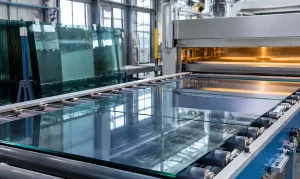
Practical limits depend on manufacturing, transportation, and installation constraints. Zhongbo Glass produces laminated glass up to 4200mm × 28000mm and tempered glass up to 3660mm × 28000mm using our specialized equipment. However, transportation typically limits panels to 3000mm × 6000mm maximum. Larger classroom glazing systems use multiple panels with structural silicone joints or framing mullions. Oversized panels require specialized rigging equipment and careful installation planning.
Conclusion
Educational glazing specification requires balancing competing performance requirements. Safety codes mandate impact-resistant glass in hazardous locations, with laminated configurations providing superior post-breakage protection. Daylight optimization demands adequate visible light transmittance (60-75% VLT) while controlling glare through architectural shading and glass selection. Thermal performance using Low-E coatings reduces energy costs while maintaining visual comfort.
The critical specifications for educational facilities include ANSI Z97.1 Category II compliant safety glazing in hazardous locations, minimum 6mm+1.52mm PVB+6mm laminated tempered glass for ground-floor classroom windows, Low-E insulated glass with 60-70% VLT and SHGC 0.35-0.45 for south-facing exposures, external shading devices maintaining DGP below 0.35, and STC 35-40 acoustic performance for urban schools. These requirements, validated through research on student performance and building codes focused on occupant safety, represent best practice in educational glazing design.
Zhongbo Glass specializes in large-format architectural glass for educational facilities. Our manufacturing capabilities include laminated glass up to 4200mm × 28000mm, tempered glass up to 3660mm × 28000mm, Low-E coating production at 8000m²/24h, and comprehensive testing to ANSI Z97.1, ASTM E1300, and other relevant standards. We provide engineering support for structural calculations, thermal modeling, and specification development.
Contact us for technical specifications, performance data, and project pricing for your educational building glazing requirements.