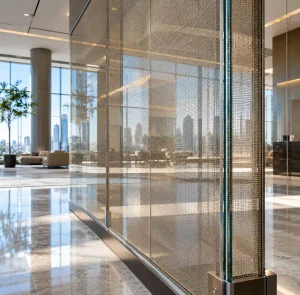
Fabric laminated glass transforms ordinary glazing into functional art that delivers measurable acoustic performance while creating unique visual statements. This specialized solution has shifted from architectural curiosity to mainstream specification, particularly in projects demanding both sound control and design distinction.
What Is Fabric Laminated Glass?
Fabric laminated glass sandwiches textile, mesh, or woven materials between two or more glass panes using polymer interlayers like PVB (polyvinyl butyral) or SGP (SentryGlas). The construction follows this sequence: outer glass ply → interlayer film → fabric layer → interlayer film → inner glass ply. The assembly undergoes high-temperature, high-pressure autoclave processing that permanently bonds all layers into a single composite unit.
Unlike decorative films applied to glass surfaces, the fabric remains sealed within the laminate structure, protected from dust, moisture, and physical damage. This encapsulation preserves the textile’s appearance indefinitely while maintaining structural integrity and safety characteristics.

At Zhongbo Glass, our 4200mm × 28000mm autoclaves process oversized panels for curtain walls and feature installations, with maximum production capacity reaching 1500㎡ per 24-hour cycle across eight dedicated laminating lines.
Acoustic Performance: How Fabric Interlayers Reduce Noise
Sound transmission through glass occurs when vibrations pass from one surface to the opposite side. Standard monolithic glass transmits sound efficiently because the entire pane vibrates as a single unit. Fabric laminated glass interrupts this transmission through distinct mechanisms.
Sound Wave Decoupling
The fabric interlayer creates a viscoelastic damping layer that absorbs vibrational energy. When sound waves strike the outer glass ply, the interlayer material flexes and converts acoustic energy into heat, preventing the inner glass ply from resonating at the same frequency. Research shows that interlayer thickness directly correlates with sound absorption—1.52mm PVB interlayers provide significantly higher attenuation than 0.38mm variants.

STC Ratings and Real-World Performance
Sound Transmission Class (STC) ratings quantify acoustic performance. While standard single-pane glass typically achieves STC 26-31, and basic insulated glass units reach STC 28-32, properly configured fabric laminated glass assemblies can achieve STC 38-45 depending on total thickness and interlayer specification.
| Glass Configuration | STC Rating | Noise Reduction | Typical Application |
|---|---|---|---|
| 6mm single glass | 28 | Minimal | Basic windows |
| 6mm + 6mm IGU (12mm air gap) | 32 | Moderate | Standard residential |
| 8mm + 1.52mm PVB + 8mm fabric laminate | 38 | Substantial | Office partitions |
| 10mm + 1.52mm PVB + fabric + 1.52mm PVB + 10mm | 42 | High | Conference rooms |
| Triple laminate with fabric (12mm+12mm+12mm) | 45+ | Excellent | Recording studios |
STC ratings indicate: STC 25 allows normal speech to be easily understood, STC 35 makes normal speech unintelligible, STC 45 renders even loud speech barely perceptible. For urban commercial projects, specifying fabric laminated glass with STC 38+ delivers noticeable comfort improvements.
Aesthetic Benefits: Design Flexibility and Visual Effects
Fabric laminated glass converts functional building envelopes into architectural features. The embedded textiles introduce depth, texture, and material warmth impossible with standard glass types.
Light Diffusion and Privacy Control
The fabric layer diffuses both natural and artificial light, creating soft, even illumination that eliminates harsh shadows and glare. This controlled translucency provides daytime privacy without sacrificing natural light—occupants cannot see distinct images through the glass, yet spaces remain bright. Bathroom partitions, conference room walls, and office fronts commonly specify this attribute to balance openness with visual privacy.

Backlighting fabric laminated glass amplifies this effect dramatically. LED systems positioned behind the glass illuminate the fabric’s texture and color, transforming walls into luminous features.
Unlimited Material and Color Options
Fabric selection determines the glass’s final character. Available interlayer materials include:
- Natural textiles: linen, cotton, silk for organic aesthetics
- Synthetic fabrics: polyester, nylon offering consistent weave patterns
- Metallic mesh: stainless steel, brass, copper providing industrial elegance
- Specialty materials: carbon fiber, fiberglass for specific performance requirements

Color possibilities extend across the full spectrum. Our design library includes over 200 fabric options, but custom materials are frequently specified. We’ve laminated client-supplied textiles, branded corporate fabrics, and artist-designed materials. The only constraints are fabric thickness (typically under 2mm) and heat stability during autoclave processing (fabrics must withstand 140°C).
Typical Applications and Installation Considerations
Commercial Interior Applications
Office Partitions and Conference Rooms: Fabric laminated glass delivers privacy and acoustic separation while maintaining visual connection to adjacent spaces. Specified thickness typically ranges from 16mm to 24mm total.
Hotel and Restaurant Dividers: Hospitality projects leverage fabric laminated glass to create intimate zones within open floor plans. The material’s sound attenuation reduces conversation bleed between dining areas.
Retail and Showroom Features: Storefront designers specify fabric laminated glass for window displays, fitting room partitions, and branded feature walls.

Architectural Envelope Applications
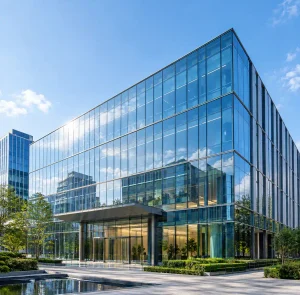
Curtain Wall Accent Panels: Within glass facades, fabric laminated panels introduce visual interest and control solar heat gain. The fabric layer functions as an integrated shading device, reducing SHGC by 15-30% compared to clear glass.
Skylight and Canopy Glazing: Overhead applications benefit from fabric interlayers’ light-diffusing properties. The textile scatters direct sunlight, eliminating hot spots and reducing glare.
Balustrades and Railings: Decorative balustrade infill panels incorporate fabric laminated glass to meet safety glazing codes while creating visual interest.
Installation Requirements
Fabric laminated glass installs using standard architectural glazing methods—captured frame systems, structural silicone glazing, or point-supported hardware. Key considerations:
Edge Treatment: Laminate edges expose the fabric layer and interlayer films. Specify captured frame systems with adequate glass coverage (minimum 15mm frame bite), or use painted frame finishes that complement the fabric color.

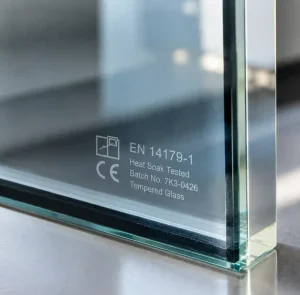
Thermal Stress Considerations: Dark fabrics absorb solar radiation, creating temperature differentials. In high-exposure applications, specify heat-strengthened or fully tempered glass to resist thermal stress breakage.
Production Capabilities and Size Limitations
Maximum producible size depends on autoclave dimensions and glass handling equipment. At Zhongbo Glass, our production capabilities include:
| Processing Line | Maximum Size | Capacity |
|---|---|---|
| Laminated Glass Production | 4200mm (W) × 28000mm (H) | 1500㎡/24h across 8 lines |
| Tempered Glass (if required) | 3660mm (W) × 28000mm (H) | 2500㎡/24h across 5 lines |
| Low-E Coating (for IGU combinations) | 3300mm (W) × 28000mm (H) | 8000㎡/24h across 2 lines |
Standard production runs accommodate panels up to 3660mm × 6000mm without special handling. Thickness ranges from 6mm total (interior applications only) to 60mm+ for specialty structural applications.

Maintenance and Durability
Fabric laminated glass requires minimal maintenance compared to exposed textile installations. The hermetically sealed construction protects the fabric from dust accumulation, moisture damage, and physical wear.
Cleaning Procedures
Clean glass surfaces using standard architectural glass procedures:
- Rinse with clean water to remove loose dirt
- Wash with mild soap solution (pH 7-8) and soft cloths
- Squeegee dry to prevent water spotting
- Avoid abrasive cleaners or aggressive chemicals

Never attempt to clean the embedded fabric layer. The sealed laminate construction makes this impossible and unnecessary.
Expected Lifespan
Properly manufactured fabric laminated glass matches or exceeds standard laminated glass longevity. PVB and SGP interlayers resist UV degradation when protected between glass plies. Expect 25-30+ year service life in typical architectural applications.
Fabric Laminated Glass vs. Alternative Solutions
| Feature | Fabric Laminated Glass | Decorative Film | Printed Glass | Textile Wall |
|---|---|---|---|---|
| Sound Insulation | Excellent (STC 38-45) | Poor (STC +0-2) | Poor (STC +0-2) | None |
| UV Protection | 99%+ | 70-95% | Minimal | None |
| Durability | 25-30+ years | 5-10 years | 25-30+ years | 5-15 years |
| Impact Safety | Yes (laminated) | No | Depends on type | No |
| Maintenance | Low | Medium | Low | High |
| Light Diffusion | Excellent | Good | Limited | Excellent |
| Design Flexibility | High | Medium | Medium | High |
Surface-applied films offer lower initial cost but lack fabric laminated glass’s durability and acoustic performance. Films scratch easily, peel at edges, and require replacement within 5-10 years.
Cost Considerations and Project Planning
Fabric laminated glass costs approximately 2.5-4× standard clear laminated glass, depending on fabric selection, panel size, and quantity. Custom fabrics add $40-150/m² over base cost.

Custom fabric lamination typically requires 50-100m² minimum to justify setup costs. Lead times extend 6-8 weeks from approval of shop drawings and fabric samples.
Frequently Asked Questions
Q: Can fabric laminated glass be used in exterior curtain walls?
Yes, but thermal stress from solar absorption requires heat-treated glass for dark fabrics. We recommend combining fabric laminated glass with an outer clear glass ply in IGU configurations for maximum weather protection.
Q: How does fabric laminated glass perform in fire-rated applications?
Standard fabric laminated glass is not fire-rated. The organic fabric and polymer interlayers lose integrity under fire exposure. For fire-rated partitions, specify fire-rated glass products.
Q: What happens if the glass breaks?
Fabric laminated glass behaves like standard laminated safety glass. If one ply cracks, it remains bonded to the interlayer and fabric layer, maintaining barrier function and preventing dangerous shards from falling.
Q: Can I use any fabric I want?
Most fabrics work if they meet two criteria: thickness under 2mm and heat stability to 140°C. We conduct trial laminations with custom fabrics before full production to verify compatibility.
Q: How do I specify fabric laminated glass on construction drawings?
Use this format: “Fabric laminated glass: [outer glass thickness]mm + [interlayer thickness]mm PVB/SGP + [fabric specification] + [interlayer thickness]mm PVB/SGP + [inner glass thickness]mm.” Include fabric samples or reference numbers from manufacturer’s library.
Q: Does the fabric affect glass transparency?
Yes—that’s the design intent. Fabric laminated glass is translucent, not transparent. Light transmits through but images blur. Sheer fabrics allow more light transmission. Dense fabrics create maximum privacy and light diffusion.
Conclusion
Fabric laminated glass delivers measurable acoustic improvement and distinctive visual character for commercial interiors and architectural features. The technology combines proven laminated glass safety performance with textile aesthetics, creating a hybrid material that satisfies both functional requirements and design ambitions.
Critical success factors include fabric selection aligned with project goals, proper edge treatment in glazing systems, and thermal stress analysis for solar-exposed applications. When these elements align, fabric laminated glass creates interiors that perform acoustically while expressing material authenticity impossible with conventional glazing.
At Zhongbo Glass, we manufacture fabric laminated glass at architectural scale using jumbo autoclaves. Our production capabilities support curtain wall dimensions up to 4200mm × 28000mm with custom fabric integration. For more information about our laminated glass solutions, fabric and metal glass, and decorative glass options, contact our technical team.