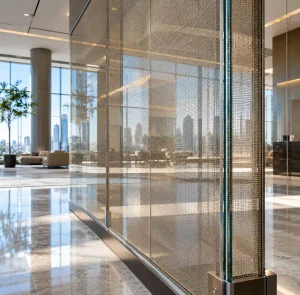
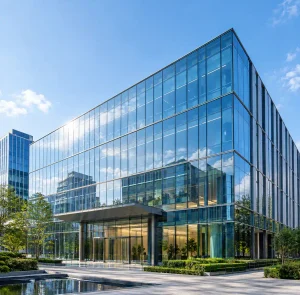
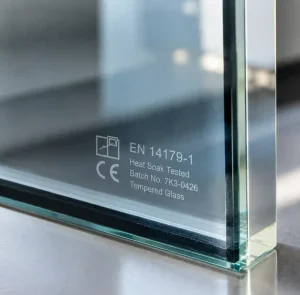
Fire safety is a critical consideration in modern architecture, especially for offices, public buildings, and high-rise projects where large numbers of occupants and complex evacuation routes are involved. Among essential fire-protection materials, fire-resistant glass plays a vital role by containing smoke, flames, and heat while maintaining transparency and design flexibility.
This article provides a comprehensive overview of fire-resistant glass, including its types, classifications, performance standards, and applications, while highlighting how Henan Zhongbo Glass Co., Ltd. delivers reliable fire-rated glass solutions for global construction projects.

What Is Fire-Resistant Glass?
Fire-resistant glass is a specialized glazing material engineered to prevent the spread of fire, smoke, and, in some cases, heat for a specified duration—typically ranging from 20 minutes to over 180 minutes.
Unlike ordinary glass, fire-resistant glass is tested and certified to withstand extreme temperatures and fire exposure, making it suitable for safety-critical architectural applications such as fire-rated doors, walls, windows, and partitions.
Why Fire-Resistant Glass Matters in Modern Buildings
In offices, public facilities, and high-rise buildings, fire-resistant glass serves multiple essential purposes:
Compartmentalization of fire and smoke
Extended evacuation time for occupants
Protection of escape routes and stairwells
Compliance with international fire safety codes
Preservation of natural light and open design
By integrating fire-rated glazing, architects can achieve both safety and aesthetics without sacrificing transparency.
Main Types of Fire-Rated Glass
Different applications require different fire-resistant glass technologies. The most common types include:
1. Ceramic Fire-Resistant Glass
Ceramic glass is designed to withstand extremely high temperatures—often exceeding 1,470°F (800°C), with some variants tolerating up to 1,600°F or more.
Key features:
Exceptional heat resistance
Minimal thermal expansion
Ideal for high-temperature environments
Typical applications:
Fireplaces and stoves
Fire-rated doors and partitions
Industrial and high-risk zones
2. Borosilicate Fire-Rated Glass
Borosilicate glass is tempered and chemically stable, offering strong resistance to thermal shock and high temperatures.
Key features:
High temperature and thermal shock resistance
Good optical clarity
Suitable for architectural glazing
Typical applications:
Fire-rated windows and doors
Office partitions
Public building facades
3. Wire Glass
Wire glass contains an internal wire mesh that helps hold the glass together when exposed to fire and impact.
Key features:
Fire protection for up to 60 minutes
Added impact resistance
Cost-effective fire-rated solution
Typical applications:
Interior doors and windows
Industrial and utility spaces
Stairwells and service corridors
Fire-Resistant Glass Classifications Explained
Fire-rated glass products are classified according to their performance during fire exposure:
Fire-Protective Glass
Blocks flames and smoke
Limited heat insulation
Typically restricted to 25% of wall area in doors and openings
Common fire ratings: 20–90 minutes
Fire-Resistive Glass
Blocks flames, smoke, and heat transfer (radiant and conductive)
Can be used without area limitations
Suitable for walls, floors, and large glazed sections
Provides higher overall fire safety performance
EI Class (Integrity & Insulation)
Measures both fire containment (E) and thermal insulation (I)
Considered the highest fire-safety standard
Often required in high-rise buildings, hospitals, and public infrastructure
Applications in Offices, Public Buildings, and High-Rise Projects
Fire-resistant glass is widely used across modern construction projects:
Office Buildings
Fire-rated glass doors and partitions
Transparent fire barriers between departments
Protected escape corridors
Public Buildings
Schools, hospitals, airports, and shopping centers
Fire-rated windows and internal walls
Smoke-control zones
High-Rise Buildings
Stairwells and elevator lobbies
Fire-rated curtain wall sections
Compartmentalized fire zones for vertical safety
All installations must be combined with approved fire-rated frames and hardware to ensure full system compliance.
Henan Zhongbo Glass Co., Ltd.: Trusted Fire-Resistant Glass Solutions
Henan Zhongbo Glass Co., Ltd. is a professional manufacturer and supplier of architectural glass products, including fire-resistant glass, tempered glass, laminated glass, and insulating glass.
With advanced processing equipment, strict quality control, and compliance with international standards, Zhongbo Glass provides customized fire-rated glazing solutions for offices, public buildings, and high-rise projects worldwide.
FAQ
Q1: How long can fire-resistant glass withstand fire?
Depending on the type and classification, fire-resistant glass can provide protection from 20 minutes to over 180 minutes.
Q2: Is fire-resistant glass the same as fireproof glass?
No. “Fireproof” is a marketing term; “fire-resistant” is the correct technical term defined by testing standards.
Q3: Can fire-resistant glass be used in large wall areas?
Yes, fire-resistive glass (especially EI-rated) can be used without area limitations when properly certified.
Q4: Does fire-rated glass need special frames?
Absolutely. Fire-resistant glass must be installed with approved fire-rated frames to maintain safety and code compliance.
Q5: Is fire-resistant glass transparent?
Yes. Modern fire-rated glass offers excellent clarity while meeting strict fire safety standards.
Conclusion
Fire-resistant glass is a crucial element in ensuring safety, compliance, and design flexibility in offices, public buildings, and high-rise projects. By effectively containing fire, smoke, and heat while allowing visibility and light transmission, it supports both occupant safety and architectural creativity.
With reliable manufacturers like Henan Zhongbo Glass Co., Ltd., developers and architects can access high-quality fire-resistant glass solutions that meet international safety standards and modern building requirements.