Fire-rated glazing systems prevent the spread of flames, smoke, and radiant heat during building fires, protecting evacuation routes and containing fire to specific compartments. According to recent industry data, fire-resistive glass assemblies must withstand furnace temperatures exceeding 1,600°F for 45 minutes or longer while maintaining structural integrity and limiting heat transfer to the non-fire side.
If you want to specify fire-rated glass for commercial buildings, healthcare facilities, or institutional projects, then you will need to understand rating classifications, testing standards, performance requirements, and code compliance. This guide explains fire-resistant glass standards including ASTM E119, EN 13501-2, integrity versus insulation classifications, and application requirements.
What Is Fire-Resistant Glass?
Fire-resistant glass is a specialized safety glazing product designed to maintain integrity and provide thermal insulation during fire exposure. The glass undergoes rigorous testing per ASTM E119 or UL 263 standards, where it is subjected to extreme temperatures in controlled furnace conditions.
Unlike standard glass, fire-resistant glass incorporates intumescent layers or gel-filled cavities that expand when heated, creating an insulating barrier. This construction prevents flame penetration, blocks smoke transmission, and limits radiant heat transfer.
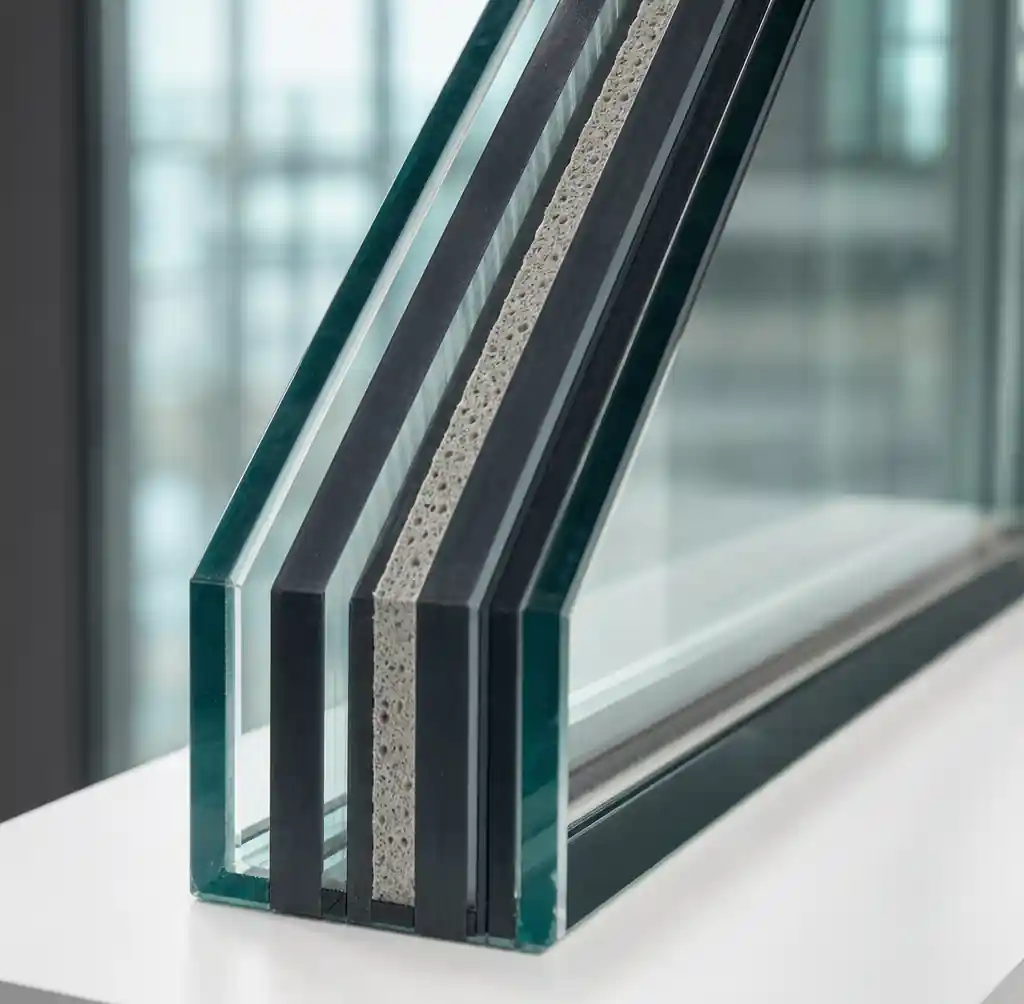
You can specify fire-rated glass for fire barriers, corridor walls, stairwell enclosures, and any opening where fire protection is required by codes.
Fire Rating Classifications: Integrity vs Insulation
Integrity-Only Ratings (E and EW)
Integrity-rated glass (classified as E or EW) maintains structural stability and prevents flame and smoke passage, but allows radiant heat transfer. This fire-protective glass protects against direct flame contact but not thermal radiation.
You should specify integrity-rated glass for vision panels in fire doors, corridor sidelites, and borrowed lites where code permits. Maximum size limitations apply—typically 100 square inches per door leaf unless tested in larger configurations.
Insulation Ratings (EI)
EI-rated glass provides both integrity and insulation, limiting temperature rise on the non-fire side. Fire-resistive assemblies must meet strict criteria: average temperature rise limited to 250°F above ambient, with maximum single-point rise capped at 325°F.
Recent innovations in 2026 achieve temperature rise limits of ≤100°C (~180°F), significantly improving occupant safety.
You must specify EI-rated fire-resistive glass for fire barriers exceeding one hour, elevator lobby enclosures, exit passageways, and fire compartment boundaries in high-rise buildings per IBC Section 707.
Fire Rating Duration Standards
| Rating Duration | Applications | Testing Standard | Temperature Exposure |
|---|---|---|---|
| 20-30 minutes | Corridor vision panels, interior doors | ASTM E2010, UL 9 | 1,000-1,300°F |
| 45-60 minutes | Fire partition doors, elevator lobbies | ASTM E119, UL 263 | 1,550-1,700°F |
| 90-120 minutes | Fire walls, stairwells, exterior walls | ASTM E119, ISO 834 | 1,850-1,925°F |
Standard ratings range from 20 to 180 minutes, with duration determined by building code requirements, occupancy classification, and fire compartment design. Higher-rated assemblies incorporate thicker glass lites, multiple intumescent layers, and enhanced framing systems.
ASTM E119 Testing Standard
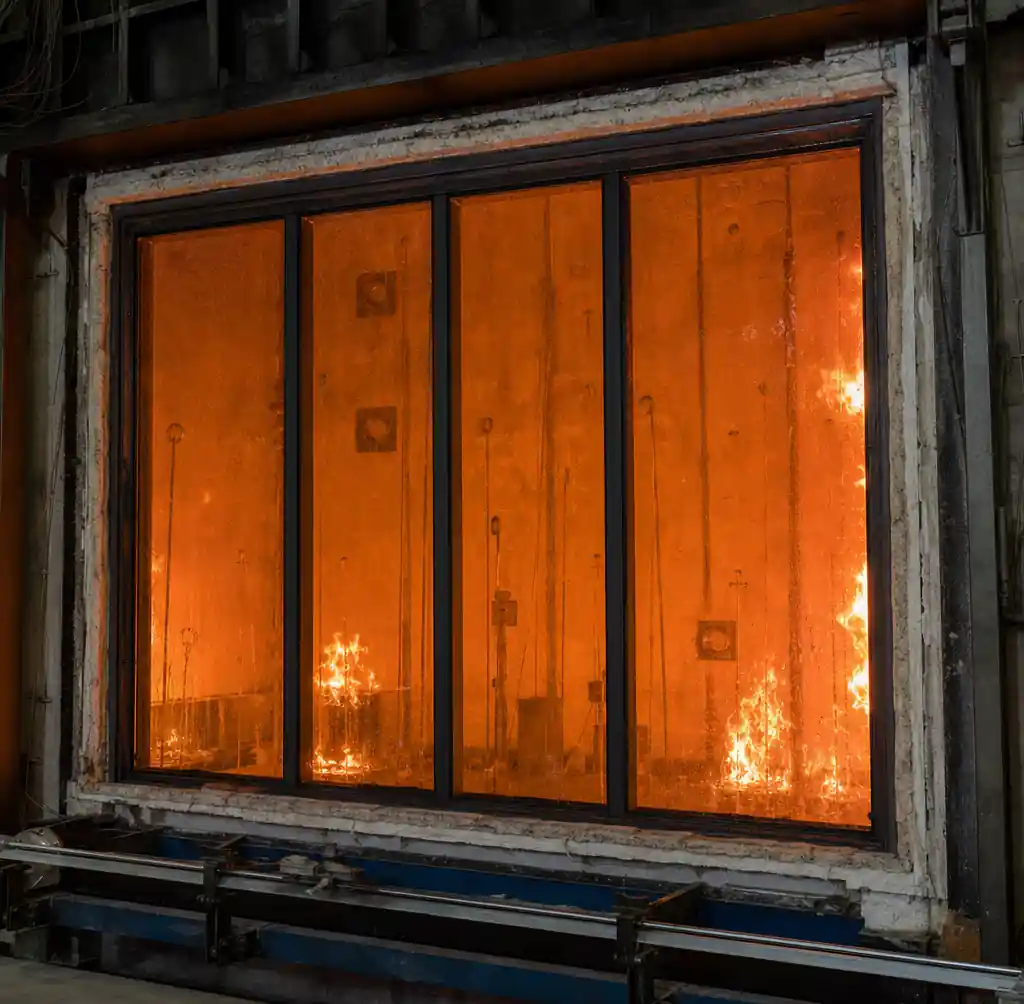
ASTM E119 is the primary test method used in the United States for evaluating fire-resistive assemblies. The test subjects glazing systems to time-temperature curves that simulate realistic fire conditions.
Furnace temperatures increase from ambient to approximately 1,000°F at 5 minutes, 1,300°F at 10 minutes, 1,550°F at 30 minutes, 1,700°F at 60 minutes, and 1,850°F at 90 minutes.
For fire-resistive ratings, thermocouples monitor the unexposed surface temperature. The assembly must maintain average temperature rise below 250°F and single-point rise below 325°F to achieve EI classification.
After fire endurance testing, the hose stream test subjects the heated assembly to water impact, simulating thermal shock during firefighting. The assembly must remain intact without through-openings.
European EN Standards
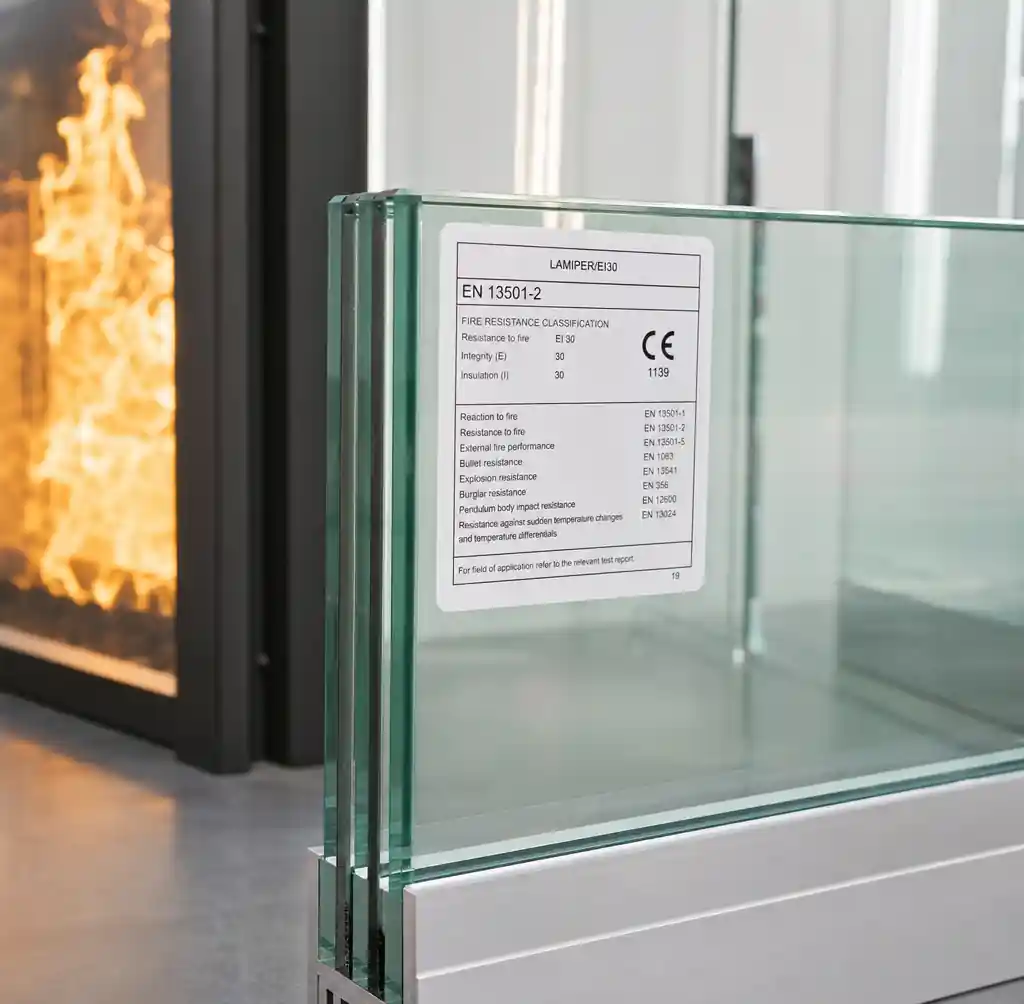
European fire-rated glazing follows EN 13501-2 testing and classification standards, which evaluate resistance to fire exposure across EU member states.
The classification system uses letter designations: E (Integrity), I (Insulation), and W (Radiation). Common classifications include E30, E60, EI30, EI60, EI90, and EI120, where the number indicates minutes of fire resistance.
Testing follows EN 1364-1 for non-loadbearing elements and EN 1364-3 specifically for glazed elements. The test setup and acceptance criteria differ from ASTM E119, so products certified to EN standards may not directly correspond to ASTM ratings.
Additional Testing Standards
UL 9 and NFPA Standards
UL 9 specifically addresses fire window assemblies in exterior walls, testing both fire exposure and hose stream impact. Products tested to UL 9 are suitable for fire-rated exterior walls where the glazing may be exposed to fire from outside the building.
NFPA 80 provides installation requirements for fire door assemblies incorporating glazing, including frame preparation, hardware installation, and clearance specifications. NFPA 252 covers fire test methods for door assemblies, and NFPA 257 addresses window assemblies.
International Standards
ISO 834 provides the international standard time-temperature curve for fire resistance testing, used globally outside North America and Europe. GB 15763 covers fire-resistant glass standards in China, with testing protocols similar to ISO 834.
System-Based Testing Requirements
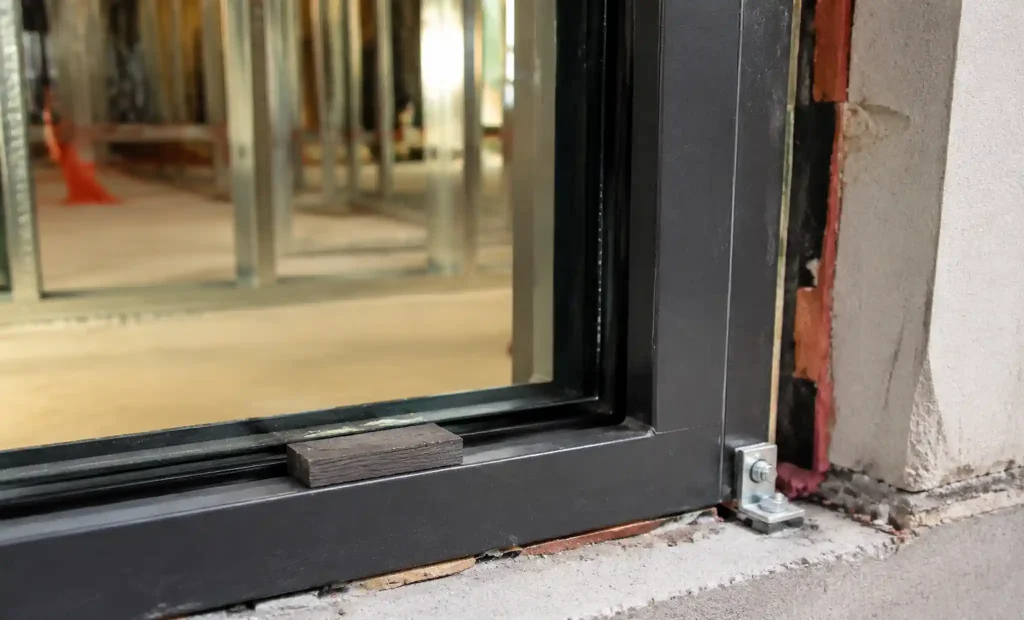
Modern fire-rated glazing standards emphasize system-based testing, where glass, framing, fixings, hardware, and sealants are tested together as a complete assembly. You cannot substitute components without invalidating the fire rating.
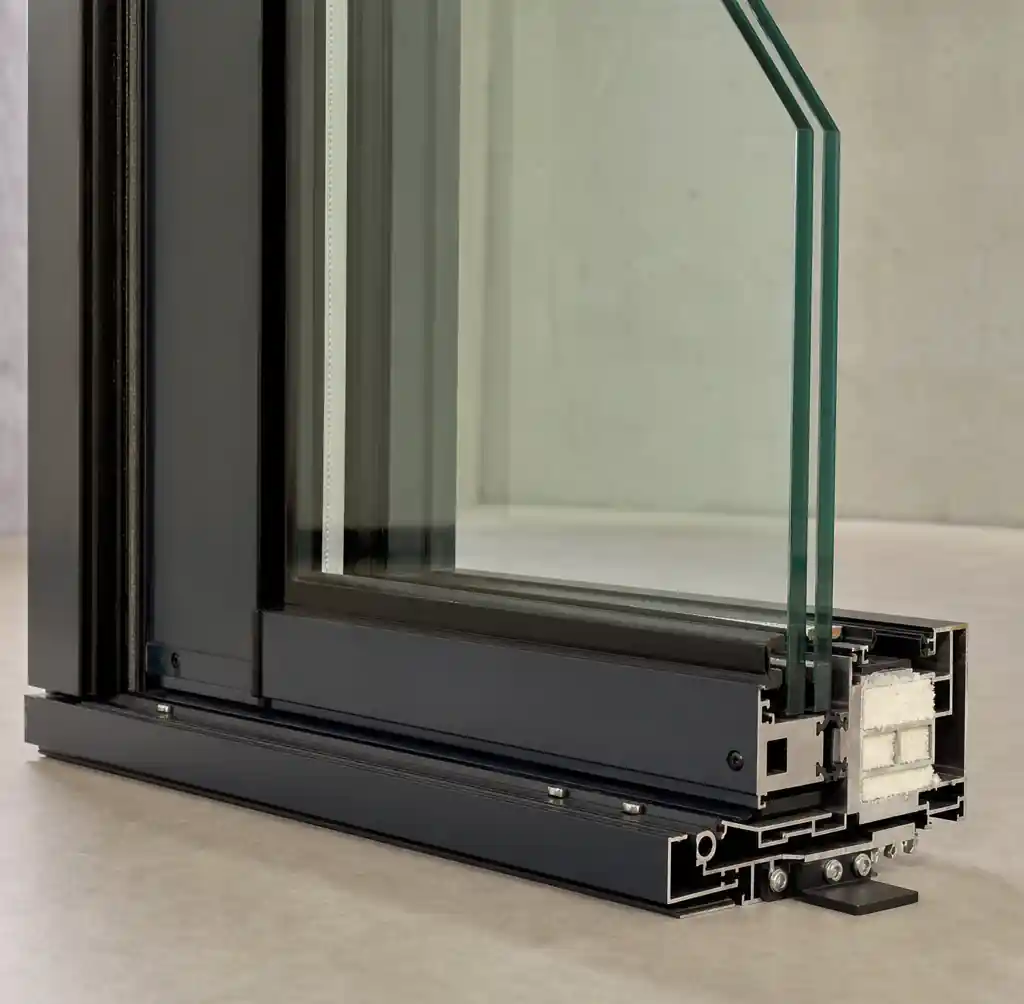
You must verify that field installation matches the tested configuration: glass specifications, frame profile and material, setting blocks and edge clearances, fire-rated glazing tapes and seals, plus hardware types and locations.
Temperature Rise Criteria
| Performance Metric | Maximum Allowed | Code Reference |
|---|---|---|
| Average Temperature Rise | 250°F above ambient | IBC Section 707.5 |
| Single-Point Temperature Rise | 325°F above ambient | ASTM E119 |
| Advanced Products (2026) | ≤100°C (~180°F) | Research standard |
These criteria apply to fire-resistive assemblies in fire walls, fire barriers rated over one hour, and any application where IBC Section 707 temperature-rise requirements are triggered. Fire-protective glass (integrity-only) does not have temperature-rise limitations.
Applications by Building Type
Commercial Office Buildings
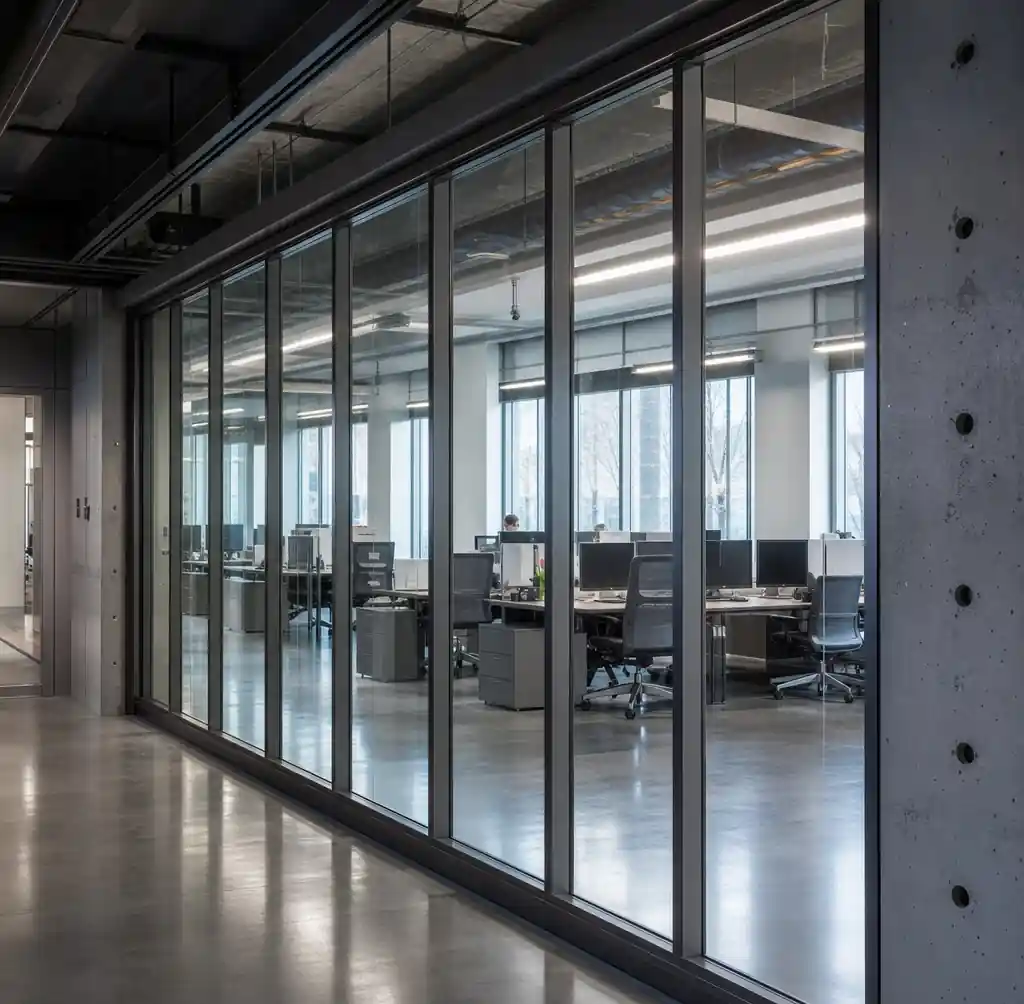
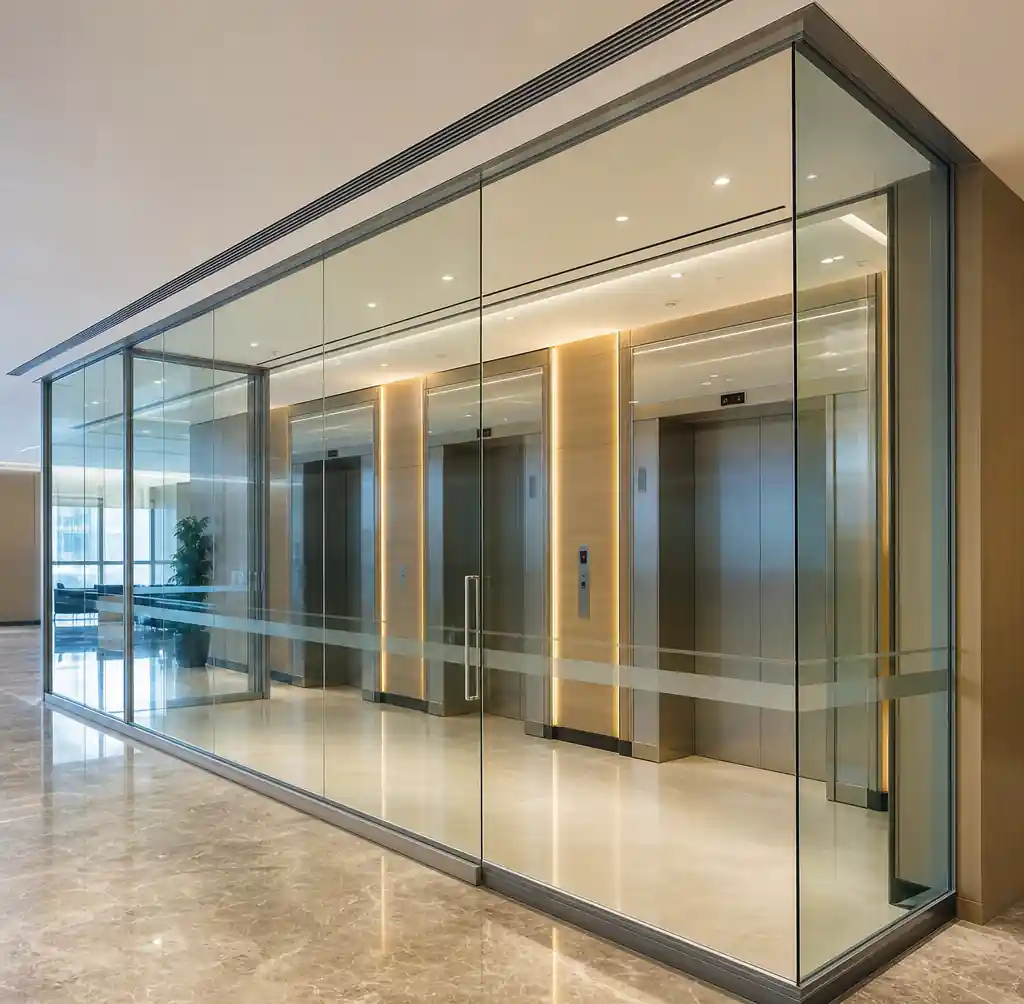
Fire-rated glass in office buildings appears in elevator lobbies, stairwell enclosures, and corridor partitions. IBC requires fire-resistive assemblies (EI-rated) for elevator lobby enclosures in buildings with occupied floors more than 75 feet above grade.
Healthcare and Educational Facilities
Hospitals require fire barriers with 1-hour or 2-hour ratings using temperature-rise limited assemblies. You should specify EI-rated glass for corridor walls, nurse stations, and patient observation windows.
Schools require fire-rated corridor walls and stairwell enclosures. Fire-resistive glass allows floor-to-ceiling transparency while maintaining code compliance, enhancing supervision and security.
Airport Terminals
Airport terminals combine high occupant loads with large open spaces, requiring fire compartmentation. Fire-rated glass protects concourse separation walls and exit enclosures while maintaining visual connectivity.
Zhongbo Glass has supplied jumbo-size fire-rated assemblies up to 3660mm × 18000mm for airport projects, including configurations that meet both fire-resistive and security glazing standards.
Installation and Field Verification
NFPA 80 specifies clearances, anchoring methods, and inspection requirements that must be followed during installation.
Key requirements include frame anchoring per tested assembly (typically 12-16 inches on center), edge clearances maintained per listing, fire-rated setting blocks, intumescent glazing tape applied continuously, no field modifications, and labeled assemblies with permanent certification markings.
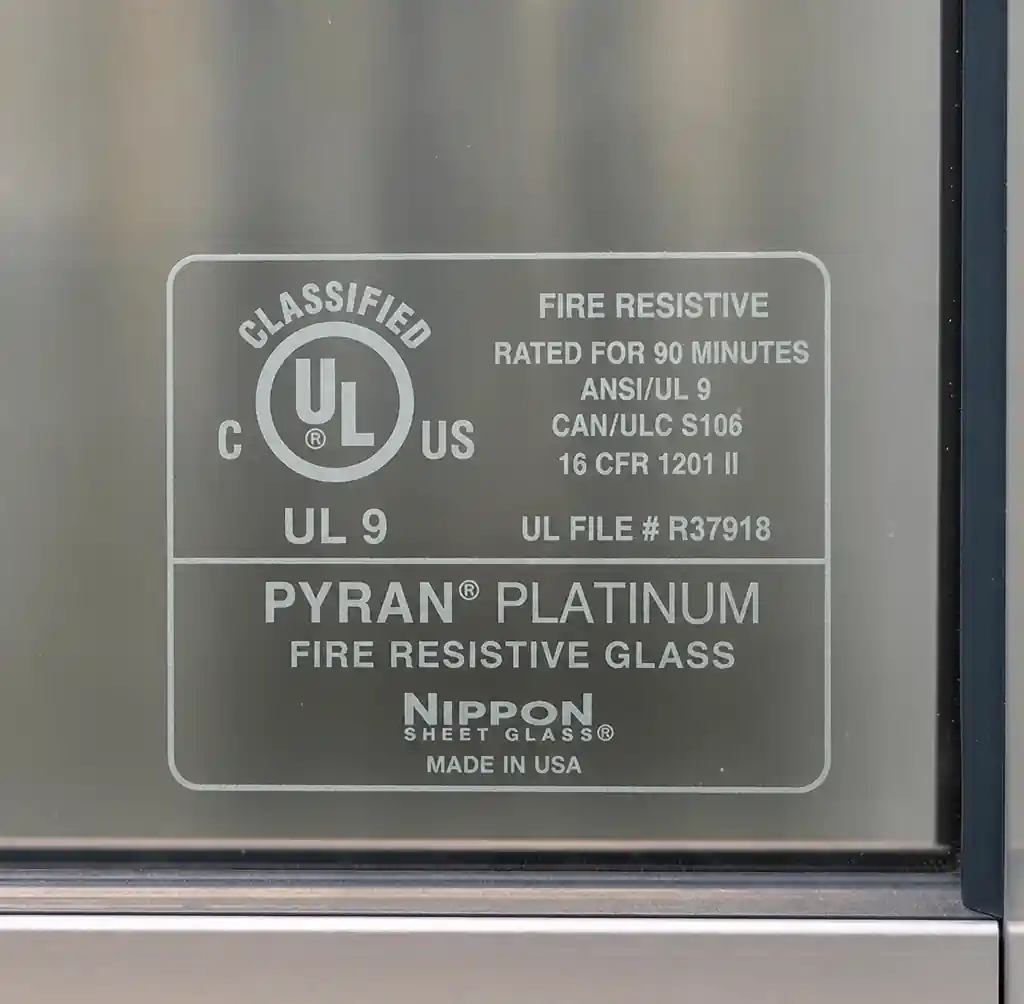
Nonsymmetrical glazing systems must be tested with both faces exposed to fire, with the rating assigned as the shortest duration. You should require third-party inspection to verify compliance with tested assembly details.
Specifying Considerations
When specifying fire-rated glass assemblies, address these key criteria:
Fire Rating Requirements: Determine required fire rating based on building code, occupancy classification, and fire barrier type. Verify whether integrity-only (E/EW) or fire-resistive (EI) assembly is required.
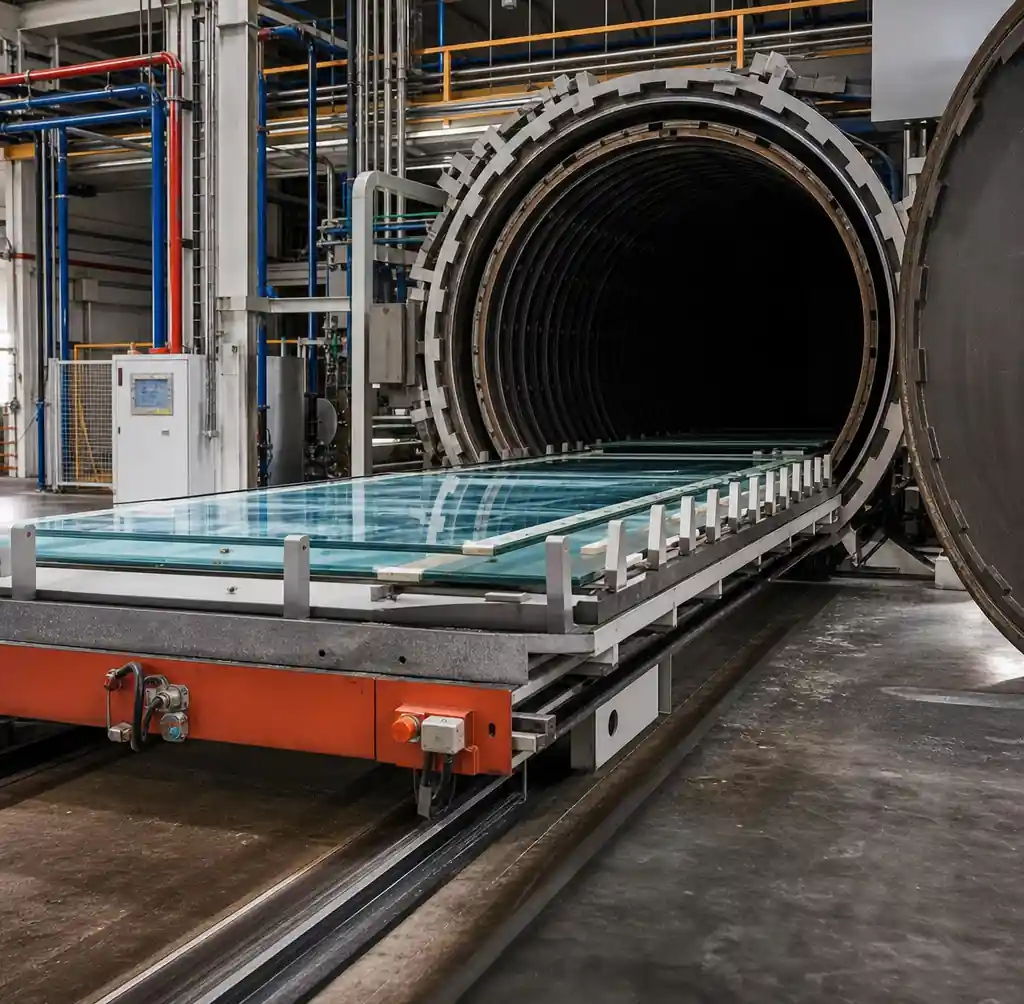
Maximum Size Limitations: Check tested assembly listings for maximum glass dimensions. Zhongbo Glass manufactures fire-rated laminated glass up to 3660mm × 18000mm using our world’s largest autoclave (4.2m × 28m).
Impact and Security: Fire-rated glass must meet impact safety requirements per CPSC 16 CFR 1201. Projects requiring combined fire rating and security protection need specialized laminated configurations with SGP interlayers.
Acoustic Performance: Multi-layer fire-resistive glass provides inherent sound attenuation, achieving STC ratings of 40-45 for healthcare and educational applications.
Frequently Asked Questions
What is the difference between fire-protective and fire-resistive glass?
Fire-protective glass (E/EW-rated) prevents flame and smoke passage but allows radiant heat transmission. Fire-resistive glass (EI-rated) provides both integrity and insulation, limiting temperature rise to protect occupants and prevent ignition of nearby combustibles.
Can I install fire-rated glass in exterior curtain walls?
Yes, if tested per UL 9 or equivalent exterior fire test standards. The assembly must withstand both interior fire exposure and hose stream impact, with proper framing and anchoring for wind load resistance.
What is the maximum size for fire-rated glass?
Maximum size depends on the tested assembly and fire rating duration. Zhongbo Glass manufactures fire-rated laminated glass up to 3660mm × 18000mm, significantly larger than standard industry limitations.
Do I need fire-rated glass or fire-rated frames?
Both. Fire-rated assemblies are tested and listed as complete systems including glass, frames, hardware, and installation methods. You cannot substitute components without invalidating the fire rating.
How do I verify fire-rated glass certification?
Check for permanent certification labels indicating the testing standard (ASTM E119, UL 263, UL 9), rating duration (20-120 minutes), and listing agency. Request test reports and listing documents from the manufacturer.
Can fire-rated glass be used in doors?
Yes, subject to size limitations. Vision panels in fire doors are typically limited to 100 square inches unless tested in larger configurations per NFPA 80 and UL 10B/10C.
Conclusion
Fire-resistant glass provides critical life safety protection by containing fire spread, blocking smoke transmission, and limiting heat transfer during fire events. Understanding the distinction between integrity-rated (E/EW) and insulation-rated (EI) classifications is essential for code-compliant specification.
ASTM E119, EN 13501-2, and NFPA standards ensure fire-rated glazing systems perform as tested in real-world installations. System-based certification requires that all assembly components match tested configurations to maintain fire rating validity.
If you need fire-rated laminated glass for commercial towers, healthcare facilities, or airport terminals, Henan Zhongbo Glass offers world-class manufacturing capabilities up to 18 meters. Our facility features the world’s largest autoclave (4.2m × 28m) ensuring superior quality for fire-resistive architectural glazing assemblies.
Contact us today for custom fire-rated glass solutions and technical specifications.