When winter temperatures plunge below freezing, your building’s glass becomes the weakest thermal link. In northern regions where heating costs can account for 60% of annual energy expenditure, selecting the right insulated glass isn’t just about comfort—it’s an economic imperative. This guide draws from our experience manufacturing glass for projects like the Yabuli Forum permanent site in Heilongjiang, where temperatures drop to -40°C, to help you specify glass that performs when it matters most.
Why Standard Double Glazing Fails in Cold Climates
Double glazing adequate for temperate zones becomes a liability in harsh winters. Standard double-pane units achieve U-values between 1.8-2.8 W/m²K—insufficient where temperatures regularly fall below -15°C.
At -20°C exterior with +20°C interior, a window with U-value 2.0 loses 80 watts per square meter. Across 100m² of glazing, that’s 8 kilowatts continuously—equivalent to running eight space heaters just to compensate for window losses. Interior glass surface temperature drops to 5-8°C, creating condensation, frost buildup, and cold radiation zones.

Triple Glazing: The Cold Climate Standard
Triple-pane insulated glass units represent the minimum specification for northern climates. A third glass lite with two sealed cavities creates dramatic thermal resistance improvement.
Performance Targets for Northern Regions
Your specification should target these benchmarks:
| Climate Zone | Target U-Value | Minimum Air Gap | Gas Fill Requirement |
|---|---|---|---|
| Moderate Cold (-15°C to -25°C) | 0.8-1.0 W/m²K | 12mm per cavity | Argon recommended |
| Severe Cold (-25°C to -35°C) | 0.6-0.8 W/m²K | 14mm per cavity | Argon or krypton |
| Extreme Cold (below -35°C) | 0.4-0.6 W/m²K | 16mm per cavity | Krypton required |
At Zhongbo Glass, our insulated glass production lines manufacture triple-glazed units up to 3660mm × 8000mm with optimized cavity spacing for maximum thermal performance, enabling large-format curtain wall applications.
The Physics of Cold Climate Glazing
Gas Fill Selection Matters
The gas between glass panes dramatically affects thermal performance. Air has thermal conductivity of 0.026 W/mK. Argon improves this to 0.018 W/mK—a 30% reduction. Krypton performs better at 0.009 W/mK but costs more.
For most northern applications, argon-filled cavities provide optimal cost-performance. Krypton becomes justified in extreme cold or where space constraints limit cavity width. In projects below -35°C, we specify krypton fill in at least one cavity.
Low-E Coating Positioning
Low-E glass placement within the IGU stack critically affects performance. The coating works by reflecting long-wave infrared radiation while allowing visible light transmission.
Optimal coating positions for cold climates:
- Surface 2 (inner surface of exterior lite): Primary position. Reflects interior heat back into the building while allowing maximum solar heat gain when needed.
- Surface 5 (inner surface of middle lite): Secondary position in triple glazing. Creates additional thermal barrier without significantly reducing solar gain.
Avoid placing Low-E on surface 3 in cold climates—this position optimizes for solar heat rejection, which is counterproductive when you need every available BTU of passive solar heating.

Condensation Prevention Through Surface Temperature Control
Interior condensation occurs when glass surface temperature drops below the dew point of interior air. At 20°C and 50% relative humidity, dew point is approximately 9.3°C.
Surface Temperature Comparison
| Glass Configuration | U-Value (W/m²K) | Interior Surface Temp at -20°C Exterior | Condensation Risk |
|---|---|---|---|
| Standard double glazing, air-filled | 2.7 | 6.2°C | High – frost formation |
| Double glazing, argon, one Low-E | 1.6 | 12.8°C | Moderate – condensation likely |
| Triple glazing, argon, one Low-E | 0.8 | 16.4°C | Low – minimal risk |
| Triple glazing, argon, two Low-E | 0.6 | 17.8°C | Very low – safe |
These calculations assume 20°C interior, -20°C exterior, no frame effects. In our Yabuli Forum project, we specified triple glazing with U-value 0.7 to maintain interior surface temperatures above 15°C during -35°C cold snaps.

Thermal Bridging: The Hidden Heat Thief
Even with excellent glass specification, thermal bridges through frames and spacers can undermine performance. Aluminum spacers create cold bridges, dropping edge-of-glass temperatures by 5-8°C versus center-of-glass.
Warm Edge Spacer Technology
Specify warm edge spacers constructed from materials with thermal conductivity below 0.3 W/mK. Options include:
- Stainless steel: 17 W/mK conductivity but thin profile minimizes heat transfer
- Hybrid composite: Typically 0.2-0.3 W/mK, good balance of performance and cost
- Foam-based: Below 0.1 W/mK, maximum thermal break but higher cost
In our insulated glass production, we use thermally improved spacer systems that reduce edge-of-glass heat loss by 40% compared to aluminum spacers. For a typical 1.5m × 2m window, this reduces edge heat loss from 18W to 11W.

Solar Heat Gain: Balancing Act in Cold Climates
While minimizing heat loss is paramount, blocking solar heat gain is counterproductive in northern climates. Passive solar heating offsets significant heating loads.
Target Solar Heat Gain Coefficient (SHGC) between 0.35-0.50 for cold climates. This allows beneficial solar heating while maintaining excellent insulation.
On a clear winter day at 45°N latitude, south-facing glass with SHGC 0.40 can collect 400-500 BTU per square foot—offsetting heat losses. Our Low-E glass formulations maximize this balance: high thermal resistance with useful solar heat gain.

Heating Cost Savings: The Financial Case
Upgrading from standard double glazing to high-performance triple glazing requires higher upfront investment but delivers measurable energy savings in cold climates.
Example calculation for 1000 ft² residential glazing in climate zone with 8000 heating degree days:
- Standard double glazing (U-2.5): Annual heat loss = 43 million BTU
- High-performance triple glazing (U-0.7): Annual heat loss = 12 million BTU
- Energy savings: 31 million BTU per year
At $15 per million BTU (natural gas), this represents $465 annual savings. With typical cost premium of $15-25 per square foot for triple glazing, payback ranges from 3-5 years.
For commercial buildings with larger glazing areas, savings scale proportionally. Curtain wall projects achieve payback in under four years while improving occupant comfort.
[IMG_7]
Installation Considerations for Cold Climate Performance
Even perfectly specified glass can underperform if installation compromises the thermal envelope.
Proper sealant selection: Use silicone or polyurethane sealants rated for temperature extremes. Standard sealants lose elasticity below -20°C.
Continuous insulation at frame: Insulate the frame-to-wall junction. Spray foam or backer rod with sealant creates airtight, insulated connection.
Interior condensation management: In extreme climates, consider interior storm windows to boost thermal resistance, pushing U-values below 0.4 W/m²K.

Tempering and Cold Climate Requirements
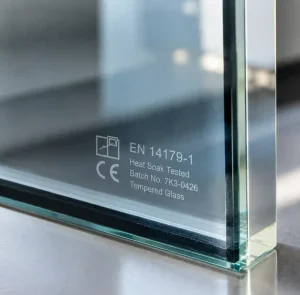
All tempered glass in cold climates should meet impact resistance standards. Ice buildup and thermal shock create additional stresses.
At Zhongbo Glass, our tempering lines process glass up to 3660mm × 8000mm with stress patterns optimized for cold climates. Our process creates compression strength exceeding 100 MPa for thermal shock resistance.
Real-World Application: Yabuli Forum Project
The permanent site of Yabuli Forum in Heilongjiang Province provided an extreme testing ground for cold climate glazing. With design temperatures reaching -40°C, standard glazing was inadequate.
Our solution involved triple-glazed insulated glass units with U-value 0.65 W/m²K:
- 8mm Low-E + 16mm argon cavity + 6mm + 16mm argon cavity + 8mm tempered glass
- Warm edge spacers throughout
- SHGC 0.42 to capture solar heating
- Frame systems with thermal breaks
The result: interior glass surface temperatures remained above 14°C during peak cold, eliminating condensation. Energy modeling indicated 48% heating energy reduction versus baseline double glazing.

FAQ
What is the minimum U-value I should specify for triple glazing in cold climates?
Target U-value 0.8 W/m²K or lower for regions with winter design temperatures below -20°C. For extreme climates below -30°C, specify U-value 0.6 W/m²K or better. These values ensure interior glass surface temperatures stay above dew point, preventing condensation.
Is argon gas fill worth the additional cost?
Yes. Argon fill reduces U-value by approximately 0.2-0.3 W/m²K compared to air-filled cavities, costing only $2-4 per square foot. In cold climates, this improvement pays back in 1-2 heating seasons through reduced energy losses.
How do I prevent condensation at glass edges?
Specify warm edge spacers with thermal conductivity below 0.3 W/mK and ensure frame systems include thermal breaks. The combination keeps edge-of-glass temperatures within 2-3°C of center-of-glass, minimizing condensation risk at the most vulnerable location.
Can I use triple glazing in existing window frames?
Rarely. Triple-glazed IGUs are heavier and thicker than double glazing. A typical unit weighs 40-50 kg/m² and measures 40-50mm thick. Most existing frames cannot accommodate these requirements.
What cavity spacing is optimal for cold climate triple glazing?
14-16mm per cavity provides optimal balance. Cavities narrower than 12mm begin convection that reduces insulation. Cavities wider than 18mm show diminishing returns. We specify 14mm for most northern applications.
How long does argon gas remain effective in sealed units?
Quality IGU fabrication with proper edge seals retains over 80% of argon fill for 20+ years. Annual gas loss rates should be below 1% with proper spacer sealing systems. Our insulated glass production uses dual-seal systems specifically to minimize long-term gas loss.
Conclusion
Glass selection for cold climates requires understanding U-value, surface temperature, gas fill, Low-E coatings, and thermal bridging interactions. Triple glazing with U-values below 0.8 W/m²K represents the baseline for northern regions, with extreme climates demanding 0.6 W/m²K or better.
The initial cost premium—typically 30-50% over standard double glazing—delivers measurable returns through reduced heating costs, eliminated condensation, and improved comfort. Projects in China’s northeastern provinces demonstrate that properly specified glazing maintains performance through extreme temperature cycles while paying for itself within five years.
At Zhongbo Glass, our manufacturing capabilities span Low-E coating to insulated glass assembly with production lines for large-format architectural applications. The principles remain constant: target appropriate U-values, control condensation, minimize thermal bridging, and balance insulation with solar heat gain.