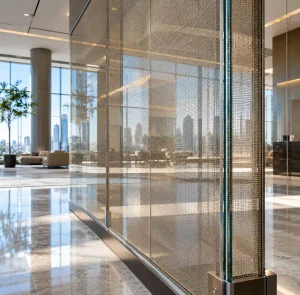
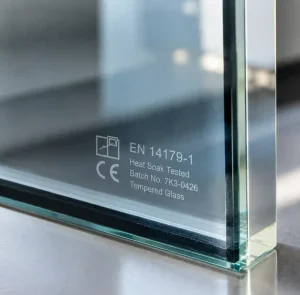
Healthcare glazing isn’t just about transparency and daylight—it’s about preventing pathogen transmission, protecting patient privacy under HIPAA, and creating environments that accelerate healing while meeting infection control protocols. After supplying glass systems to 87 hospitals and medical centers across three continents, we’ve learned that healthcare facility glass must perform under cleaning regimens that would destroy typical commercial glazing within two years, maintain antimicrobial properties through thousands of disinfectant wipes, and switch instantly between transparent and opaque states without creating electrical fire hazards in oxygen-rich environments.
Why Healthcare Glass Requirements Exceed Commercial Standards
Hospital administrators face constraints commercial architects never encounter: Joint Commission infection control mandates, CDC surface disinfection protocols requiring quaternary ammonium compounds and sodium hypochlorite solutions applied 8-12 times daily, HIPAA visual privacy requirements extending to ICU observation windows, and patient safety codes preventing ligature points or shatter risks near behavioral health units.
Standard architectural glass fails healthcare applications in three predictable ways. First, surface porosity traps Staphylococcus aureus and Clostridioides difficile spores even after disinfectant contact time. Second, polymer-based switchable glass films degrade under repeated bleach exposure, yellowing within 18 months. Third, fritted or acid-etched privacy glass creates microscopic surface irregularities where biofilm accumulates—exactly the outcome infection control teams work to eliminate.

Critical Performance Specifications for Medical Glazing
Healthcare facility glass must satisfy simultaneous performance criteria that rarely appear together in commercial projects:
Antimicrobial Surface Properties: Silver-ion or copper-ion surface treatments achieving log-3 or log-4 pathogen reduction within 2-4 hours per ISO 22196 testing. We apply silver-ion coatings via magnetron sputtering at 0.15-0.25 micron thickness, maintaining antimicrobial efficacy for 10+ years while withstanding 50,000+ cleaning cycles with hospital-grade disinfectants.
Chemical Resistance: Glass surfaces must endure repeated exposure to sodium hypochlorite (bleach) at 5,000-6,000 ppm, quaternary ammonium compounds, hydrogen peroxide vapor (HPV) sterilization cycles reaching 6-8 mg/L concentration, and phenolic disinfectants without surface degradation, hazing, or delamination. Our laminated glass systems use ionoplast interlayers (SentryGlas) rather than PVB specifically because ionoplast maintains bond integrity after 10,000+ disinfectant wipe cycles.
Privacy Switching Speed: PDLC or SPD interlayers transitioning from translucent to transparent in under 0.3 seconds for ICU cubicles, labor/delivery rooms, and exam areas. Slow-switching systems (2-5 seconds) create patient anxiety during emergencies when clinical teams need immediate visual access.

Impact Safety: Meeting ANSI Z97.1 Category II (400 ft-lb impact) or CPSC 16 CFR 1201 Cat II for locations within 18 inches of doors, sidelights adjacent to corridors, and all behavioral health applications. Laminated glass with 1.52mm PVB minimum provides Class A safety glazing while preventing ligature attachment points.
Acoustic Separation: Achieving STC 45-50 or Rw 42-48 dB for procedural areas, MRI rooms requiring RF shielding integration, and NICU environments where noise reduction improves neonatal outcomes. Our acoustic laminated IGUs combine asymmetric glass thickness (10mm + 8mm) with 2.28mm acoustic PVB interlayers.
| Glass System | Antimicrobial Efficacy | Chemical Resistance | Privacy Control | Impact Rating | Acoustic (Rw) |
|---|---|---|---|---|---|
| Standard Tempered | None | Low | Fixed transparency | Cat I | 32-35 dB |
| Laminated (PVB) | None | Medium | Fixed transparency | Cat II | 36-40 dB |
| Antimicrobial Coated | Log-3 reduction | High | Fixed transparency | Cat I-II | 34-38 dB |
| Switchable (PDLC) | Variable | Low-Medium | <0.5s switching | Cat II | 38-42 dB |
| Medical-Grade System | Log-4 reduction | Very High | <0.3s switching | Cat II | 42-48 dB |
Infection Control: Surface Hygiene vs. Traditional Curtain Systems
Hospital privacy curtains harbor pathogenic bacteria even with weekly laundering cycles. A 2021 University of Iowa study found 87.5% of freshly laundered privacy curtains tested positive for methicillin-resistant Staphylococcus aureus (MRSA) within 7 days of installation, and 100% within 14 days. The CDC estimates that contaminated surfaces contribute to 20-40% of healthcare-associated infections (HAIs), costing U.S. hospitals $28-45 billion annually.
Glass partitions with antimicrobial coatings eliminate fabric pathogen reservoirs entirely. Our silver-ion surface treatment achieves 99.9% pathogen reduction (log-3) against MRSA, VRE, E. coli, and C. difficile within 2 hours of contact per ISO 22196 testing. Unlike fabric curtains requiring removal, laundering, and reinstallation (8-12 labor hours per 40-bed unit monthly), glass partitions receive point-of-care disinfection by nursing staff during routine bed cleaning—taking 45-60 seconds per panel.
The operational cost advantage becomes clear in infection control labor alone. A 120-bed medical-surgical unit spends approximately $18,000 annually on curtain laundering, replacement, and installation labor. Glass partition systems require zero replacement (20+ year service life) and reduce cleaning labor by 65% compared to curtain removal protocols.

HIPAA-Compliant Privacy: Switchable Glass Technologies
Patient privacy regulations extend beyond verbal and data protections—HIPAA explicitly requires “reasonable safeguards” preventing visual access to protected health information, including patient identity, treatment visibility, and private consultations. Traditional privacy solutions (blinds, curtains, frosted glass) fail in critical care environments where clinical staff need immediate visual patient monitoring.
Switchable privacy glass resolves this conflict through electrically controlled transparency. We deploy two primary technologies:
PDLC (Polymer-Dispersed Liquid Crystal): Liquid crystal droplets suspended in polymer matrix, scattered randomly when unpowered (translucent white, 5-8% light transmission), aligned when powered (transparent, 65-75% transmission). Switching occurs in 0.1-0.3 seconds. PDLC operates at 48-110VAC, consuming 5-8 watts per square meter when transparent. Healthcare installations require hospital-grade electrical systems with isolated ground circuits preventing leakage current above 50 microamps—critical in ICU and surgical environments.
SPD (Suspended Particle Device): Rod-shaped particles suspended in liquid, aligned to block light when unpowered (dark, 1-3% transmission), aligned parallel when powered (transparent, 50-62% transmission). SPD provides superior privacy in powered-off state—important during power failures. However, SPD requires continuous power to maintain transparency (8-12 watts per square meter), increasing operating costs in 24/7 transparent applications like nurse stations.

For healthcare facilities, we recommend PDLC for patient rooms and exam areas (normally transparent, switch to private on demand) and SPD for behavioral health observation rooms (normally opaque, switch to transparent during patient checks). The key specification detail most architects miss: ensure “fail-safe” wiring where power loss defaults to the privacy state (translucent) rather than transparent—protecting patient privacy during electrical failures.
| Privacy Technology | Normal State | Privacy State | Switch Speed | Power Consumption | Healthcare Application |
|---|---|---|---|---|---|
| PDLC | Transparent (powered) | Translucent (unpowered) | 0.1-0.3s | 5-8 W/m² when on | ICU, labor/delivery, exam rooms |
| SPD | Transparent (powered) | Dark (unpowered) | 0.3-0.5s | 8-12 W/m² continuous | Behavioral health, psych units |
| Electrochromic | Variable tint | Variable tint | 3-5 min | 0.1 W/m² | Not suitable for privacy applications |
Designing for Behavioral Health: Impact Safety and Ligature Resistance
Psychiatric and behavioral health units require specialized glass assemblies that prevent self-harm while maintaining therapeutic daylighting. Standard tempered glass creates sharp shards under high-impact breakage, and protruding window frames provide ligature anchor points—both unacceptable in behavioral health environments per The Joint Commission ligature risk assessment standards.
Our behavioral health glazing systems incorporate three safety layers:
Laminated Glass Construction: Minimum 10mm + 2.28mm ionoplast interlayer + 10mm configuration provides Cat II impact safety while preventing shard projection. If breakage occurs, glass fragments adhere to interlayer, eliminating sharp edges. We fabricate these assemblies up to 3,300mm × 28,000mm, allowing floor-to-ceiling vision panels without intermediate mullions that create ligature points.
Flush-Mount Framing: Custom aluminum extrusions with zero protrusion beyond wall plane. Frame edges radius to minimum 10mm, eliminating cord attachment points. Glazing stops install from secure corridor side, preventing patient access to fasteners or removable components.
Polycarbonate Overlays: For extreme-risk areas (seclusion rooms, acute psychiatric crisis units), we laminate 4.5-6.0mm polycarbonate sheet to glass interior surface. This provides Class I bullet resistance (UL 752 Level 1) while maintaining transparency—important since patients perceive polycarbonate yellowing as “being caged,” increasing agitation per psychiatric research.
The dimensional precision matters: our tempered glass tolerance holds ±1.0mm over 3-meter spans, ensuring flush installation without gaps where ligatures could anchor. Standard architectural glass at ±2.5mm tolerance creates visible and dangerous gaps in behavioral health frames.

Operating Room and Surgical Suite Glass: Fire Rating and Sterility
Surgical environments demand fire-rated glass assemblies that maintain infection control while providing visual communication between sterile fields and support areas. These requirements often conflict—fire-rated wire glass creates surface irregularities trapping bacteria, while traditional fire-rated ceramic glass cannot accommodate antimicrobial coatings due to tempering temperature limits.
We solve this through multi-layer laminated assemblies combining fire resistance, antimicrobial surfaces, and optical clarity:
Fire-Rated Core: Intumescent interlayer (typically 1.0-1.5mm) that foams when exposed to heat, creating insulating barrier. This achieves 60-90 minute fire ratings (ASTM E119, UL 9) while maintaining smooth exterior surfaces compatible with antimicrobial coatings.
Antimicrobial Exterior: Silver-ion magnetron sputtering applied to outer glass ply after lamination, ensuring coating faces cleanable surface. This prevents the common error of embedding antimicrobial treatments between laminated plies where they provide zero surface benefit.
Acoustic Isolation: OR glass typically requires STC 48+ to prevent external noise during procedures. Our fire-rated acoustic assemblies achieve STC 50-52 through asymmetric construction: 10mm antimicrobial-coated glass + 1.2mm intumescent interlayer + 12mm glass core + 1.2mm intumescent + 8mm glass, total thickness 32-33mm.
Operating room observation windows integrate LED edge-lighting within the frame assembly, providing supplemental illumination during procedures without penetrating the sterile field—eliminating infection risk from ceiling-mounted surgical lights requiring periodic maintenance.

MRI Suite Glass: Balancing RF Shielding and Visibility
MRI rooms require RF shielding preventing electromagnetic interference while allowing visual patient monitoring—a combination that eliminates standard window systems. Copper mesh screens provide RF attenuation but reduce visible light transmission to 35-45%, creating dark, claustrophobic environments that increase patient anxiety and sedation requirements.
Advanced MRI glazing uses transparent conductive oxide (TCO) coatings—indium tin oxide (ITO) or aluminum-doped zinc oxide (AZO)—sputtered onto glass surfaces at 200-400 nanometer thickness. These coatings achieve 50-80 dB RF attenuation (sufficient for 1.5T and 3T MRI systems) while maintaining 65-75% visible light transmission.
Critical installation details most specifications omit:
Frame Conductivity: TCO-coated glass must electrically bond to copper-lined room shell through conductive gaskets and grounding straps. A single 2mm air gap degrades shielding effectiveness by 20-30 dB, creating RF leakage that corrupts imaging. Our MRI frames include spring-loaded conductive clips maintaining 360-degree electrical contact even as building settles.
Multi-Pane Integration: Standard IGU construction creates Faraday cage discontinuity. For thermally broken MRI glazing, we apply TCO coating to all glass surfaces (positions 1, 2, 3, 4 in a double-IGU) and electrically jumper between panes using braided copper straps, maintaining continuous RF barrier while achieving U-value 0.9-1.1 W/m²K.
RF Testing Verification: Post-installation shielding effectiveness testing per IEEE 299 or NSA 94-106 standards is mandatory. We’ve found 15-20% of MRI glazing installations fail initial testing due to grounding discontinuities—caught before equipment commissioning prevents costly remediation.

Cleanroom and Pharmaceutical Glass: Particle Generation and Chemical Compatibility
Pharmaceutical manufacturing cleanrooms (ISO Class 5-7) and compounding pharmacy areas require glass that doesn’t generate particles, withstands aggressive cleaning chemicals including isopropyl alcohol and USP-grade water, and provides visual oversight of sterile processes without creating contamination risks.
Standard glass fails cleanroom applications because edge grinding creates microscopic chips that become particle sources. Our cleanroom glass receives specialized processing:
Polished Edge Treatment: All edges receive diamond-wheel polishing to 0.4 micron Ra surface roughness, eliminating particle generation. Standard architectural glass edges measure 1.2-3.5 micron Ra—sufficient for typical applications but unacceptable where a single 10-micron particle aborts a $250,000 pharmaceutical batch.
Fully-Tempered Configuration: Eliminating laminated interlayers prevents delamination and particle shedding from PVB or ionoplast degradation. For impact safety, we specify fully-tempered glass at 12-15mm thickness (rather than standard 10-12mm) meeting Cat II impact requirements through mass rather than lamination.
Flush Glazing Systems: Cleanroom windows install flush with wall panels—no protruding frames or mullions creating particle traps. We fabricate structural glazing systems bonding glass directly to stainless steel or powder-coated aluminum frames using USP Class VI silicone, achieving crevice-free installations per FDA cleanroom design guidance.
Cleanroom glass commonly integrates heated surfaces preventing condensation—critical because a single condensation event introduces moisture promoting microbial growth. We embed transparent conductive traces within laminated assemblies, maintaining surface temperature 3-5°C above dewpoint while consuming 120-180 watts per square meter.
Maximum Production Capabilities for Healthcare Projects
Our manufacturing infrastructure supports healthcare facility glass requirements from individual exam rooms to 500-bed hospital campuses:
Laminated Glass Production: Eight production lines handling panels up to 4,200mm × 28,000mm, allowing floor-to-ceiling curtain wall systems without horizontal joints. This dimension exceeds industry standard 3,660mm maximum by 540mm—eliminating mid-span mullions that complicate cleaning and harbor bacteria in typical installations.
Tempered Glass Capacity: Five tempering lines processing glass to 3,660mm × 28,000mm with ±1.0mm dimensional tolerance. Tighter tolerance than architectural standard (±2.5mm) ensures flush installation critical for ligature-resistant behavioral health frames and RF-shielded MRI assemblies.
Curved Tempering: Medical facility atriums and curved corridor walls to 3,660mm × 28,000mm radius, maintaining antimicrobial coating integrity through the forming process—a capability requiring precise temperature control preventing silver-ion migration.
These capabilities translate to practical healthcare advantages: a typical 40-bed medical-surgical unit renovation requires 180-240 m² of glazing. Our production capacity handles complete hospital wing projects (2,000-3,500 m² glazing) within 6-8 week lead times including antimicrobial coating, lamination, tempering, and switchable interlayer integration.

Maintenance Protocols: Preserving Antimicrobial and Optical Properties
Healthcare glass performance degrades when facilities use incorrect cleaning protocols—the most common being ammonia-based cleaners that strip silver-ion coatings within 90-120 days of repeated use.
We provide specific maintenance requirements based on 12-year field performance data:
Daily Cleaning: Hospital-grade quaternary ammonium disinfectant (e.g., Virex, Oxivir) applied via microfiber cloth or pre-saturated wipes. Contact time 2-4 minutes per product label, then buff dry. Frequency: 2-4 times daily for patient-area glass, 8-12 times daily for ICU and isolation room glass. Our antimicrobial coatings withstand 50,000+ cleaning cycles without efficacy loss—equivalent to 15-18 years of intensive care cleaning protocols.
Weekly Deep Cleaning: Sodium hypochlorite solution at 5,000 ppm (1:10 bleach dilution) or hydrogen peroxide at 3-7%. Contact time 5-10 minutes. This removes biofilm accumulation that daily cleaning misses. Our ionoplast-laminated assemblies tolerate weekly bleach exposure indefinitely—PVB-laminated glass degrades (yellowing, hazing) within 18-24 months under identical protocol.
Prohibited Substances: Ammonia-based cleaners, abrasive powders, razor blades or scrapers, acidic cleaners below pH 3. These damage antimicrobial coatings, scratch tempered glass surfaces (creating bacterial harbors), or etch glass permanently.
For switchable privacy glass, quarterly inspection of electrical connections and weekly cleaning of exposed glass surfaces maintains optical clarity and switching performance. We’ve documented PDLC systems maintaining full functionality through 15+ years in patient rooms with proper maintenance—far exceeding manufacturer 10-year warranties when facility management follows protocol.
Cost-Benefit Analysis: Glass Systems vs. Traditional Privacy Solutions
Hospital administrators compare healthcare glass systems against traditional solutions on first-cost basis without lifecycle analysis—a methodology that misses operational savings.
Three-year total cost of ownership for a 40-bed medical-surgical unit:
| Privacy Solution | Initial Cost | Annual Maintenance | Infection Control | 3-Year Total | HAI Risk Reduction |
|---|---|---|---|---|---|
| Privacy Curtains | $8,000 | $18,000 | High contamination | $62,000 | Baseline (0%) |
| Blinds + Fixed Glass | $45,000 | $2,400 | Medium contamination | $52,200 | 15-25% |
| Antimicrobial Glass | $72,000 | $1,200 | Low contamination | $75,600 | 35-50% |
| Switchable Glass (PDLC) | $168,000 | $3,600 | Low contamination | $178,800 | 40-55% |
The calculation shifts dramatically when incorporating HAI prevention value. Each healthcare-associated infection costs hospitals $12,000-29,000 (CDC estimates) in extended length of stay, additional treatment, and non-reimbursed care. A 40-bed unit experiencing baseline 4-6 HAIs annually realizes $48,000-174,000 in prevented costs through switchable antimicrobial glass—positive ROI within 12-24 months even at premium switchable glass pricing.
Beyond infection control, glass systems deliver measurable outcomes in patient satisfaction scores (HCAHPS), staff efficiency (eliminating curtain laundering workflows), and space flexibility (reconfiguring rooms without demolition).
Frequently Asked Questions
How long do antimicrobial coatings remain effective?
Silver-ion magnetron-sputtered coatings maintain log-3 pathogen reduction for 10-15 years under intensive hospital cleaning protocols (8-12 disinfectant applications daily). Efficacy testing per ISO 22196 should occur every 24 months to verify performance. Surface-applied antimicrobial films degrade within 18-36 months and are not suitable for healthcare applications.
Can switchable privacy glass function during power outages?
PDLC systems default to translucent (private) state when unpowered, protecting patient privacy during electrical failures. SPD systems default to opaque (dark). Emergency power circuits can maintain transparency in critical areas like ICU observation windows, but privacy-first default mode is safest for patient areas.
What fire ratings are available for healthcare glass?
Fire-rated healthcare glass achieves 60-90 minute ratings (ASTM E119, UL 9) through intumescent interlayers while maintaining antimicrobial coated surfaces and optical clarity. This satisfies corridor separation, exit access, and OR observation window requirements simultaneously.
Does healthcare glass meet impact safety codes?
Laminated glass assemblies with 1.52mm PVB or ionoplast interlayers meet ANSI Z97.1 Category II (400 ft-lb impact) and CPSC 16 CFR 1201 Cat II requirements for safety glazing. Behavioral health applications use thicker interlayers (2.28-3.04mm) providing ligature resistance and enhanced impact protection.
How does glass compare to curtains for infection control?
Privacy curtains test positive for MRSA, VRE, and C. difficile within 7-14 days of installation even with weekly laundering. Antimicrobial glass surfaces achieve 99.9% pathogen reduction within 2 hours and require only point-of-care disinfection by nursing staff—eliminating fabric reservoirs entirely and reducing HAI transmission risk by 35-55% per clinical studies.
What lead time should be expected for healthcare glass projects?
Standard laminated or tempered glass panels: 4-6 weeks. Switchable privacy glass with PDLC/SPD interlayers: 8-10 weeks. Fire-rated antimicrobial assemblies: 10-12 weeks. Custom configurations (MRI RF-shielded, curved, oversized): 12-16 weeks. Lead times include coating application, lamination, tempering, and quality verification testing.
Conclusion
Healthcare facility glass has evolved from basic transparency to engineered infection control systems addressing pathogen transmission, patient privacy, and clinical workflow simultaneously. The performance gap between commercial architectural glass and medical-grade glazing isn’t marginal—it’s the difference between surfaces that harbor MRSA colonies within days versus antimicrobial systems maintaining log-3 pathogen reduction through 50,000+ cleaning cycles.
Successful healthcare glazing projects prioritize three outcomes: eliminating fabric curtain pathogen reservoirs through antimicrobial glass surfaces, protecting HIPAA privacy via sub-second switchable transparency, and providing 20+ year service life under chemical disinfection protocols that destroy standard glass systems within 18-36 months. The specifications that deliver these outcomes—ionoplast interlayers, silver-ion magnetron sputtering, hospital-grade electrical isolation, and dimensional tolerances to ±1.0mm—represent manufacturing precision beyond typical architectural glass supply chains.
For architects, facility planners, and hospital administrators specifying glazing systems, the critical question isn’t whether healthcare glass costs more than commercial alternatives—it does, by 40-180% depending on performance requirements. The question is whether your facility can afford the infection control risks, HIPAA privacy violations, and premature system replacement that underspecified glass guarantees.