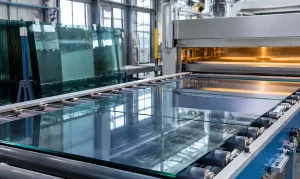
Tempered glass is four to five times stronger than standard annealed glass, making it essential for modern architecture. But even the highest-quality tempering cannot eliminate one silent threat: nickel sulfide (NiS) inclusions. These microscopic impurities can cause tempered glass to shatter spontaneously months or years after installation, without warning. Heat soak testing (HST) is the only proven method to identify and eliminate these unstable panels before they reach your building.
What Is Heat Soak Testing?
Heat soak testing is a quality control process that exposes tempered glass panels to 290°C (± 10°C) for minimum two hours to accelerate the phase transformation of nickel sulfide inclusions. Panels containing unstable NiS inclusions break during testing rather than after installation, eliminating the risk of unexpected field failures.

During tempering, glass is rapidly heated to 620°C and quickly cooled, creating surface compression that provides strength. However, nickel sulfide particles present in raw glass become trapped in a high-temperature alpha crystalline phase during rapid cooling. Over time, these NiS inclusions undergo phase transformation to beta phase, which occupies 4% more volume. This expansion creates internal tensile stress that can exceed the glass’s strength, causing sudden fracture into small cube-shaped fragments.
The Real Cost of Spontaneous Breakage
Without heat soak testing, tempered glass experiences 1 to 8 spontaneous fractures per 10,000 lites installed, according to Glass Association data. The consequences include safety hazards from falling glass, replacement costs requiring scaffolding and specialized equipment, liability exposure, building disruption, and reputation damage.

One Shanghai curtain wall project required emergency replacement when three panels spontaneously fractured within six months. Total cost exceeded ¥850,000 ($120,000 USD), more than 15 times the original panel cost.
The Heat Soak Testing Process
Heat soak testing follows strict protocols defined in EN 14179-1:2016, the European standard serving as the global benchmark.
Pre-Test Preparation: After tempering, glass panels cool to ambient temperature and are inspected for defects. Panels are then loaded into specialized heat soak chambers with precise spacing.
Loading Configuration: Glass is positioned vertically with minimum 20mm gaps between panels, ensuring uniform heat distribution and unhindered airflow around all surfaces.
Heating Phase: Chamber temperature rises to 290°C (± 10°C). This temperature accelerates NiS phase transformation without approaching the annealing point (550°C), which would reduce surface compression.
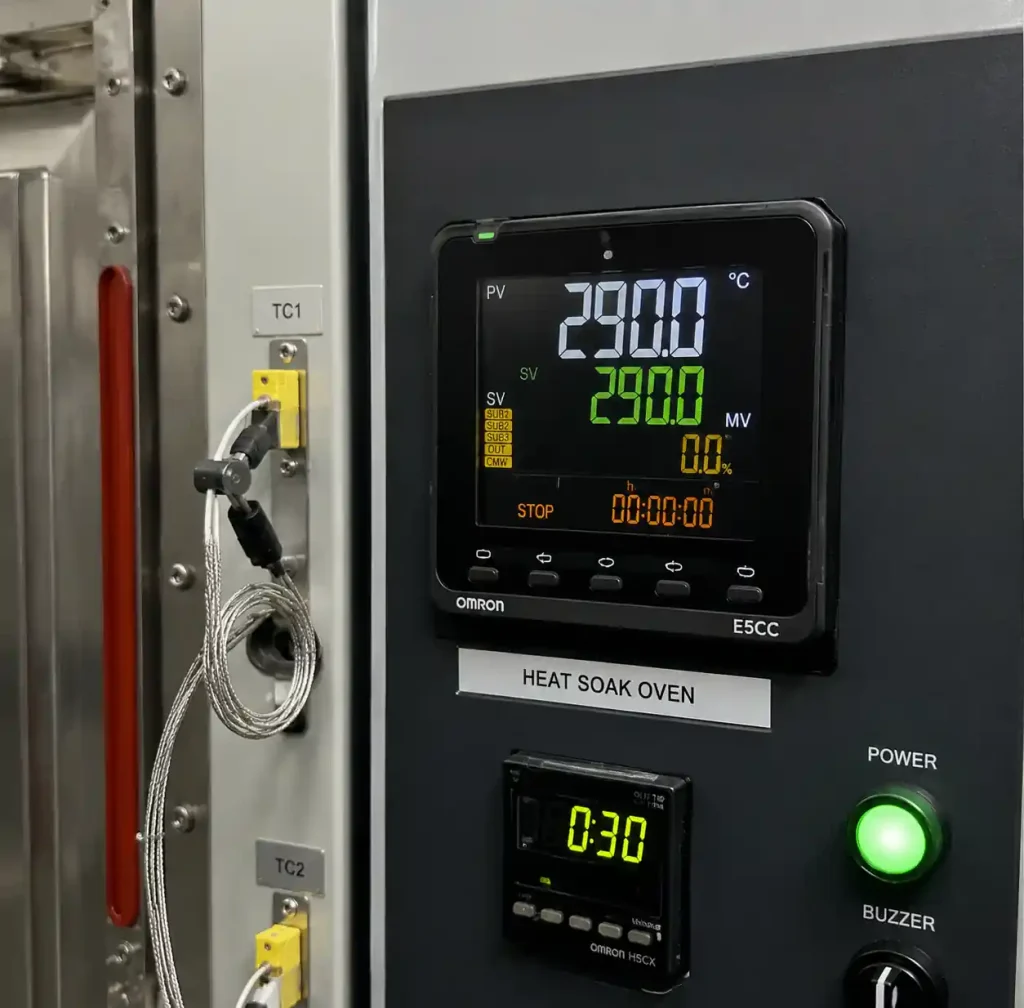
Soak Phase: Once all glass surfaces reach target temperature—verified through multiple sensors—the soak phase begins. The standard requires minimum two-hour dwell time at 290°C. Panels containing critical-size inclusions (typically >0.04mm diameter in the tensile zone) will fracture.
Cooling and Inspection: After soaking, the chamber gradually cools to prevent thermal shock. Broken panels are discarded and replaced with panels undergoing the same cycle. Only surviving panels are certified as heat soaked.
Effectiveness and Limitations
Heat soak testing significantly reduces spontaneous breakage risk but doesn’t eliminate it entirely. Research by Kasper and Bordeaux found only 40% of NiS inclusions causing breakage during heat soak testing would cause failures in installed facades at ambient temperatures.
| Factor | With Heat Soak Testing | Without Heat Soak Testing |
|---|---|---|
| Spontaneous breakage risk | Reduced by 90-95% | 1-8 failures per 10,000 lites |
| Field failure rate | <0.1 per 10,000 lites | 1-8 per 10,000 lites |
| Cost premium | +15-25% over non-HST | Baseline |
| Lead time addition | +3-7 days | Baseline |
Only one-quarter of NiS inclusions in raw glass lead to breakages during heat soak testing. Size, location within glass thickness, and specific composition affect breakage probability. Large NiS inclusions in the tensile zone (center third of glass thickness) pose highest risk and are most reliably detected.

When to Specify Heat Soak Testing
Not every tempered glass application requires heat soak testing. Base decisions on risk assessment considering safety consequences, replacement difficulty, and project risk tolerance.
Applications Where HST Is Essential:
- Overhead glazing: Skylights, canopies, and glass roofs where falling glass poses injury risk
- High-rise curtain walls: Exterior glazing above three stories where spontaneous breakage creates falling glass hazards
- Inaccessible installations: Glass in locations where replacement would be extremely difficult, such as double-skin facades or sealed cavities
- High-consequence environments: Hospitals, schools, transportation terminals where glass failure creates significant safety issues
Applications Where HST May Be Optional:
- Ground-level storefronts where replacement is straightforward
- Interior partitions with limited breakage consequences
- Low-rise residential projects where statistical risk may not justify cost premium
At Zhongbo Glass, we produce tempered glass panels up to 3660mm × 28000mm with heat soak capability up to 3660mm × 24000mm. For projects like Shanghai Museum East Hall with 12.4-meter glass ribs, heat soak testing was non-negotiable.
Cost-Benefit Analysis
Heat soak testing adds 15-25% to tempered glass cost, translating to $8-12 per square meter for typical mid-rise curtain wall projects.
| Cost Component | Heat Soak Testing (Per m²) | Post-Installation Replacement (Per m²) |
|---|---|---|
| Glass material | $50-80 | $50-80 |
| HST premium | $8-12 | $0 |
| Original installation | $40-60 | — |
| Replacement installation | — | $120-200 |
| Building access/scaffolding | — | $80-150 |
| Disruption/downtime | — | $30-100 |
| Total | $98-152 | $280-530 |
The economic case strengthens when considering liability exposure and reputation risk. A single spontaneous breakage incident can generate legal costs and insurance claims far exceeding heat soak testing costs for entire projects.

Compliance and Standards
Heat soak testing standards vary by region, creating challenges for international projects.
Europe: EN 14179-1:2016 is mandatory, specifying temperature (290°C ± 10°C), dwell time (minimum 2 hours), and spacing requirements (20mm minimum). Manufacturers must maintain factory production control records.
North America: No ASTM or ANSI standard exists. Many projects reference EN 14179-1 by specification. Some jurisdictions require heat soak testing for overhead glazing through building codes.
Asia: China’s GB 15763.2 includes heat soak requirements aligned with EN 14179. Other Asian markets typically reference European standards.
Middle East: Most GCC countries accept EN 14179-1 certification. Projects like our Riyadh Airport H Concourse required full EN 14179-1 compliance.

A 2025 UK regulatory review found high non-compliance rates in heat soaked glass manufacturing, highlighting the importance of working with certified manufacturers maintaining proper factory production control systems.
Quality Control Verification
Common quality issues include insufficient dwell time, poor air circulation, and temperature deviations. Request from your supplier: heat soak certification, temperature monitoring records, chamber calibration certificates, factory production control documentation, and breakage records.

At Zhongbo Glass, our two heat soak lines (up to 3660mm × 24000mm) feature multiple temperature sensors, automated controls, and continuous data logging. Every panel includes certification with full traceability.
Complementary Strategies
Complementary strategies can further reduce risk: source material control minimizes nickel contamination, proper edge grinding eliminates stress points, thermal stress management through design reduces triggering conditions, and heat-strengthened glass alternatives offer lower NiS susceptibility with some strength trade-offs.

Real-World Case Study
The 260-meter Tencent Cloud Tower curtain wall in Shenzhen used 12mm+1.52SGP+12mm+1.52SGP+12mm Low-E laminated tempered glass up to 7673mm × 3013mm. The project mandated 100% heat soak testing.
During testing of 847 panels, seven units (0.8% failure rate) spontaneously fractured—consistent with industry experience for high-quality float glass. Had these seven panels not been identified before installation, they could have failed anytime during the building’s lifespan, each requiring replacement at approximately $18,000 per unit including installation.
The heat soak testing premium was approximately $65,000. Replacing even four panels post-installation would have exceeded $72,000—excluding liability claims, tenant disruption, or reputation damage.
Frequently Asked Questions
How much does heat soak testing increase glass lead time?
Typically 3-7 days beyond standard tempered glass lead times, including the 2+ hour soak cycle plus heating/cooling time, chamber loading/unloading, and replacement of broken panels.
Can heat soak testing be performed on-site after installation?
No. The process requires specialized furnaces with precise temperature control and must be completed before installation.
Does heat soak testing affect glass strength or optical quality?
No. The 290°C temperature is well below the annealing point, so surface compression remains unchanged. Optical properties are unaffected.
Is heat soak testing required by building codes?
Requirements vary by jurisdiction. Many locations mandate HST for overhead glazing. Even where not required, specifying HST for high-consequence applications is considered professional standard of care.
What happens to panels that break during heat soak testing?
Broken panels are discarded and replacements are fabricated and heat soak tested. The cost is absorbed by the glass processor as part of manufacturing.
Can laminated glass eliminate the need for heat soak testing?
No. Lamination prevents glass fragments from falling but doesn’t prevent spontaneous breakage itself. For overhead or curtain wall applications, laminated tempered glass that has been heat soaked provides both breakage prevention and fragment retention.
Conclusion
Heat soak testing represents a 15-25% premium on tempered glass cost that eliminates the primary cause of spontaneous tempered glass failure. For applications where unexpected glass breakage poses safety risks, creates difficult replacement logistics, or exposes stakeholders to liability, heat soak testing is essential risk management.
The economics are straightforward: preventing a single field failure through heat soak testing pays for testing an entire small project. The safety case is even more compelling: eliminating falling glass hazards in occupied buildings protects both building users and your professional reputation.
At Zhongbo Glass, our heat soak capabilities up to 3660mm × 24000mm and commitment to EN 14179-1 compliance give architects and contractors confidence that their tempered glass will perform safely throughout the building’s service life. For projects where glass failure is not an option, heat soak testing is the proven solution.
Ready to specify heat soaked tempered glass for your next project? Contact our technical team to discuss your requirements and receive detailed specifications for our heat soak tested tempered glass products.