After 18 years managing glass installations across commercial towers, museums, and glass bridges, I’ve learned that “how long does architectural glass last?” has no single answer. At Zhongbo Glass, we’ve tracked performance data from projects like the Zhangjiajie Grand Canyon Glass Bridge to high-rise curtain walls in harsh climates, documenting exactly what determines whether glazing systems last 15 years or 50 years.

Architectural Glass Lifespan by Type
Glass substrates last centuries, but glazing systems fail much earlier. Here’s what determines replacement cycles:
| Glass Type | Typical Lifespan | Primary Failure Mode | Warranty Period |
|---|---|---|---|
| Tempered Glass (monolithic) | 25-40 years | Spontaneous breakage (NiS), edge damage | 5-10 years |
| Laminated Glass (PVB) | 20-30 years | Interlayer yellowing, delamination | 10-15 years |
| Laminated Glass (SGP) | 30-50 years | Edge seal degradation | 15-20 years |
| Insulated Glass Units (IGU) | 15-25 years | Seal failure, fogging | 5-20 years |
| Low-E Coated Glass | 20-30 years | Coating degradation, discoloration | 10-15 years |
| Fire-Resistant Glass | 25-35 years | Interlayer degradation, seal failure | 10-15 years |
Key Factors Affecting Glass Longevity
Climate and Environmental Exposure
Location dramatically impacts performance. Low-E IGUs lasting 30 years in mild climates might fail in 12 years in Phoenix due to thermal stress and UV exposure.
Coastal environments show 40% higher IGU seal failure rates within 5km of coastlines. High-altitude installations above 1,500m experience 15-20% shorter PVB laminated glass life. Thermal stress from temperature differentials causes premature failure—dark spandrel glass adjacent to vision glass fails 3-5 years earlier.
Installation Quality
Poor installation shortens service life more than environmental factors. Insufficient edge clearance (under 6mm) accounts for 30% of premature tempered glass breakage. Incomplete sealant application allows moisture ingress. Incorrect setting block placement reduces glass strength by 20-30%.
Maintenance Practices
Abrasive cleaners scratch Low-E coatings, reducing performance by 15-25%. Use only pH-neutral cleaners with microfiber cloths. Check sealant annually—reseal before gaps exceed 1-2mm. Verify weep holes remain clear to prevent standing water.

Insulated Glass Units: The Weak Link
IGUs dominate commercial glazing but introduce failure modes monolithic glass never experiences.
Seal Degradation Mechanisms
Primary seal (PIB) provides vapor barrier protection. UV exposure breaks down molecular chains—south and west facades show 30% higher failure rates. Thermal cycling work-hardens PIB, causing cracks 5-7 years earlier in buildings with dark glass.
Secondary seal (silicone/polysulfide) provides structural strength. Contaminated edges prevent proper bonding—40% of premature failures trace to installation issues. Polysulfide seals last 15-20 years; silicone lasts 25-30 years but costs 30-40% more.
| IGU Configuration | Expected Seal Life | Replacement Trigger |
|---|---|---|
| Aluminum spacer + polysulfide | 15-20 years | Visible fogging |
| Aluminum spacer + silicone | 20-25 years | Edge condensation |
| Warm-edge spacer + silicone | 25-30 years | Argon gas loss |
| Structural silicone glazing | 25-35 years | Adhesion testing shows degradation |
Low-E Coating Degradation
Low-E coatings transform glass into energy-efficient envelopes but require protection.

Pyrolytic (hard coat) bonds to glass at high temperature, creating durable surfaces lasting 30+ years. Sputtered (soft coat) achieves superior performance but requires IGU cavity protection—exposed soft coatings degrade in 2-5 years.
After 15 years in harsh climates, coatings show 8-12% SHGC increase, 5-10% U-value increase, and 3-5% VLT reduction. For 10,000m² curtain walls, a 10% SHGC increase costs $15,000-$35,000 annually in extra cooling.
Laminated Glass Interlayer Longevity
Polymer interlayers determine laminated glass performance over decades.
PVB (Polyvinyl Butyral) dominates specifications but absorbs moisture, causing edge delamination progressing 2-5mm yearly in humid climates. After 20 years in coastal areas, 60% of PVB installations show edge whitening. UV exposure causes yellowing reducing VLT by 5-15% after 25-30 years. Moisture-saturated PVB loses 40-60% interlayer shear capacity.
SGP (Ionomer Interlayers) cost 50-80% more but deliver superior longevity. SGP absorbs 10× less moisture, eliminating edge delamination. After 15 years in tropical climates, SGP shows zero edge whitening while PVB shows 15-25mm delamination. SGP maintains 85-90% initial shear capacity after 30 years versus 40-60% for PVB.
At Zhongbo Glass, we manufacture laminated glass with PVB and SGP up to 4,200mm × 28,000mm in our 4.2m × 28m autoclave—the world’s largest. For projects requiring 30+ year service life, SGP justifies its premium.

Factors That Accelerate Glass Aging
Thermal Stress and Breakage
Glass expansion from solar absorption creates tensile stress at edges. When stress exceeds glass strength, spontaneous breakage occurs.
High-risk configurations: Dark ceramic frit or spandrel glass, partial shading, interior insulation near edges, and Low-E coatings on wrong surface. We calculate thermal stress for every project—facades with stress above 75% of glass strength get heat-strengthened or tempered glass.
Nickel Sulfide Inclusions
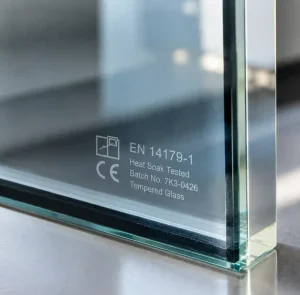
NiS contamination creates inclusions that expand over time, spontaneously fracturing tempered glass. Industry breakage rates run 1-8 pieces per 1,000 panels over 10 years.
Heat soak testing at 290°C for 2-8 hours triggers inclusions that would fail in service, reducing field breakage by 85-95%. For glass bridges, overhead glazing, and unprotected railings, heat soak testing is essential.
Chemical Attack
Concrete mortar splash etches glass permanently—protect edges during pours. Acid rain from pollution etches glass over decades. Ammonia cleaners attack Low-E coatings. Train cleaning staff on approved products only.
Maintenance Best Practices for Maximum Lifespan
Strategic maintenance extends service life by 30-50% compared to neglected installations.

Inspection Schedule
Annually: Visual inspection for edge seal degradation, delamination, sealant cracking, hardware corrosion, and drainage weep hole verification.
Every 5 years: Professional structural assessment for overhead glazing and glass floors, IGU moisture testing, Low-E coating performance verification.
After severe weather: Inspect within 48 hours for impact damage or seal compromise after hurricanes, hail, or extreme temperature swings.
Cleaning Protocol
Clean exterior glass every 3-6 months in urban/coastal areas, annually in rural locations. Pre-rinse with water, apply pH-neutral cleaner (dish soap 1:100), scrub gently with microfiber cloth, squeegee thoroughly, dry edges to prevent mineral buildup.
Never use: Abrasive pads, razor blades on coated surfaces, ammonia cleaners on Low-E glass, or high-pressure washers above 500 psi near edges.
Preventive Replacement Strategy
Replace IGUs when: Condensation appears between panes, Argon loss confirmed, or edge seal shows gaps over 2mm.
Replace laminated glass when: Edge delamination exceeds 50mm, yellowing reduces VLT over 10%, or shear capacity loss exceeds 40%.
Replace tempered glass when: Edge spalls exceed 6mm, surface damage penetrates compression layer, or thermal stress risk is too high.
Warranty Reality vs. Service Life
Manufacturer warranties cover defects, not normal aging. Most quality manufacturers offer:
- Tempered glass: 5-10 years against spontaneous breakage (if heat soaked)
- Laminated glass: 10-15 years against delamination exceeding limits
- IGUs: 5-20 years against seal failure causing fogging
- Low-E coatings: 10-15 years against coating delamination or performance loss over 10%
What Warranties Don’t Cover
Common exclusions include improper installation damage, thermal stress breakage, unapproved cleaning products, environmental damage from salt spray or pollution, and normal aging within tolerances.
Pro tip: Photograph installations at completion for future warranty claims. Documentation proves initial condition when issues arise years later.

Making Glass Last: Design Decisions That Matter
Longevity starts in design. Choose SGP-laminated glass for exterior applications in humid climates and installations requiring 30+ year service life. Specify warm-edge spacers for IGUs in zones with over 30°C temperature range—improves seal life by 5-8 years. Select hard-coat Low-E for surface #1 applications where durability outweighs performance.
Shading devices reduce glass temperature by 15-25°C, lowering thermal stress. Ventilated cavities in double-skin facades moderate temperatures, reducing thermal cycling by 40-60%. Deeper frame rabbets (25mm vs. 15mm) shield edge seals from UV, extending IGU life 3-5 years with zero cost increase.
When to Replace vs. Repair
Repair-worthy conditions: Localized IGU edge seal degradation can be resealed, extending life 5-10 years at 30-40% of replacement cost. Light surface scratches polish out with cerium oxide. Perimeter sealant replacement costs 10-15% of full replacement.
Replace immediately when: Any crack or chip exceeds 6mm, IGU condensation appears, or overhead glazing shows over 30% interlayer degradation.
FAQ
How long does tempered glass last in commercial buildings?
Tempered glass typically lasts 25-40 years. The glass substrate doesn’t degrade, but edge damage, thermal stress, and nickel sulfide inclusions can cause breakage. Heat-soaked tempered glass with proper installation often reaches the upper range.
What causes insulated glass units to fail?
IGU failure stems from seal degradation allowing moisture penetration. UV exposure breaks down PIB vapor barrier, thermal cycling work-hardens sealants, and contaminated edges prevent proper adhesion. Desiccant saturates 6-18 months after primary seal fails, causing visible fogging.
Does laminated glass degrade over time?
Yes, interlayers degrade through moisture and UV exposure. PVB shows edge delamination and yellowing after 20-30 years in humid climates. SGP resists degradation better, maintaining clarity and structural performance for 40+ years.
How often should architectural glass be inspected?
Annual visual inspections suffice for most installations. Conduct professional structural assessments every 5 years for overhead glazing and glass floors. Inspect within 48 hours after severe weather for damage or seal compromise.
Can Low-E coating wear off glass?
Soft-coat Low-E exposed to weathering degrades within 2-5 years. Protected soft-coat in IGU cavities lasts 25-30 years with gradual performance loss. Hard-coat pyrolytic Low-E maintains performance for 30+ years.
What’s the difference between warranty period and actual lifespan?
Warranties cover manufacturing defects for 5-20 years, while actual service life extends 25-50 years. Warranties don’t cover normal aging, installation errors, or environmental damage. Properly maintained glass significantly outlasts warranty coverage.
Should I replace all IGUs at once or individually as they fail?
Individual replacement works for scattered failures in small facades. For large curtain walls with IGUs approaching 20-25 years old, phased replacement prevents emergency repairs and achieves consistent appearance.
Conclusion
Architectural glass longevity depends on material selection, installation quality, environmental exposure, and maintenance. While tempered glass substrates last 25-40 years, IGU seal failure typically drives replacement at 15-25 years. Laminated glass spans 20-50 years depending on interlayer and climate.
Installations achieving maximum service life share common traits: appropriate glass for application and climate, professional installation with verified edge clearances, and routine maintenance with approved methods. Design choices like warm-edge spacers, protective shading, and SGP interlayers add 30-50% to service life for minimal cost.
At Zhongbo Glass, our capabilities—including the world’s largest autoclave at 4.2m × 28m and tempered glass up to 3,660mm × 28,000mm—enable long-lasting systems for demanding applications. Whether your project involves glass bridges, curtain walls, or custom glazing, understanding longevity factors ensures decades of performance.
Contact our technical team for performance data, thermal stress analysis, and lifecycle cost comparisons tailored to your application and climate.