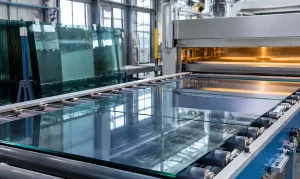
Thermal stress breakage accounts for approximately 10-15% of all tempered glass failures in commercial buildings, leading to costly replacements, project delays, and safety concerns. Unlike impact breakage or manufacturing defects, thermal stress occurs when temperature differentials across the glass surface exceed the material’s tolerance, causing spontaneous fracture.
If you want to prevent thermal stress breakage in your architectural glass projects, you need to understand the root causes, recognize high-risk conditions, and implement proven prevention strategies during design, fabrication, and installation. This guide provides technical solutions based on engineering standards and real-world manufacturing experience to help architects, engineers, and glazing contractors minimize thermal stress risks.
What Is Thermal Stress in Tempered Glass?
Thermal stress occurs when different areas of a glass pane experience significant temperature differentials, creating internal tensile stresses that can exceed the glass’s strength. Tempered glass is manufactured by heating glass to approximately 620°C and rapidly cooling it, creating a surface compression layer of approximately 10,000 psi.

When the glass center heats faster than edges—such as sunlight hitting the center while edges remain shaded—differential expansion creates additional tensile stress. If this combines with edge imperfections or nickel sulfide (NiS) inclusions, spontaneous breakage can occur.
The critical threshold typically occurs when temperature differentials exceed 40-50°C (72-90°F) across the glass surface. According to ASTM C1048, tempered glass withstands thermal stress better than annealed or heat-strengthened glass, but proper design and installation remain essential.
Primary Causes of Thermal Stress Breakage
Understanding technical causes helps you identify and mitigate risks during project planning.
Temperature Differential Across Glass Surface
The most common cause involves uneven heating where the glass center reaches significantly higher temperatures than edges. This occurs when the center absorbs solar radiation while edges remain shaded by frames or shading devices.
Each 1°C temperature difference creates approximately 0.7 MPa of stress. When differentials exceed 40-50°C, induced stress approaches edge strength of tempered glass, particularly if edge quality is compromised.

Nickel Sulfide (NiS) Inclusions
Nickel sulfide inclusions are microscopic crystalline impurities that form during glass melting. These inclusions undergo phase transformation, expanding by approximately 2-4% in volume. This expansion creates localized tensile stress in the tempered glass center, potentially causing spontaneous breakage months or years after installation.
NiS inclusions occur randomly at rates of approximately 1 in every 400-500 tons of glass production. Heat soak testing specifically addresses this risk.
Edge Quality and Damage
The edges of tempered glass represent the weakest points because tempering creates maximum surface compression at flat surfaces, while edges receive less compression. Edge chips or poor-quality edge grinding create stress concentration points where thermal stress initiates cracks.
| Edge Defect Type | Stress Concentration Factor | Risk Level |
|---|---|---|
| Clean ground edge | 1.0x | Low |
| Minor edge chip (<2mm) | 2-3x | Medium |
| Significant chip (>2mm) | 4-6x | High |
| Shell or crack | 8-10x | Critical |
Shading Patterns
Fixed or movable shading devices—including mullions, framing systems, interior blinds, or exterior sun screens—create temperature differentials by blocking sunlight on portions of glass while leaving other areas exposed. The shadow line becomes a critical stress zone.
Building elements such as overhangs, adjacent structures, or signage create similar effects. Dark-colored frame systems absorb more heat and transfer it to glass edges.

Absorptive Coatings and Tinted Glass
Low-E glass and tinted glass absorb more solar radiation than clear glass, converting it to heat. When glass edges are trapped in frames with poor ventilation, heat accumulates and creates temperature differentials.
Double-silver Low-E coatings can absorb 20-30% of solar radiation, significantly increasing glass temperature. While these coatings provide excellent energy performance, they require thermal stress analysis.
Heat Soak Testing: The Most Reliable Prevention Method
Heat soak testing (HST) is the industry-standard method for eliminating nickel sulfide-related spontaneous breakage risk. This process subjects tempered glass to a controlled thermal cycle that accelerates NiS phase transformation, causing affected glass to break in the factory rather than after installation.
The Heat Soak Process
Tempered glass panels are heated to 290°C ± 10°C for minimum 2 hours according to EN 14179-1. This temperature accelerates phase transformation of any NiS inclusions present.
The process reduces spontaneous breakage risk from approximately 1 in 400 tons to less than 1 in 3,000 tons—a 90-95% risk reduction. However, heat soak testing does not prevent thermal stress from temperature differentials, edge damage, or installation issues.

Standards and Certification
Key heat soak testing standards:
- EN 14179-1: European standard specifying 290°C for 2 hours minimum
- ASTM C1048: References heat soak testing for safety glazing
- GB 15763.2: Chinese standard for heat-soaked tempered glass
Zhongbo Glass operates heat soak furnaces with capacities up to 3660mm × 24000mm, accommodating jumbo-size panels with precise temperature control.
Cost-Benefit Analysis
Heat soak testing adds 15-25% to tempered glass costs but eliminates the most unpredictable failure mode. For high-risk applications—overhead glazing, difficult-to-access installations, or critical operations—the investment provides substantial risk mitigation.
| Application Type | Heat Soak Recommendation | Justification |
|---|---|---|
| Overhead glazing, skylights | Mandatory | Safety critical, difficult replacement |
| Glass floors, bridges | Mandatory | Life safety, structural criticality |
| High-rise curtain walls (>20 floors) | Strongly recommended | Access difficulty, replacement costs |
| Commercial storefronts | Optional | Easier replacement, lower risk |
| Interior partitions | Rarely needed | Low safety risk, easy access |
Edge Quality and Fabrication Standards
Edge treatment quality directly impacts thermal stress resistance. Poor edge work creates micro-cracks that serve as stress initiation points.
Edge Treatment Types
Tempered glass edges must be finished before tempering. Standard treatments:
Ground edge: Removes sharp arris and provides adequate strength.
Polished edge: Provides superior strength through additional polishing, offering approximately 20-30% higher strength.
Seamed edge: Minimum treatment. Not recommended for thermal stress applications.
Pre-Tempering Inspection
Before tempering, inspect for edge defects. Edge chips deeper than 3mm must be rejected, corner chips affecting more than 10mm require rework, and sharp tool marks need removal.
Quality control at this stage prevents 30-40% of potential failures. Zhongbo Glass employs automated edge inspection to ensure quality before tempering.

Post-Tempering Edge Protection
After tempering, edges remain vulnerable to impact damage. Edge protection using vinyl, foam, or rubber guards prevents chips during logistics. Damaged edges cannot be repaired.
Installation Best Practices
Proper installation prevents thermal stress by ensuring adequate edge clearance, proper support, and avoiding stress concentration.
Adequate Edge Clearance
Glass must have sufficient clearance in framing systems to accommodate thermal expansion. Thermal expansion coefficient for soda-lime glass is approximately 9 × 10⁻⁶ per °C.
Minimum clearance:
- 3mm for glass up to 1.5m
- 5mm for glass 1.5m to 3.0m
- 7mm for glass exceeding 3.0m
Inadequate clearance causes edges to press against frames during expansion, initiating breakage.
Setting Block Placement
Setting blocks support glass weight and must be positioned at quarter points of glass width, not at corners where stress concentrates. Block material must be non-porous to prevent water retention. EPDM or neoprene blocks with Shore A hardness of 50-70 provide optimal support.

Bite Depth and Edge Cover
Frame bite depth affects thermal behavior. Optimal depth balances structural and thermal considerations:
Minimum bite: 12-15mm for structural adequacy
Maximum bite: 25-30mm to avoid excessive edge shading
Edge cover: Minimize opaque frame overlap to reduce shading
Avoiding Edge Damage During Installation
Handle tempered glass carefully—minor edge chips become failure points under thermal stress. Use suction cups positioned away from edges, never drag glass across rough surfaces, avoid metal-to-glass contact, and inspect edges before installation.
Environmental Risk Factors
Certain environmental conditions significantly increase thermal stress probability. Recognizing these factors during design allows for preventive specification.
Climate and Solar Exposure
High solar exposure climates—particularly desert, tropical, and high-altitude locations—create larger temperature differentials. South-facing (Northern Hemisphere) and north-facing (Southern Hemisphere) facades receive maximum solar radiation. East and west facades experience intense low-angle sun.
Building Orientation and Altitude
Building orientation determines which facades experience peak solar loading. Sun angle analysis helps identify high-risk facades.

High-altitude installations (above 1,500 meters) experience more intense solar radiation, increasing glass temperatures. Rapid seasonal temperature changes create transient thermal stresses. Cold overnight temperatures followed by intense morning sun can create critical conditions.
Design Strategies to Minimize Risk
Proactive design strategies reduce thermal stress risk without sacrificing architectural intent.
Minimize Shading Patterns
Design framing systems to avoid sharp shadow lines. Use structural silicone glazing to eliminate frame projections, select lighter frame colors, and avoid attaching signage or brackets to glass surfaces.
Provide Edge Ventilation
Ensure adequate air circulation at glass edges to dissipate heat. Pressure-equalized rainscreen systems with weep holes provide natural convection cooling. For insulated glass units, specify Low-E coatings on surface 2 or 3 to minimize heat trapping.
Select Appropriate Glass Specifications
Clear glass vs. tinted: Clear glass absorbs less radiation (5-10%) compared to tinted glass (20-50%).
Low-E coating selection: Specify low-solar-gain coatings to minimize heat accumulation.
Heat-strengthened vs. tempered: Heat-strengthened offers 2x strength but lower thermal stress resistance.

Calculate Thermal Stress Risk
Engineering analysis using ASTM E1300 can predict thermal stress levels. Analysis considers glass properties, geographic location, building orientation, shading devices, and frame characteristics. Professional analysis costs $500-$2,000 per facade but prevents expensive failures.
When to Specify Heat-Soaked Glass
Heat-soaked tempered glass should be specified for:
Mandatory applications:
- All overhead glazing (skylights, canopies, atriums)
- Glass floors and walking surfaces
- Glass bridges and elevated walkways
- Structural glass fins and beams
Strongly recommended:
- Large-format panels (>3m²)
- Tinted or absorptive glass in high solar exposure
- High-rise curtain walls above 15 floors
Zhongbo Glass manufactures heat-soaked tempered glass in sizes up to 3660mm × 24000mm, providing NiS-related breakage risk reduction while maintaining strength and safety characteristics.

FAQs
Can thermal stress breakage be completely eliminated?
Thermal stress risk can be minimized to very low levels but not entirely eliminated. Heat soak testing addresses NiS inclusions, proper edge quality prevents stress concentration, and careful design reduces temperature differentials. Combined strategies reduce risk by 90-95%.
What is the difference between thermal stress breakage and spontaneous breakage?
Thermal stress breakage results from temperature differentials creating mechanical stress. Spontaneous breakage refers to NiS inclusion failures occurring without external loading. Heat soak testing prevents spontaneous NiS breakage but does not prevent thermal stress from external heating.
How do you calculate the thermal stress risk for a specific project?
Thermal stress analysis requires engineering calculations considering glass properties, environmental factors, shading patterns, and frame characteristics. Software tools following ASTM E1300 or EN standards model expected temperatures and stress levels. Professional structural glazing engineers perform these analyses.
Does Low-E glass increase thermal stress risk?
Low-E glass absorbs more solar radiation than clear glass, increasing glass temperature and thermal stress risk in high solar exposure applications. However, proper coating surface selection, adequate edge ventilation, and careful frame design mitigate this risk while maintaining energy performance.
What are the visual signs of thermal stress breakage?
Thermal stress breakage originates at the glass edge (often near a corner) rather than center. The fracture pattern shows straight cracks perpendicular to the edge with a “half-moon” or “kidney-shaped” origin. This differs from impact breakage (butterfly pattern at impact point) or NiS breakage (originating from glass center).
How much does heat soak testing add to project costs?
Heat soak testing increases tempered glass costs by 15-25%, translating to approximately $12-$20 per square meter for commercial curtain wall projects. When evaluated against replacement costs (glass, labor, access equipment, and business disruption), heat soak testing provides strong cost-benefit justification for high-risk applications.
Are there alternatives to heat soak testing?
No proven alternative exists for eliminating NiS inclusion risk. Some manufacturers use higher-quality raw materials with lower nickel content, reducing but not eliminating probability. Chemical strengthening works for smaller panels but is not practical for architectural glazing. Heat soak testing remains the only validated solution for near-zero spontaneous breakage risk.
Conclusion
Preventing thermal stress breakage requires addressing design, fabrication, and installation factors. Heat soak testing eliminates NiS-related breakage, while edge quality control, proper installation, and thoughtful facade design minimize temperature differential stress.
For critical applications—overhead glazing, structural glass, and difficult-to-access installations—heat-soaked tempered glass provides essential risk mitigation. Combined with thermal stress analysis and quality-controlled fabrication, architects can confidently specify large-format tempered glass while minimizing failure risks.
If you need high-quality tempered glass with heat soak testing for your project, Henan Zhongbo Glass offers world-class manufacturing with capacity up to 18 meters. Our facility features dedicated heat soak furnaces (3660mm × 24000mm capacity), advanced edge grinding systems, and rigorous quality control ensuring superior thermal stress resistance. We have successfully supplied tempered glass for glass bridges, high-rise curtain walls, and overhead glazing projects.
Contact us today for technical specifications, thermal stress analysis support, and competitive factory-direct pricing.