UV radiation causes an estimated 40% of fading and deterioration in museum artwork. Light-sensitive materials like watercolors, textiles, and photographs suffer irreversible damage within months of unprotected exposure. This guide examines museum-quality glazing specifications, UV-filtering interlayer technologies, laminated glass configurations, and architectural glass solutions for display cases and skylights.
What Is Museum-Quality Glazing?
Museum-quality glazing is specialized glass designed to protect artwork from ultraviolet radiation, visible light damage, and physical impact while providing exceptional optical clarity. The glass typically blocks 99% or more of UV radiation (300-380nm) and incorporates anti-reflective coatings that reduce surface reflection to less than 1%, compared to 8% in standard annealed glass.
You can specify laminated glass with UV-filtering PVB or SGP interlayers where both protection and safety are critical. The laminated construction prevents glass fragments from falling onto artwork if breakage occurs, while the interlayer absorbs harmful UV radiation.

UV Radiation and Art Deterioration
Understanding UV Damage Mechanisms
Ultraviolet radiation accelerates photochemical reactions in organic materials, breaking molecular bonds in pigments, dyes, paper fibers, and textiles. Damage is cumulative and irreversible—once a watercolor fades or a photograph yellows, deterioration cannot be reversed.
UV Radiation Categories:
- UVA (315-380nm): 95% of UV reaching Earth’s surface, penetrates standard glass
- UVB (280-315nm): More damaging but largely blocked by atmosphere and standard glass
- UVC (100-280nm): Completely absorbed by atmosphere, not a concern
Standard annealed glass blocks most UVB but transmits 60-70% of UVA radiation. This partial protection is insufficient for long-term art conservation.
Material-Specific Vulnerability
| Material Type | UV Sensitivity | Visible Damage Timeline | Protection Priority |
|---|---|---|---|
| Watercolors & Works on Paper | Extremely High | 3-6 months | Critical – 99%+ UV blocking |
| Textiles & Dyes | Very High | 6-12 months | Critical – 99%+ UV blocking |
| Oil Paintings (Modern) | Moderate-High | 2-5 years | High – 99% UV blocking |
| Photographs (Color) | Extremely High | 6-12 months | Critical – 99%+ UV blocking |
| Acrylic Paintings | Moderate | 5-10 years | Moderate – 95%+ UV blocking |
| Bronze & Stone Sculpture | Low | Minimal | Low – UV not critical |
The International Institute for Conservation recommends illumination below 50 lux for highly sensitive materials and below 150-200 lux for oil paintings. UV-filtering glazing must be combined with controlled lighting systems.

Museum Glazing Specifications
UV Transmission Requirements
Conservation-grade glazing must block at least 97% of UV radiation, with premium museum glass achieving 99% UV filtration per ASTM G173 or ISO 9050.
Standard Glazing UV Performance:
- Clear annealed glass: 60-70% UV transmission (insufficient)
- Standard laminated glass (clear PVB): 40-50% UV transmission (inadequate)
- UV-filtering PVB laminated glass: 1-3% UV transmission (conservation-grade)
- Museum-grade laminated glass: <1% UV transmission (premium protection)
Zhongbo Glass manufactures laminated glass with specialized UV-filtering PVB achieving 99%+ UV blocking while maintaining 90-92% visible light transmission.

Optical Clarity and Anti-Reflective Properties
| Glass Type | Surface Reflection | Viewing Experience | Museum Application |
|---|---|---|---|
| Standard Clear Glass | 8% per surface (16% total) | High glare, poor visibility | Not recommended |
| Anti-Reflective Coated Glass | <1% per surface (<2% total) | Exceptional clarity | Premium framing and display cases |
| Standard Laminated Glass | 8% per surface | Moderate glare | Overhead glazing only |
| Museum-Grade Laminated + AR | <1% reflection | Optimal clarity | Best for valuable artwork |
Anti-reflective coatings can be applied to tempered glass or laminated surfaces through magnetron sputtering, creating a graduated refractive index transition that reduces reflection across the visible spectrum.
Laminated Glass for Art Conservation
PVB Interlayer UV-Filtering Technology
Standard clear PVB transmits 40-50% of UV radiation, while specialized UV-filtering PVB grades incorporate UV-absorbing additives that capture UV energy before it reaches artwork.
UV-Filtering PVB Performance:
- Standard clear PVB (1.52mm): 40-50% UV transmission
- UV-filtering PVB (1.52mm): 1-3% UV transmission (99% blocking)
- Enhanced UV PVB (2.28mm): <0.5% UV transmission (>99.5% blocking)
Laminated Glass Configurations for Museums
Display Case Glazing: 6mm + 1.52mm UV-PVB + 6mm tempered laminated glass, 99%+ UV blocking, max size 2400mm × 3600mm.
Overhead Skylights: 10mm + 2.28mm UV-PVB + 10mm + 16A + 8mm insulated glass units, 99%+ UV blocking, U-value 1.4-1.6 W/m²K, max size 3660mm × 18000mm.
Large-Format Wall Glazing: 12mm + 2.28mm UV-PVB + 12mm + 2.28mm UV-PVB + 12mm triple-laminated, 99.5%+ UV blocking, max size 3660mm × 18000mm.
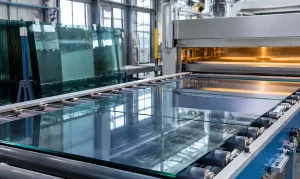
Zhongbo Glass manufactures museum-quality laminated glass up to 4200mm × 28000mm in our world’s largest autoclave (4.2m × 28m).

Architectural Glass Solutions for Museums
Gallery Skylight Design
Recommended Configuration:
- Outer lite: 10mm Low-E tempered glass
- Air space: 16mm argon-filled cavity
- Inner lite: 10mm + 2.28mm UV-PVB + 10mm tempered laminated glass
- Performance: U-value 1.4 W/m²K, SHGC 0.35-0.40, UV blocking 99%+
The Low-E coating reduces solar heat gain. The UV-filtering laminated inner lite blocks residual UV while providing safety protection. This delivers 60-70% VLT with <1% UV transmission.
Display Case and Frame Glazing
Frame Glazing Specifications:
- Glass type: 4mm + 1.52mm UV-PVB + 4mm laminated glass with AR coating
- UV blocking: 99%+, Reflection: <1%, Max size: 2400mm × 3600mm
For three-dimensional objects in freestanding cases, specify laminated glass on all viewing surfaces. The laminated construction prevents glass fragments from falling onto objects if accidental impact occurs.
Museum Curtain Wall Systems
Museum Curtain Wall Glazing:
- Outer lite: 12mm Low-E tempered glass
- Air space: 16mm argon-filled cavity with warm-edge spacer
- Inner lite: 12mm + 2.28mm UV-PVB + 12mm tempered laminated glass
- Performance: U-value 1.2-1.4 W/m²K, SHGC 0.28-0.35, UV blocking 99%+
- Max panel size: 3660mm × 18000mm
The Shanghai Museum East Hall project utilized this configuration with panels up to 7890mm × 2580mm.

Technical Standards and Testing
UV Transmission Testing
UV performance is verified through spectrophotometric testing per ASTM G173 or ISO 9050, measuring transmittance across 300-380nm wavelengths.
Testing Standards:
- ASTM G173: Reference Solar Spectral Irradiances
- ISO 9050: Determination of light transmittance and UV transmittance
- EN 410: Luminous and solar characteristics of glazing
Acceptance Criteria:
- Conservation-grade: Tuv ≤ 3% (97% UV blocking)
- Museum-grade: Tuv ≤ 1% (99% UV blocking)
- Premium museum-grade: Tuv ≤ 0.5% (99.5% UV blocking)
Safety and Structural Standards
Applicable Standards:
- ASTM E1300: Load Resistance of Glass
- EN 12543: Laminated glass and laminated safety glass
- ANSI Z97.1: Safety Glazing Materials
- ISO 12543: Laminated glass — Construction
For overhead skylights, specify laminated glass that retains fragments after breakage per CPSC 16 CFR 1201 Category II impact testing.

Manufacturing Capabilities for Museum Projects
Zhongbo Glass manufactures museum-quality laminated glass in sizes up to 4200mm × 28000mm.
Production Capabilities:
- Laminating: 4.2m × 28m autoclave (world’s largest)
- Tempering: 3.66m × 28m tempering line
- UV-filtering PVB: 1.52mm to 2.28mm thickness
- Daily capacity: 1500m²/24h for laminated glass
Quality Verification Process:
- Raw glass inspection: ±0.2mm thickness tolerance
- Interlayer verification: Confirm UV-filtering PVB grade
- Lamination monitoring: Autoclave temperature, pressure, duration
- UV transmission testing: Spectrophotometric verification
- Visual inspection: Bubbles, edge defects, distortion
- Dimensional verification: ±1.0mm for panels >10m²
Test reports accompany every museum glazing shipment.

Real-World Museum Applications
Shanghai Museum East Hall
The Shanghai Museum East Hall features structural glazing with museum-quality UV protection throughout the building envelope.
Project Specifications:
- Glass configuration: Multi-layer laminated with UV-filtering interlayers
- Maximum rib length: 12400mm × 700mm
- Maximum panel size: 7890mm × 2580mm
- UV blocking: 99%+
The jumbo-size glass ribs eliminated intermediate structural supports, creating uninterrupted sight lines throughout the exhibition spaces.
Conservation Case Studies
Museums with UV-filtering glazing demonstrate 90-95% less fading compared to standard glazing over 10-year periods. Laboratories measure color change using spectrophotometric delta-E testing. Museums with comprehensive UV protection report ΔE < 2.0 (perceptible threshold) for oil paintings over 5-10 years, compared to ΔE values of 8-15 for unprotected artwork.

FAQ
What percentage of UV radiation should museum glass block?
Museum-quality glazing should block at least 97% of UV radiation (300-380nm), with premium glass achieving 99%+ UV filtration per ASTM G173 or ISO 9050. Standard clear glass transmits 60-70% of UV radiation, which is insufficient for long-term conservation.
Can laminated glass provide adequate UV protection for museums?
Yes, with specialized UV-filtering PVB or SGP interlayers. Standard clear PVB transmits 40-50% of UV radiation, but UV-filtering grades block 99%+ while maintaining 90-92% visible light transmission. Zhongbo Glass manufactures museum-quality laminated glass up to 4200mm × 28000mm.
How does museum glass differ from standard Low-E glass?
Museum glass blocks UV radiation (300-380nm) to prevent fading, while Low-E glass reflects infrared radiation for thermal insulation. Museums require both technologies—UV-filtering laminated inner lite plus Low-E coated outer lite in insulated units, delivering 99% UV blocking and U-value 1.2-1.4 W/m²K.
What is the maximum size for museum-quality laminated glass?
Zhongbo Glass manufactures museum-quality laminated glass up to 4200mm × 28000mm in the world’s largest autoclave (4.2m × 28m), enabling seamless skylight and curtain wall installations.
Does UV-filtering glass affect color rendering?
Premium UV-filtering PVB maintains 90-92% visible light transmission with neutral color characteristics. Lower-quality materials may exhibit slight yellow tinting, but conservation-grade interlayers provide colorless UV protection without altering artwork appearance.
Conclusion
Museum and gallery glazing requires specialized laminated glass that blocks 99% of UV radiation while maintaining exceptional optical clarity. Understanding UV-filtering PVB technology, laminated glass specifications, and testing standards helps protect valuable collections while creating inspiring exhibition spaces.
If you need jumbo-size museum-quality laminated glass, Zhongbo Glass offers world-class manufacturing up to 28 meters in our facility featuring the planet’s largest autoclave (4.2m × 28m). Our conservation-grade glazing has protected artwork in major institutions including the Shanghai Museum East Hall.
Contact us today for custom museum glazing solutions with verified UV protection specifications and technical consultation.