Display cases house irreplaceable artifacts worth millions, yet a 2025 conservation audit found that 43% of U.S. museums still use glazing that fails basic UV protection standards. The British Museum documented measurable fading in a 12th-century textile within eight months of installation in a case with standard glass—damage that decades of prior storage had avoided. When you specify museum display case glazing, the stakes extend beyond aesthetics to permanent preservation of cultural heritage.
This guide examines conservation-grade glazing specifications for museum display cases, covering UV filtration requirements, anti-reflective performance, laminated glass construction, material purity standards, and the measurable differences between marketing claims and actual protection. You’ll learn how to specify glazing that meets international conservation standards while maintaining optical clarity for public viewing.
What Defines Conservation-Grade Display Case Glazing
Conservation-grade glazing refers to specialized glass or acrylic materials that meet quantifiable performance standards for artifact protection: UV transmission below 5%, anti-reflective coatings achieving less than 1% surface reflection, material purity verified through Oddy testing, and structural properties that prevent fragment hazards if breakage occurs. The term “museum-grade” lacks standardized definition—conservation professionals instead specify measurable criteria per ASTM, ISO, and conservation institute guidelines.

The Canadian Conservation Institute establishes that conservation glazing must be inert, rigid, impervious to air and water vapor, and colorless with verified UV filtration. Standard architectural glass fails these requirements—it transmits 60-70% of harmful UVA radiation and exhibits 8% surface reflection that creates glare under gallery lighting.
You can specify laminated glass with UV-filtering interlayers for display cases where both artifact protection and physical safety matter. The laminated construction bonds glass plies with PVB or ionoplast interlayers that absorb UV radiation while holding fragments in place if impact occurs, preventing damage to displayed objects below.
UV Protection Requirements for Artifact Preservation
UV Transmission Standards

Conservation-grade glazing must block at least 97% of UV radiation in the 300-380nm wavelength range, with premium museum installations achieving 99%+ UV filtration. This specification is measured per ASTM G173 or ISO 9050 testing protocols, with UV levels at the artifact surface maintained below 75 microwatts per lumen—the threshold established by the International Institute for Conservation.
Standard annealed glass blocks UVC and most UVB but transmits UVA freely. Since UVA represents 95% of UV radiation reaching Earth’s surface and penetrates standard glass, unprotected display cases expose artifacts to continuous photochemical damage. Organic materials suffer molecular bond breakage in pigments, dyes, paper fibers, and textile structures—deterioration that accumulates irreversibly over years of exposure.
| Material Type | UV Sensitivity | Visible Damage Timeline | Required UV Filtration |
|---|---|---|---|
| Watercolors & Works on Paper | Extremely High | 3-6 months (unprotected) | 99%+ blocking critical |
| Historic Textiles | Very High | 6-12 months | 99%+ with light level limits |
| Photographs (Color) | Extremely High | 6-12 months | 99%+ with 50 lux maximum |
| Oil Paintings (Modern) | Moderate to High | 2-5 years | 97-99% recommended |
| Leather & Vellum | High | 12-24 months | 97-99% recommended |
| Stone & Ceramic | Low | Minimal sensitivity | 95%+ adequate |
Laminated Glass UV Filtration
Laminated glass construction provides inherent UV protection through PVB or ionoplast interlayers that absorb UV radiation before it reaches displayed artifacts. Standard PVB interlayers block approximately 99% of UV below 380nm wavelength, making laminated glass a dual-function solution that prevents both physical impact damage and photochemical deterioration.
For maximum conservation performance, specify laminated glass with UV-enhanced PVB formulations that extend protection into the visible spectrum edge (380-420nm), where high-energy blue light causes additional fading in sensitive materials. Zhongbo Glass manufactures laminated glass up to 4200mm × 28000mm with conservation-grade interlayers suitable for large-scale museum installations and walk-through display environments.
Anti-Reflective Coatings and Optical Clarity
Reflection Reduction Performance
Surface reflection obscures artifact visibility and creates viewer discomfort under gallery lighting. Standard glass reflects approximately 8% of incident light from each surface—16% total reflection for a single pane. Museum-grade anti-reflective (AR) coatings reduce surface reflection to 0.5-1% reflectance, making the glazing nearly invisible and allowing unobstructed viewing of displayed objects.
The optical benefit of AR coating becomes critical in ambient-lit galleries where multiple light sources create complex reflection patterns. Premium AR glass maintains clarity and low reflectance at viewing angles up to 45 degrees from perpendicular, accommodating the range of visitor positions around freestanding display cases.

AR coatings achieve reflection reduction through thin-film interference layers that cancel reflected light waves. The coating stack typically reduces light transmission by 3-4% absolute compared to uncoated glass, but the dramatic improvement in perceived clarity under gallery lighting conditions far outweighs this slight transmission loss. For dimly lit museum galleries displaying light-sensitive materials, AR coating visibility gains justify the transmission tradeoff.
Combining AR Performance with UV Protection
Specifying laminated glass with AR coating delivers both artifact protection and viewing quality, though the combination requires careful construction sequencing. The AR coating applies to exterior glass surfaces, while the UV-filtering interlayer bonds between glass plies in the laminate. This configuration—AR coating on position 1 (exterior surface) combined with UV-filtering PVB interlayer—provides comprehensive performance for conservation display cases.
High-end museum installations use glass like Sapphire AR 99 Protect that combines sub-1% reflectance with maximum UV blocking in laminated safety construction. These premium glazing systems cost $200-400 per square meter but deliver the optical and conservation performance required for irreplaceable artifacts and high-value collections.
Material Purity and Off-Gassing Requirements
Oddy Testing for Display Case Materials
Conservation standards require that all materials within sealed display cases pass the 28-day Oddy test, which evaluates potential off-gassing damage to metal coupons under accelerated aging conditions. Display case components including adhesives, gaskets, felts, paints, and sealants must demonstrate no corrosive emissions that could tarnish silver, corrode copper, or damage lead-based materials commonly found in historic artifacts.
Glass itself is chemically inert and passes Oddy testing without concern. The risk comes from edge treatments, glazing tapes, structural adhesives, and gasket materials used to mount glass in display case frames. Specify adhesive-free mechanical glazing systems or Oddy-tested neutral-cure silicones for conservation installations where off-gassing could damage displayed objects over years of sealed case exposure.
Material Selection: Glass vs Acrylic
| Property | Conservation Glass | Museum-Grade Acrylic |
|---|---|---|
| UV Protection | 99% (with UV-PVB interlayer) | 98% inherent filtration |
| Surface Reflectance | 0.5-1% (with AR coating) | 0.5-1% (with AR treatment) |
| Scratch Resistance | Excellent (Mohs 5-6) | Poor (requires careful handling) |
| Weight | 2.5 g/cm³ (heavy, limits size) | 1.2 g/cm³ (half glass weight) |
| Impact Resistance | Moderate (shatters under force) | 17× stronger than glass |
| Optical Stability | Permanent clarity | Yellowing over 10-15 years |
| Cost per m² | $150-400 (laminated AR) | $80-250 (UV-filtered AR) |
Glass maintains superior scratch resistance and permanent optical clarity, making it preferred for permanent installations and high-traffic museums where daily visitor contact with cases is common. Acrylic excels in traveling exhibits, seismic zones, and situations where weight reduction matters for wall mounting or temporary structures. Both materials achieve conservation-grade UV protection and anti-reflective performance when properly specified.

Laminated Glass Construction for Display Cases
Interlayer Selection and Thickness
Laminated glass for museum display cases typically uses 0.76mm or 1.52mm PVB interlayers bonded between two glass plies ranging from 3mm to 6mm thickness per ply. The total assembly—such as 4mm + 0.76mm PVB + 4mm—provides UV filtration, impact safety, and acoustic dampening while maintaining visual clarity for artifact viewing.
Standard PVB interlayer thicknesses include 0.38mm, 0.76mm, 1.14mm, and 1.52mm, with 0.76mm representing the minimum recommended for conservation applications. Thicker interlayers (1.52mm) provide enhanced acoustic performance for noisy gallery environments and increased post-breakage strength if vandalism or accidental impact occurs.
For high-security museum installations displaying exceptionally valuable artifacts, specify laminated glass with SGP (SentryGlas Plus) ionoplast interlayers instead of standard PVB. SGP offers five times the stiffness and tear resistance of PVB while maintaining equivalent UV filtration, extending the time required to penetrate a broken display case from seconds to minutes—enough delay for security response in most museum settings.
Maximum Size Capabilities
Display case glazing size limitations depend on manufacturing equipment capacity and handling constraints. Standard museum display case glass ranges from 500mm × 500mm desktop cases up to 2000mm × 3000mm freestanding enclosures. Zhongbo Glass produces laminated glass up to 4200mm × 28000mm using high-pressure autoclave processing, enabling custom oversized display cases for large artifacts without visible mullions interrupting sightlines.

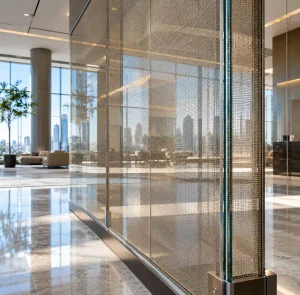
For walk-through display environments and gallery partitions requiring structural glazing, tempered glass up to 3660mm × 28000mm provides the necessary strength and safety performance. These jumbo-size capabilities allow museum architects to create immersive viewing experiences with minimal framing while maintaining conservation-grade UV protection through laminated construction with UV-filtering interlayers.
Climate Control and Environmental Stability
Sealed Case Requirements
Conservation display cases maintain stable internal environments isolated from fluctuating gallery conditions. The glazing must integrate with case sealing systems that control relative humidity (typically 45-55% RH for mixed collections) and limit air exchange that introduces pollutants, dust, and moisture. Climate-sealed cases require glazing with continuous perimeter support and compression gaskets that maintain hermetic seals while accommodating thermal expansion.
Glass edge treatments affect sealing performance. Polished edges provide smooth, consistent surfaces for gasket compression, while ground or seamed edges may create leak paths that compromise internal climate control. For conservation display cases requiring long-term RH stability (6-12 months between servicing), specify polished edge treatment and verify gasket compression across the full perimeter during installation.
Light Level Management
UV filtration alone does not ensure artifact preservation—total light exposure (UV + visible) must remain within conservation guidelines. The International Council of Museums recommends maximum 50 lux for highly sensitive materials (watercolors, textiles, photographs) and 150-200 lux for more stable objects (oil paintings, ceramics). Conservation glazing with 99% UV filtration combined with controlled gallery lighting prevents both UV photochemical damage and visible light deterioration.
Museums achieve light level control through dimming systems, fiber-optic lighting, and LED sources with tuned spectral output that minimizes harmful wavelengths. The glazing specification must account for light transmission properties—standard low-iron glass transmits 87-89% of visible light, while AR-coated conservation glass transmits 83-85% after coating losses. Calculate required lighting intensity to achieve target lux levels at the artifact surface based on glazing transmission and geometric factors.

Security and Impact Resistance
Protection Against Vandalism
Museum display cases face threats from both accidental impact (visitor contact, child interaction) and intentional vandalism. Laminated glass construction provides essential post-breakage retention—if the glass cracks, fragments remain bonded to the interlayer rather than falling onto artifacts or creating projectile hazards to visitors.
For high-value collections requiring elevated security, specify multi-layer laminated assemblies such as 6mm + 1.52mm PVB + 6mm + 1.52mm PVB + 6mm. This three-ply configuration significantly extends penetration time after breakage, providing security staff opportunity to respond before access to artifacts occurs. Museums housing jewelry, precious metals, or culturally sensitive objects often mandate this enhanced laminated construction as minimum standard.
Frame and Installation Requirements
Conservation glazing performs only as well as its installation. Display case frames must provide continuous edge support with minimum 15mm engagement and setting blocks at quarter points to prevent glass sagging under self-weight. Mounting hardware should be concealed from visitor access or use tamper-resistant fasteners to prevent frame disassembly.
For tabletop and wall-mounted display cases, verify that frame structures can support the dead weight of laminated glass—approximately 20 kg/m² for 4mm + 0.76mm PVB + 4mm construction. Inadequate frame rigidity causes glass edge stress concentrations that can initiate cracks in corners, compromising both artifact protection and case sealing integrity.
Specification and Procurement Guidelines
Essential Specification Elements
Conservation-grade display case glazing specifications must include measurable performance criteria rather than vague “museum-quality” language. Include these quantifiable requirements in your specifications:
UV Protection: UV transmission <5% measured per ASTM G173 across 300-380nm wavelength range, with UV irradiance at artifact surface <75 microwatts per lumen
Anti-Reflective Performance: Surface reflectance <1% measured per ASTM E1651, maintaining performance at 0-45° viewing angles
Material Construction: Laminated glass comprising [thickness]mm + [interlayer type and thickness] + [thickness]mm, with UV-filtering PVB or ionoplast interlayer documented to block 99% UV below 380nm
Edge Treatment: Polished edges with 1mm chamfer, clean of chips and defects that compromise sealing or create stress points
Dimensional Tolerances: ±1mm length and width, ±0.2mm thickness variation, with flatness within 0.003 × diagonal dimension
Oddy Test Compliance: All adhesives, sealants, and edge treatments must pass 28-day Oddy test with no damage to silver, copper, or lead coupons

Verifying Conservation Performance Claims
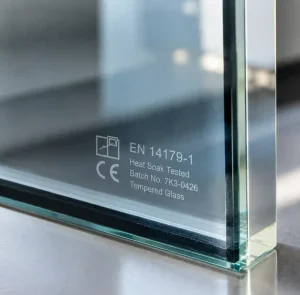
Request third-party test reports documenting UV transmission, anti-reflective performance, and material purity rather than accepting supplier marketing claims. Spectrophotometer testing per ASTM E1651 and UV-Vis spectroscopy per ISO 9050 provide objective verification that glazing meets specified performance thresholds. Conservation-wiki notes that measured data trumps vendor assertions when evaluating competing glazing options.
For large museum installations, specify submittal of samples with certified test data during procurement. Physical samples allow side-by-side comparison of optical clarity, color neutrality, and reflection characteristics under actual gallery lighting conditions. This verification step prevents expensive mistakes discovered only after installation when replacing unsatisfactory glazing becomes cost-prohibitive.
Cost Analysis and Budget Considerations
Conservation Glazing Price Ranges
Museum display case glazing costs vary widely based on size, performance specifications, and manufacturing complexity. Budget for these typical price ranges per square meter FOB:
- Standard clear glass (no UV protection): $30-50/m²
- Laminated glass with UV-filtering PVB: $80-120/m²
- Low-iron laminated with UV-PVB: $120-180/m²
- AR-coated laminated conservation glass: $200-320/m²
- Premium AR laminated with enhanced UV: $320-450/m²
These prices apply to standard rectangular panels 1000mm × 1500mm or smaller. Oversize panels, custom shapes, curved glazing, and edge-worked details add 30-80% premium depending on complexity. For budget-constrained projects, prioritize conservation-grade glazing on display cases housing the most light-sensitive and valuable artifacts, using standard laminated glass for cases containing stable materials.

Long-Term Value Considerations
Conservation glazing represents a one-time capital investment that protects artifacts for decades. Compare the $150-250/m² incremental cost of upgrading from standard to conservation-grade glazing against the irreplaceable value of displayed artifacts and the expense of artifact restoration after light damage occurs. Museums that economize on glazing specifications often face five-figure costs to repair or stabilize faded textiles, deteriorated photographs, and damaged works on paper—damage that proper UV filtration would have prevented.
The British Museum’s 2024 analysis found that investing in conservation-grade glazing for light-sensitive collections delivered artifact protection value equivalent to 15-20 years of avoided conservation treatment costs. For permanent museum installations with artifact values exceeding display case costs by orders of magnitude, conservation glazing specification is financially prudent risk mitigation, not discretionary luxury.
FAQ
What is the difference between museum-grade and conservation-grade glazing?
“Museum-grade” lacks standardized definition and often represents marketing language. Conservation-grade glazing specifies measurable performance: UV transmission <5%, anti-reflective coating achieving <1% reflection, material purity verified through Oddy testing, and laminated safety construction. Always request documented test results rather than relying on grade classifications.
Can acrylic display cases provide the same protection as glass?
Yes—museum-grade acrylic with UV filtration and AR treatment achieves equivalent conservation performance to laminated glass. Acrylic blocks 98% of UV inherently and weighs half as much as glass, but scratches more easily and yellows over 10-15 years. Glass maintains permanent optical clarity and superior scratch resistance, making it preferred for permanent high-traffic installations.
How often should display case glazing be replaced?
Conservation-grade glass maintains UV-filtering performance indefinitely—the laminated interlayer does not degrade under normal museum conditions. Replace glazing only when physical damage occurs, optical clarity deteriorates due to surface scratching, or AR coating degrades (typically 15-20 years in high-touch environments). Acrylic requires replacement every 10-15 years as yellowing becomes visible.
What thickness laminated glass is required for display cases?
Standard museum display cases use 4mm + 0.76mm PVB + 4mm or 5mm + 0.76mm PVB + 5mm laminated construction. High-security installations housing valuable artifacts specify thicker assemblies such as 6mm + 1.52mm PVB + 6mm. Total thickness depends on panel size, frame support conditions, and required impact resistance rather than conservation performance alone.
Does conservation glazing block all light damage?
No—conservation glazing blocks UV radiation (300-380nm) that causes most photochemical damage, but visible light (380-780nm) also contributes to fading in sensitive materials. Complete artifact protection requires both UV-filtering glazing and controlled visible light levels below 50-200 lux depending on material sensitivity, achieved through dimmed gallery lighting and limited display duration.
Can existing display cases be retrofitted with conservation glazing?
Yes, if case frames provide adequate edge support and depth to accommodate laminated glass thickness. Measure frame rabbet dimensions, verify structural capacity for increased glass weight, and ensure gasket systems can seal the new glazing perimeter. Retrofitting delivers conservation protection without full case replacement, though custom glass sizing and edge treatments may increase costs 20-40% versus standard panel sizes.
Conclusion
Conservation-grade museum display case glazing protects irreplaceable cultural heritage through measurable specifications: UV transmission below 5%, anti-reflective coatings achieving less than 1% surface reflection, laminated construction preventing fragment hazards, and material purity verified through standardized testing. These quantifiable criteria distinguish legitimate conservation performance from marketing claims lacking documentation.
When specifying glazing for museum display cases, prioritize UV-filtering laminated glass with AR coatings for light-sensitive collections, request third-party test data documenting performance claims, and ensure installation details provide continuous edge support with Oddy-tested sealants and gaskets. The incremental cost of conservation-grade glazing—typically $150-250/m² over standard glass—represents prudent investment when protecting artifacts whose value and irreplaceability far exceed display infrastructure expenses.
Zhongbo Glass manufactures laminated and tempered glass with conservation-grade specifications up to 4200mm × 28000mm, enabling both compact display cases and oversized gallery installations with UV protection, anti-reflective performance, and structural safety meeting international museum standards.