Choosing between PVB and SGP interlayers isn’t just a material specification—it’s a structural decision that affects safety, longevity, and project costs. After fabricating over 12.4-meter glass panels for Shanghai Museum and engineering the Zhangjiajie Glass Bridge, we’ve seen firsthand how interlayer selection impacts real-world performance. This comparison cuts through marketing claims to show which interlayer actually delivers for your application.
What Are PVB and SGP Interlayers?
Laminated glass bonds two or more glass lites with a polymer interlayer that holds fragments together after breakage. PVB (polyvinyl butyral) has dominated since the 1930s as the standard automotive and architectural interlayer. SGP (SentryGlas Plus, ionoplast polymer by Kuraray) arrived in the 1990s offering five times the rigidity and superior edge stability, targeting structural applications where PVB traditionally failed.
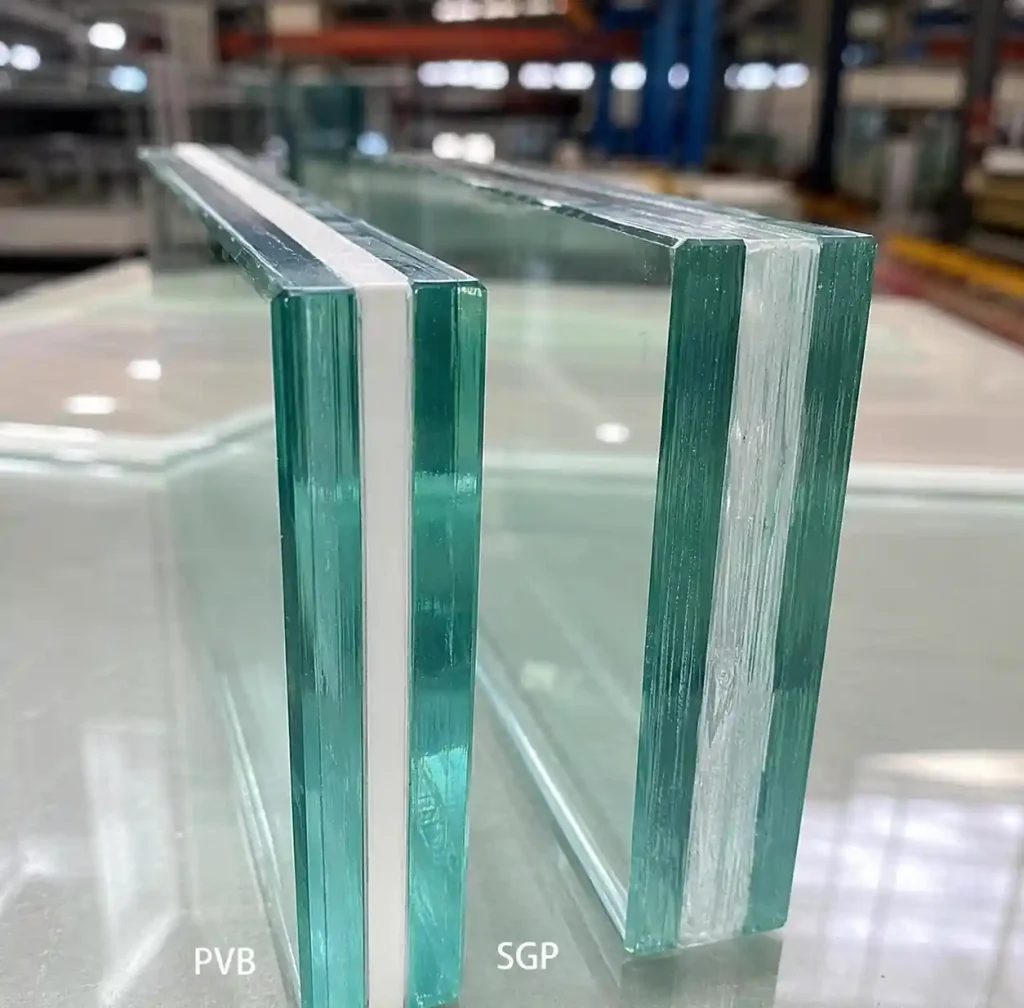
The performance gap between these materials isn’t subtle. SGP maintains 90% of its stiffness at 50°C while PVB softens dramatically, losing structural contribution. For load-bearing glass—bridges, floors, overhead glazing—this difference determines whether the design works or requires thicker, heavier glass.
Structural Performance: Where SGP Pulls Ahead
Post-Breakage Strength
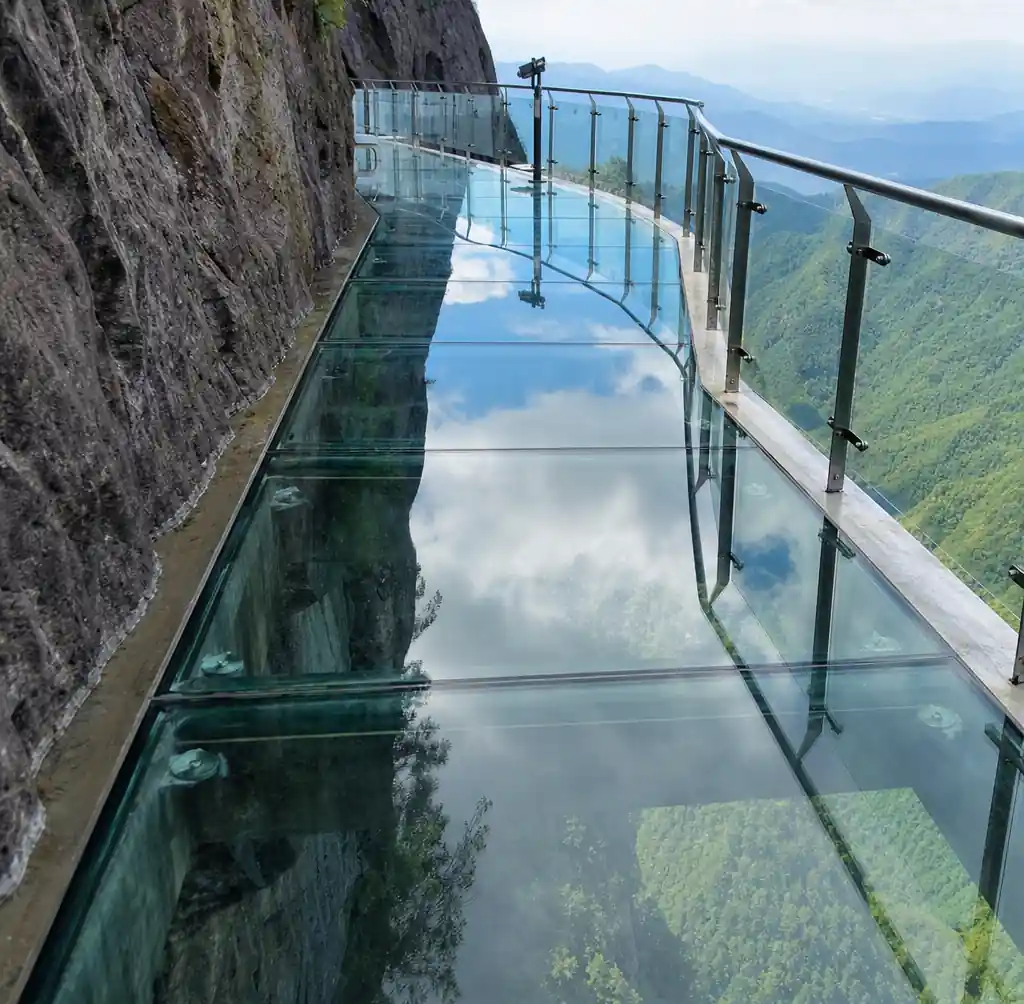
When tempered glass shatters, the interlayer becomes the only thing preventing collapse. SGP’s tear strength exceeds PVB by 5x, maintaining load-bearing capacity even after glass failure. On the Zhangjiajie Glass Bridge, we specified 15mm+2.67mm SGP+15mm+2.67mm SGP+15mm precisely because visitors need to walk safely across broken panels until replacement. PVB would sag excessively under foot traffic post-breakage.
Temperature Stability
Standard PVB loses rigidity above 35°C, causing deflection issues in hot climates or sun-exposed facades. SGP maintains structural properties up to 60°C. For the Guizhou Huajiang Bridge glass walkway facing direct Southwestern sun, SGP prevented the creep deformation that would occur with PVB in summer months.
Key Performance Comparison Table
| Performance Factor | PVB | SGP | Application Impact |
|---|---|---|---|
| Rigidity (Shear Modulus) | 0.1-0.5 MPa at 23°C | 158 MPa at 23°C | SGP enables thinner glass in structural applications |
| Post-Breakage Tear Strength | ~3 MPa | ~20 MPa | SGP provides 5x better safety retention after glass failure |
| Temperature Performance | Softens significantly above 35°C | Stable to 60°C | SGP essential for hot climates and overhead glazing |
| Edge Stability (Moisture) | Prone to delamination | Highly resistant | SGP eliminates edge seal corrosion in exposed installations |
| Acoustic Damping | Excellent (0.38mm) | Moderate | PVB superior for sound insulation applications |
| UV Protection | 99%+ | 99%+ | Both block harmful UV radiation |
| Cost Premium | Baseline | 3-4x PVB | SGP justified only when structural performance required |
Edge Stability: The Hidden Failure Mode
Moisture ingress at laminated glass edges causes delamination—the cloudy haze spreading inward from the perimeter. PVB hydrolyzes when exposed to humidity, requiring meticulous edge sealing in IGU applications. SGP’s ionoplast structure resists moisture absorption, tolerating exposure that would destroy PVB bonds within months.
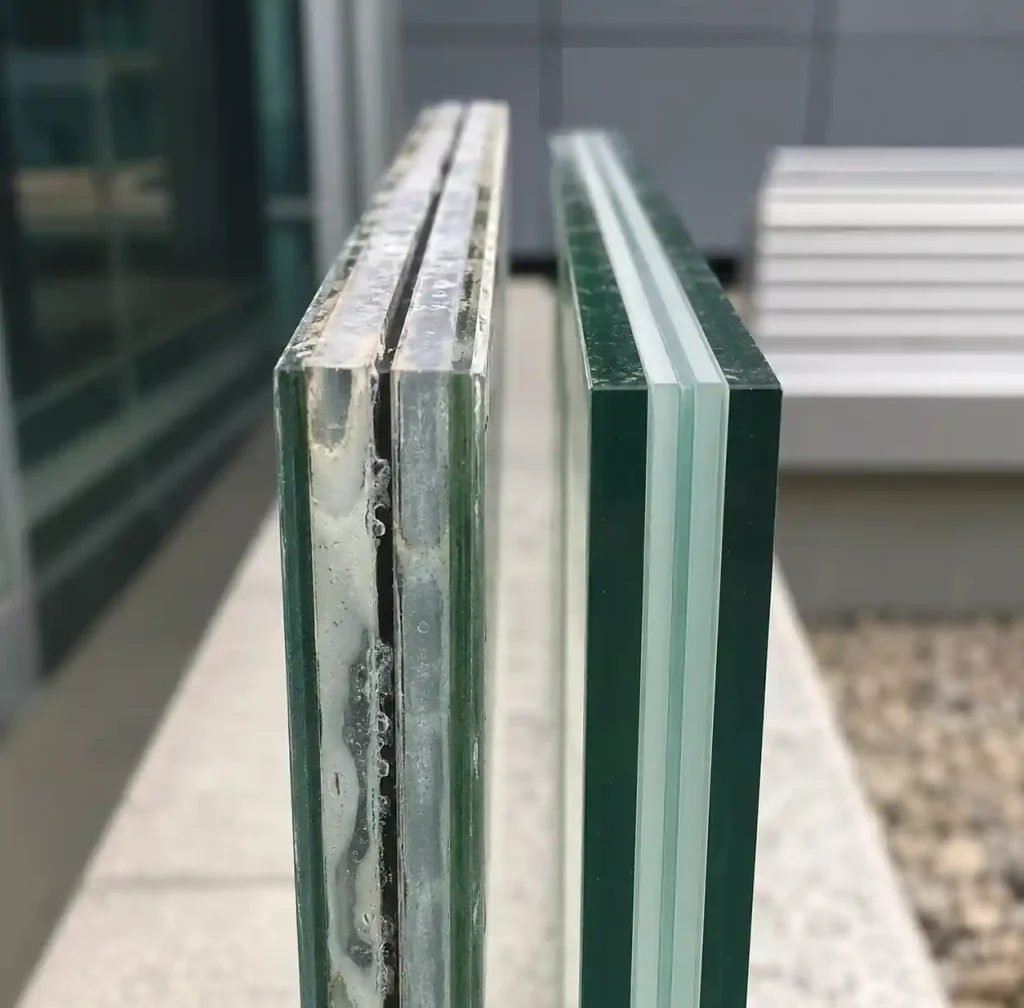
For the Luoyang Peony Square installation (2100mm × 9000mm panels), we used SGP specifically because the ceramic frit edge detail left minimal edge protection. PVB would have delaminated within two years. After five years, the SGP edges remain crystal clear.
Material Properties Comparison
| Technical Property | PVB (Standard) | SGP (SentryGlas Plus) |
|---|---|---|
| Tensile Strength | 20-25 MPa | 35-45 MPa |
| Elongation at Break | 200-300% | 300-400% |
| Thickness Options | 0.38mm, 0.76mm, 1.52mm, 2.28mm | 0.89mm, 1.52mm, 2.28mm |
| Operating Temperature Range | -40°C to +50°C | -40°C to +80°C |
| Moisture Absorption | 0.8-1.0% | <0.3% |
| Processing Temperature | 140-145°C | 130-145°C |
| Autoclave Requirements | Standard (135°C, 12 bar) | Standard compatible |
When PVB Is the Right Choice
Despite SGP’s superior structural properties, PVB remains the optimal choice for many applications:
Acoustic Performance: PVB’s viscoelastic properties dampen sound vibration more effectively than SGP. For office facades facing highways or urban noise, 0.76mm PVB delivers superior sound insulation. The Shanghai Qiantan Shangri-La hotel specified PVB specifically for acoustic performance in guest room glazing.
Cost-Sensitive Projects: At 3-4x the cost of PVB, SGP only makes financial sense when its structural advantages prevent using thicker glass. For standard residential windows or storefronts without structural loads, PVB provides adequate safety at dramatically lower cost.
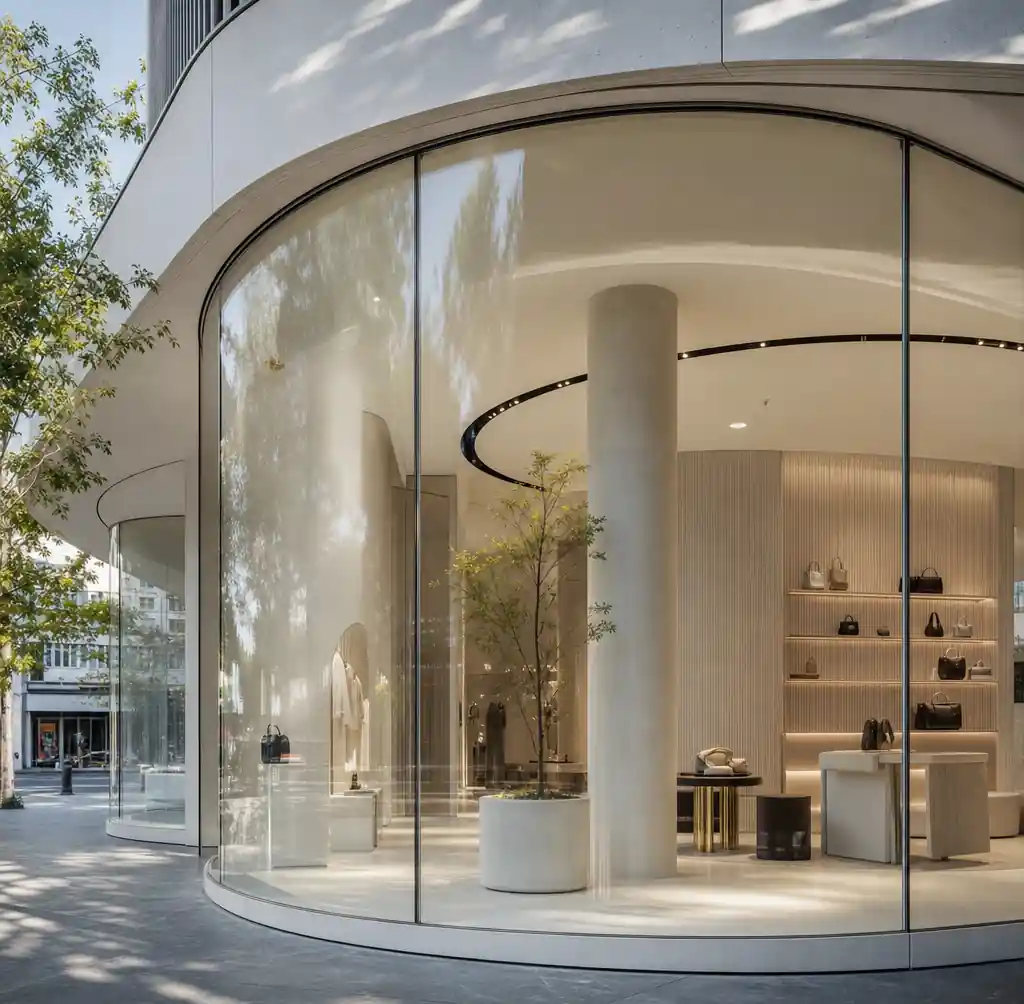
Curved Glass Applications: PVB flows more easily during lamination, reducing optical distortion in tight-radius bends. We use PVB for curved glass storefront glazing unless structural requirements demand SGP.
When SGP Is Non-Negotiable
Certain applications physically require SGP’s performance characteristics:
Glass Bridges and Walkways: Post-breakage strength and temperature stability make SGP the only viable option. At Zhangjiajie, summer surface temperatures exceed 50°C—PVB would soften unacceptably.
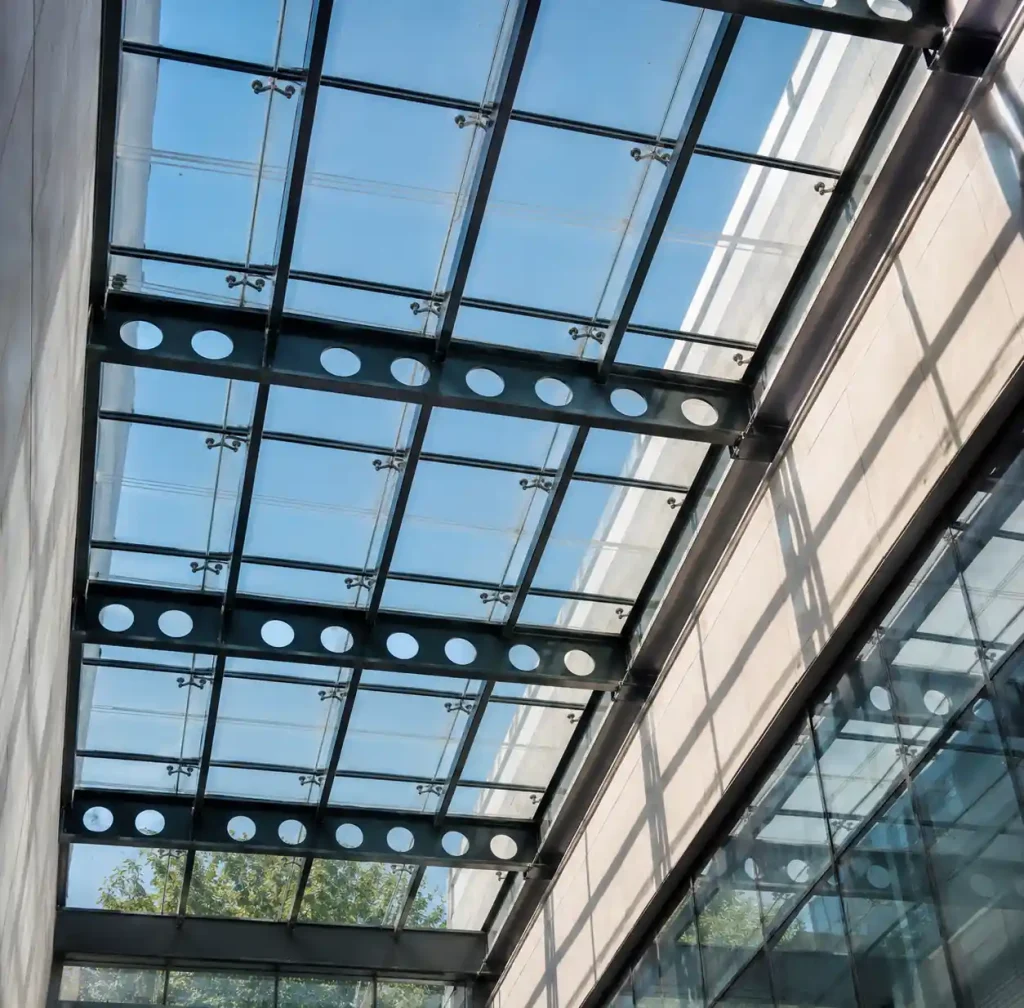
Overhead Structural Glazing: Skylights and canopies must retain load capacity after glass failure. Building codes increasingly require SGP for overhead applications exceeding 3 meters height. The Baiyun International Conference Center‘s 8200mm × 2200mm overhead panels use SGP to meet structural safety factors.
Exposed Edge Details: When architectural details leave edges exposed to weather—glass fins, point-fixed facades, unframed balustrades—SGP eliminates delamination risk. The Shanghai Museum East Hall‘s 12,400mm glass ribs use SGP because conventional edge sealing wasn’t possible.
Hurricane and Blast Resistance: SGP’s tear strength keeps fractured glass attached during extreme wind events or explosions. Coastal high-rises and secure facilities specify SGP for impact-resistant facades.
Processing and Fabrication Considerations
Both interlayers process through standard autoclave cycles, but differences matter:
Handling: PVB tolerates more handling abuse pre-lamination. SGP requires controlled humidity environments to prevent moisture absorption before processing.
Autoclave Cycles: PVB typically processes at 140°C, SGP at 130-145°C. Both use standard 12-bar pressure cycles. SGP’s higher modulus means trapped air bubbles are less forgiving—requiring more careful pre-pressing.
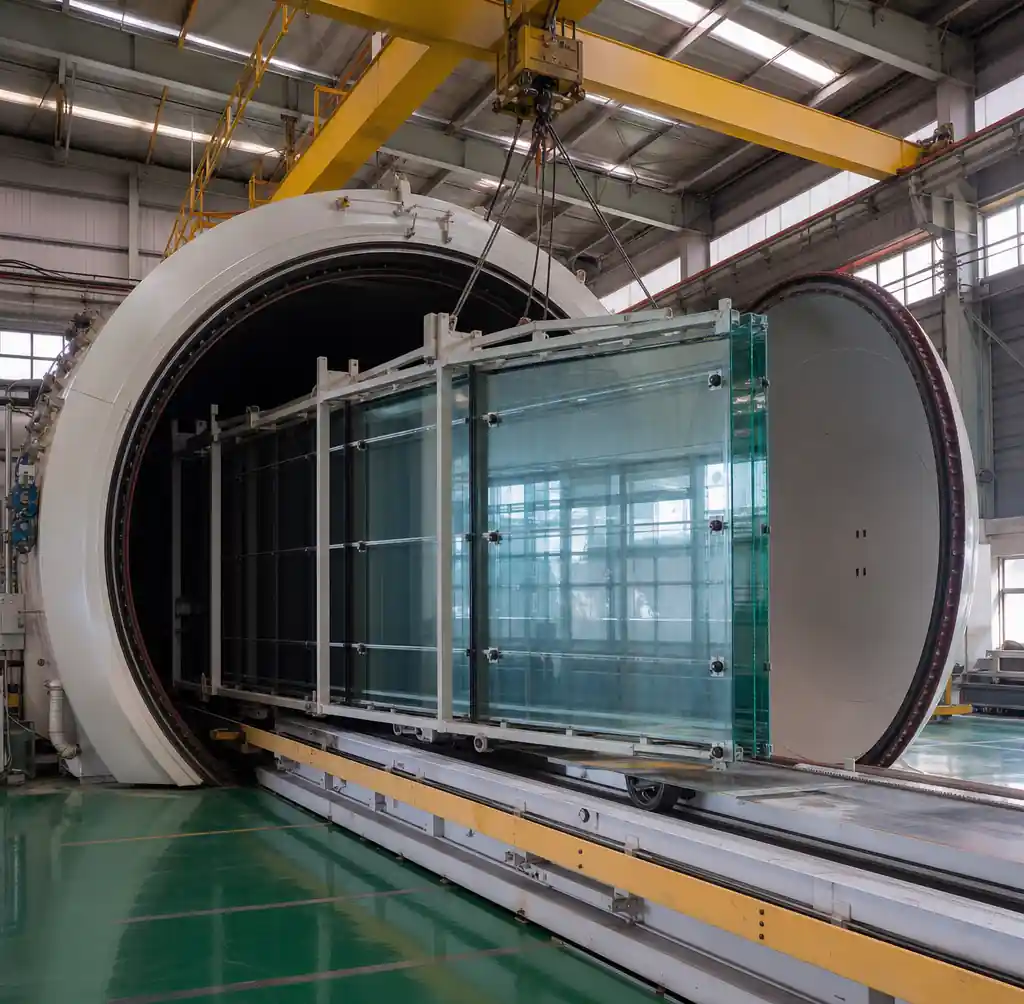
Yield Rates: PVB’s forgiving nature produces higher yield rates in production. SGP demands tighter process control, particularly for jumbo panels. At our 4.2m × 28m autoclave, we achieve 98% yield with PVB versus 95% with SGP on panels exceeding 10 meters.
Cost Analysis: When Is SGP Worth It?
Raw material cost tells only part of the story. SGP costs 3-4x more per square meter than PVB, but system-level economics shift this calculation:
Glass Thickness Reduction: SGP’s rigidity allows thinner glass lites in structural applications. A floor panel requiring 15mm+PVB+15mm might achieve equivalent performance with 12mm+SGP+12mm. Thinner glass reduces weight, eases handling, and cuts tempering costs.
Lifecycle Costs: PVB edge delamination in exposed conditions requires panel replacement after 5-10 years. SGP installations lasting 25+ years avoid replacement costs that dwarf initial material premiums.
Insurance and Liability: Post-breakage performance reduces injury risk in occupied spaces. Some insurers offer premium reductions for SGP in overhead applications.
For the Qingpu Huawei R&D Center‘s 12,455mm × 2,413mm panels, SGP’s upfront premium was 40% higher than PVB. But avoiding two glass thicknesses paid back that premium immediately through reduced material and processing costs.
Installation and Project Considerations
Weight Impact: SGP’s ability to reduce glass thickness matters most for manual installation. A 10mm+SGP+10mm panel weighs 30% less than the 15mm+PVB+15mm alternative while meeting the same structural requirements. For high-rise curtain walls, this reduces crane time and installation risk.
Lead Times: SGP availability from suppliers can add 2-4 weeks versus PVB’s commodity status. Plan procurement accordingly.
Edge Treatments: SGP tolerates exposed edges; PVB demands edge deletion and sealing in IGU applications. This flexibility can simplify details and reduce fabrication steps.
Making the Right Choice for Your Project
Start with structural requirements, not material preferences:
Choose SGP when:
- Glass carries structural loads (floors, bridges, overhead canopies)
- Edges will be exposed to moisture without full encapsulation
- Operating temperatures exceed 40°C regularly
- Post-breakage load retention is critical for life safety
- Building codes require enhanced structural performance
Choose PVB when:
- Acoustic performance drives the design
- Glass is fully captured in frames with proper edge sealing
- No significant structural loads exist beyond wind pressure
- Budget constraints are primary
- Standard safety glass requirements suffice
Consider Hybrid Approaches: Some projects use SGP in critical structural zones (base of facade, overhead areas) while specifying PVB elsewhere to optimize costs. The Tencent Cloud Tower project used this strategy, placing SGP in the lower 10 floors facing higher wind loads and PVB above.
Real-World Performance Data from Our Projects
Zhangjiajie Grand Canyon Glass Bridge (completed 2016): 430-meter span using 15mm+2.67SGP+15mm+2.67SGP+15mm. After 8 years and 30+ million visitors, zero edge delamination despite exposed edges in high-humidity environment. Several panels replaced after intentional hammer testing continue to demonstrate SGP’s post-breakage strength.
Luoyang Peony Square (completed 2018): 2100mm × 9000mm digital-printed panels with SGP in exposed roof application. Five-year inspection shows no edge degradation. Equivalent PVB installation would have required replacement by year three based on similar regional projects.
Shanghai Qiantan Shangri-La (completed 2020): Hotel specified PVB for 7330mm × 1720mm curved facade panels based on acoustic requirements. STC testing confirms 38dB reduction, outperforming SGP alternative by 4dB—critical for luxury hospitality.
FAQ
Can you combine PVB and SGP in the same laminated panel?
Yes, though uncommon. Some manufacturers offer hybrid constructions using SGP for structural plies and PVB for acoustic damping. Processing requires compatible autoclave cycles and careful material selection. We don’t recommend this except for specialized applications where both acoustic and structural performance are critical.
Does SGP yellow or degrade over time like early PVB formulations?
No. SGP maintains optical clarity for 30+ years in testing. Modern PVB formulations also resist yellowing—early failures were due to plasticizer migration, now solved. Both materials provide 99%+ UV blocking that protects interiors without self-degrading.
Can damaged laminated glass with SGP be repaired, or must the entire panel be replaced?
Once glass fractures, the entire panel requires replacement regardless of interlayer type. SGP’s advantage is maintaining safety and partial load capacity until replacement occurs, not enabling repair. Delaminated edges in PVB can sometimes be re-sealed if caught early, but SGP rarely delaminates in the first place.
How does humidity during installation affect each interlayer?
PVB requires <30% relative humidity during cutting and handling pre-lamination. SGP tolerates <50% humidity but performs best below 30%. Both must be processed in climate-controlled environments. Once laminated, SGP’s edge stability makes it far more forgiving of job site humidity during installation.
What thickness combinations work for structural glass floors?
For pedestrian loading, typical specs are 12mm+1.52SGP+12mm+1.52SGP+12mm minimum. Vehicular loading may require 19mm+2.28SGP+19mm+2.28SGP+19mm. PVB is unsuitable for floor applications due to creep and post-breakage performance. Always consult structural engineers—our specifications are for reference only.
Are there environmental or recycling considerations between PVB and SGP?
Both complicate glass recycling since interlayers must be separated from glass. PVB recycling infrastructure is more established—some facilities recover PVB for reuse in automotive applications. SGP recycling is less common but growing. From a manufacturing standpoint, both require similar energy inputs. Neither offers a clear environmental advantage.

Conclusion
PVB and SGP serve different engineering requirements rather than competing directly. PVB remains the cost-effective standard for safety glazing where structural loads are minimal and edges are protected, while SGP justifies its premium when structural performance, edge stability, or high-temperature resistance become critical.
At Zhongbo Glass, our 4.2m × 28m autoclave processes both materials at architectural scale. After fabricating panels exceeding 12 meters with both interlayers, we’ve learned that specification decisions should emerge from structural analysis and environmental conditions—not material preferences or cost alone. The choice determines whether your glass performs safely over decades of service.