Metal mesh laminated glass outperforms traditional wire glass in aesthetics, impact safety, design flexibility, and code compliance. While wire glass costs 40-50% less upfront, its safety limitations make it obsolete for modern projects. For fire ratings above 45 minutes or where occupant safety matters, metal mesh laminated glass is the defensible choice.
Manufacturing and Construction Differences
Wire glass embeds a steel wire mesh directly into molten glass during casting—a monolithic pane with visible wire grid fused within. This 1890s technology remains fundamentally unchanged.
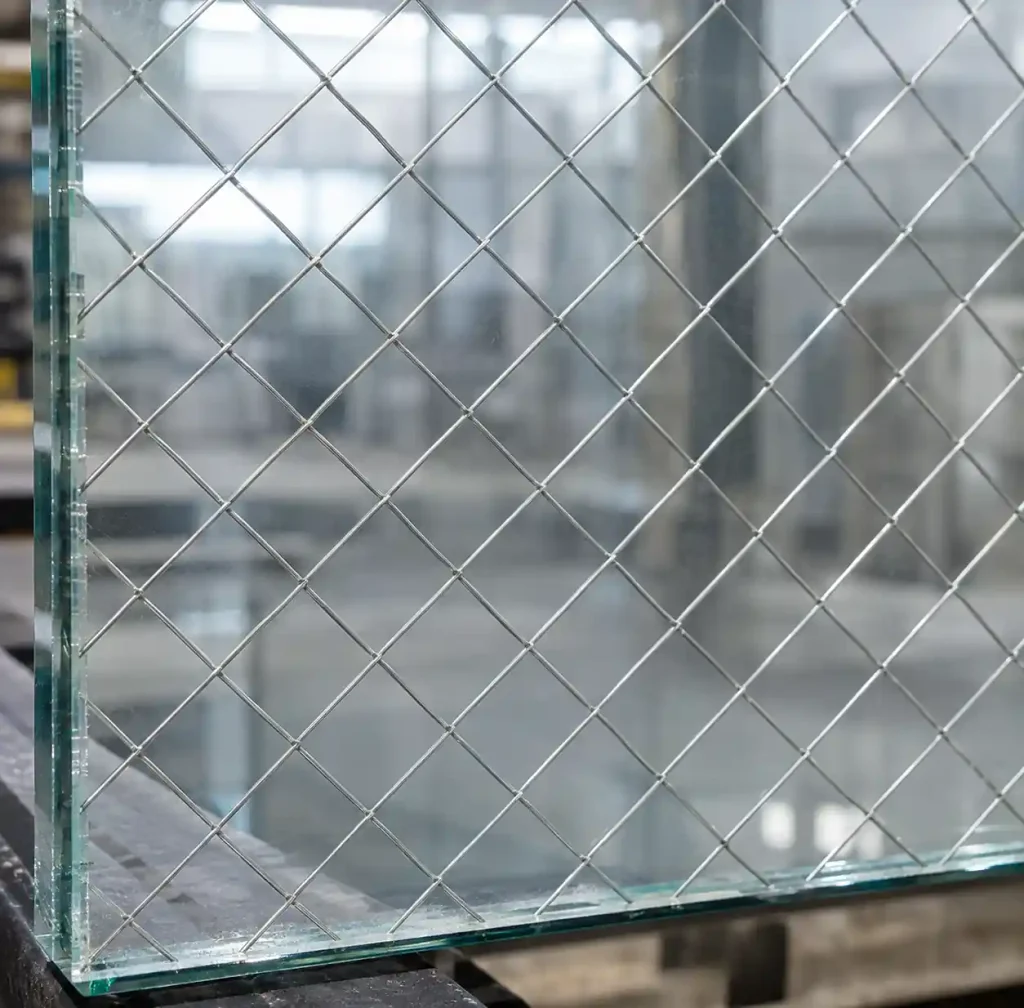
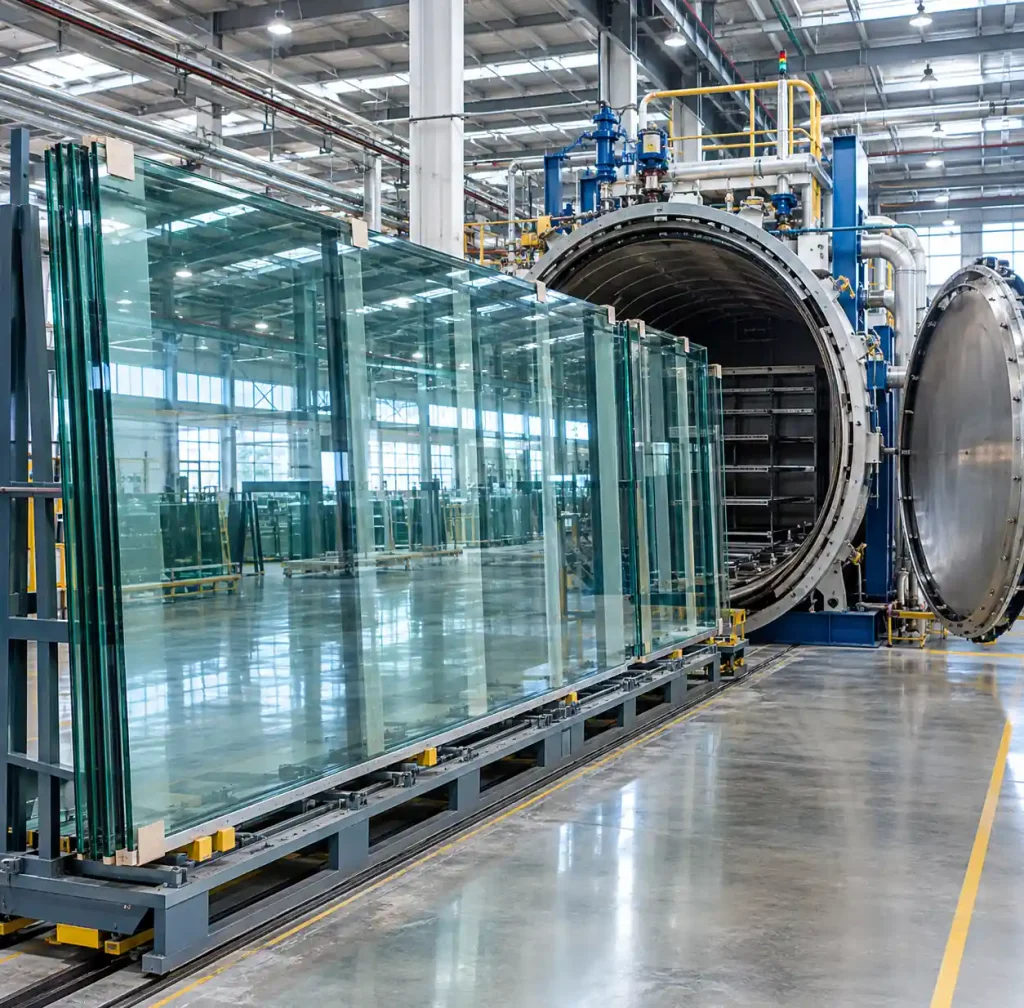
Metal mesh laminated glass sandwiches woven metal mesh between two or more glass layers using PVB or SGP interlayers, then processes through autoclave lamination. This creates true safety glass where the interlayer bonds mesh and glass into a unified composite.
This manufacturing distinction determines every performance characteristic—breakage behavior, fire ratings, and structural capacity.
Aesthetic and Design Flexibility
Wire glass presents a fixed industrial aesthetic—12.5mm or 25mm diamond or square grid that oxidizes over time, creating rust staining. The visible wire mesh cannot be customized.
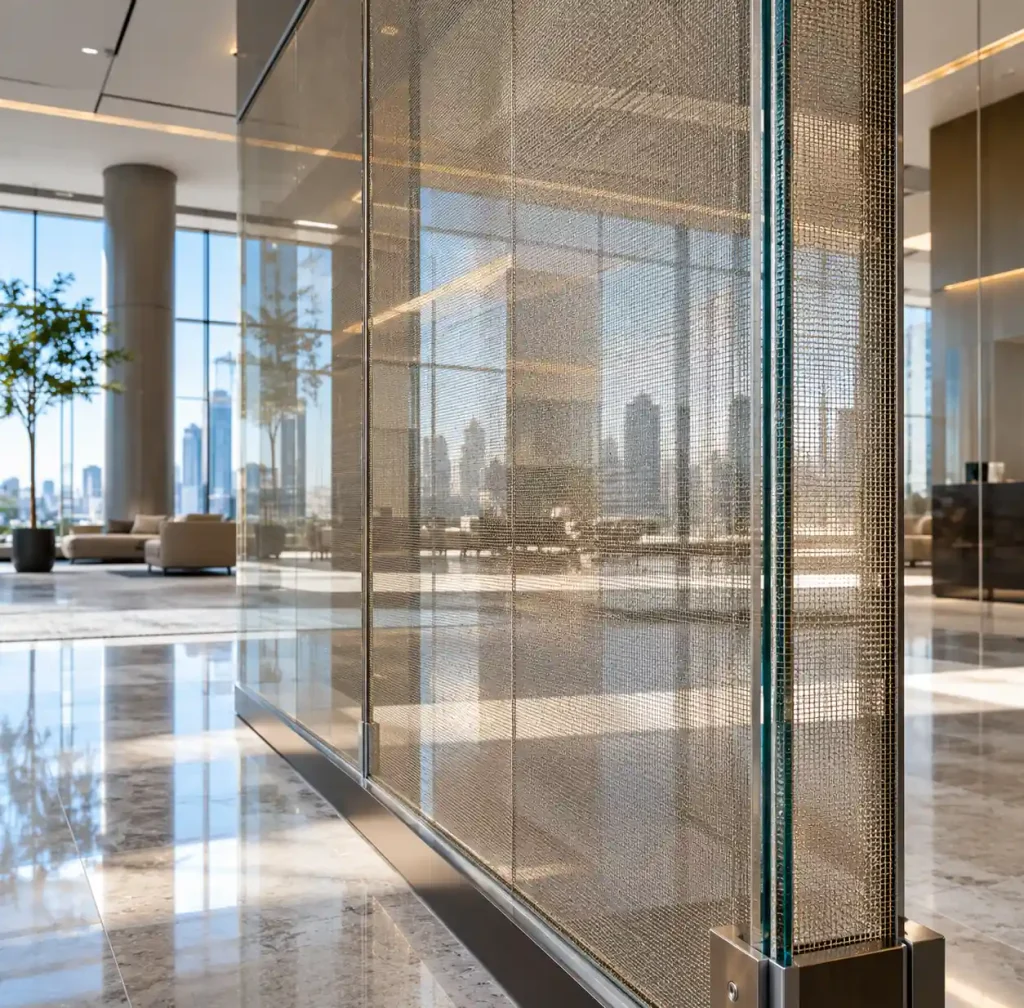
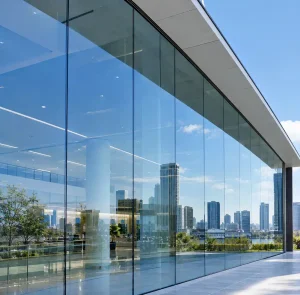
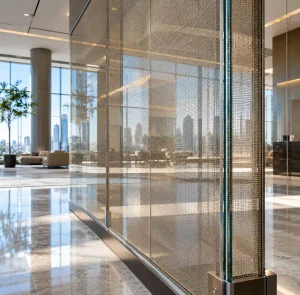
Metal mesh laminated glass offers extensive design options. Mesh patterns range from fine micro-mesh to bold architectural weaves. Materials include stainless steel, bronze, brass, copper, and aluminum. Zhongbo Glass manufactures panels up to 4200mm × 28000mm, enabling floor-to-ceiling installations without joints.
| Merkmal | Wire Glass | Laminiertes Glas mit Metallgewebe |
|---|---|---|
| Mesh visibility | Always prominent, 12.5-25mm grid | Customizable from subtle to bold |
| Mesh patterns | Fixed diamond or square only | Unlimited woven patterns available |
| Mesh materials | Galvanized steel only | Stainless, bronze, brass, copper, aluminum |
| Maximum panel size | Limited to 2440mm × 3660mm | Up to 4200mm × 28000mm |
| Light transmission loss | 15-20% with scattered appearance | Proportional to mesh openness (30-70%) |
| Aging appearance | Oxidation and rust staining | No corrosion with proper metal selection |
Wire glass reduces visible light transmission by 15-20%, creating a perpetual “dirty glass” appearance. Metal mesh laminated glass offers 60% open area options with clear glass surfaces that look intentionally textured, not obscured.
Fire Rating Capabilities
Wire glass historically dominated fire-rated glazing as the only economical option. It provides only “fire protection” (ASTM E119 Class E)—blocking flames and smoke but not controlling radiant heat transfer.
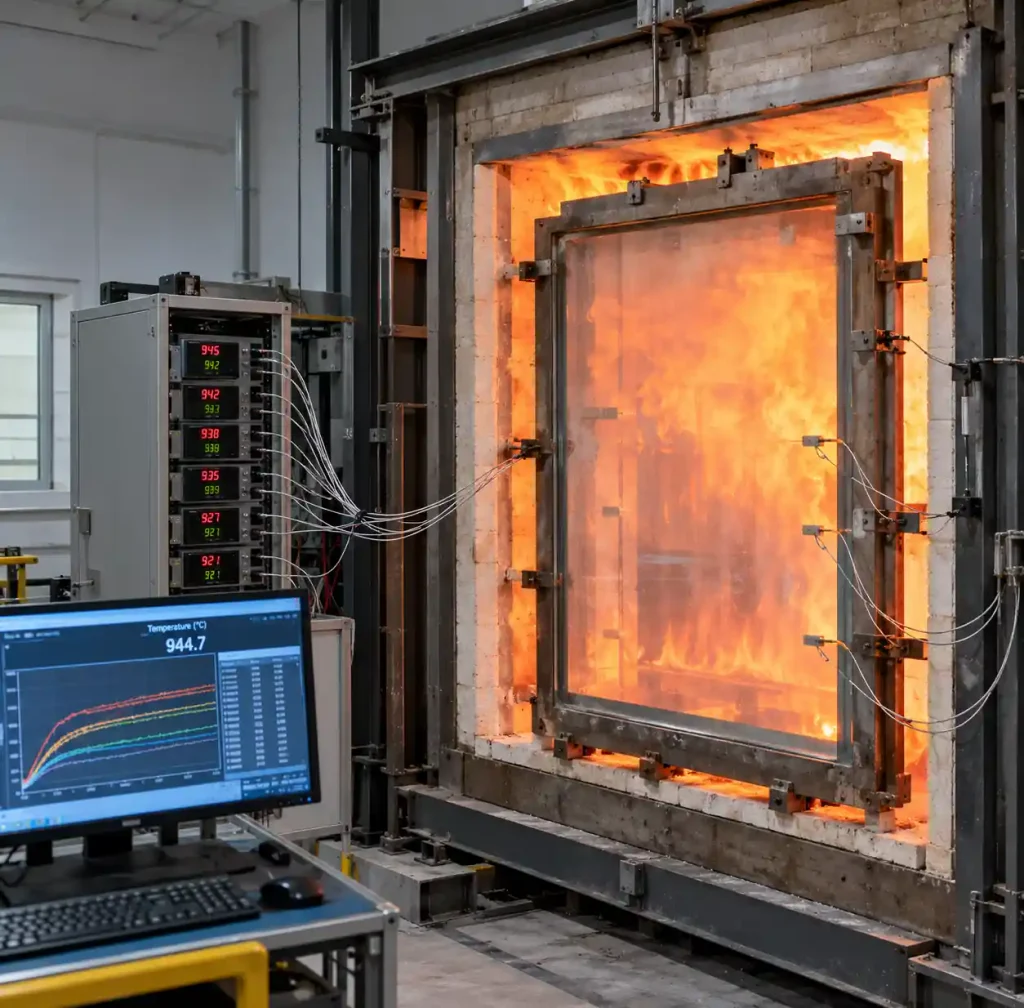
Modern fire-resistant glass standards require more. Wire glass maxes out at E45 to E60 ratings. For EI ratings—integrity plus insulation limiting backside temperature rise—ceramic glass or engineered laminated products are mandatory.
Metal mesh laminated glass fire ratings depend on complete assembly testing. When properly engineered:
- E ratings: Blocks flame and smoke for 30-90 minutes
- EI ratings: Limits radiant heat for 60-120 minutes in specially designed assemblies
The critical constraint: each mesh type, glass thickness, interlayer, and framing system requires specific testing. Wire glass benefits from decades of legacy test reports. Metal mesh laminated needs project-specific testing unless matching existing assemblies—expect $30,000-$50,000 per configuration.
At Zhongbo Glass, we maintain reports for common feuerfestes Glas assemblies, but custom mesh patterns typically require new testing.
Impact Resistance and Safety Performance
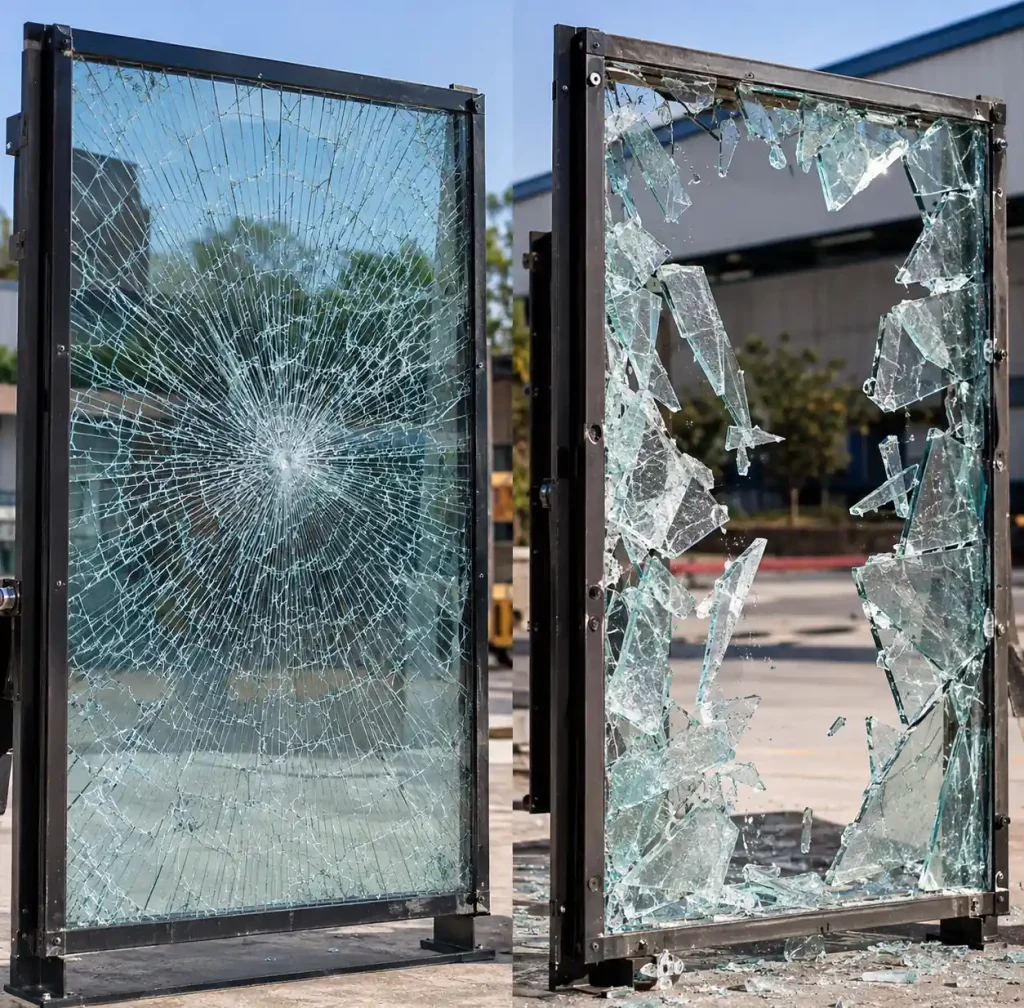
Wire glass is annealed glass—breaking into large, sharp shards. The embedded wire holds shards temporarily but becomes a cutting hazard itself. Wire glass causes severe lacerations upon human impact.
The Consumer Product Safety Commission (CPSC 16 CFR 1201) and IBC Section 2406 prohibit wire glass in hazardous locations—doors, sidelights in schools, areas with foreseeable human impact—unless laminated or filmed to meet safety requirements.
Verbundsicherheitsglas construction changes failure modes completely. When metal mesh laminated glass breaks, the PVB or SGP interlayer holds all fragments together. The panel maintains barrier function without projecting sharp edges, meeting safety glazing requirements without additional treatment.
| Prüfnorm | Wire Glass (6mm) | Metal Mesh Laminated (6mm+6mm) |
|---|---|---|
| CPSC 16 CFR 1201 Cat II | Fails—prohibited in hazardous locations | Passes—approved for doors, sidelights |
| EN 12600 classification | 3(C)3—worst safety class | 1(B)1 achievable—highest safety class |
| Residual strength after breakage | ~20%—collapses under load | 60-80%—remains intact |
| Edge durability | Wire corrosion accelerates failure | Sealed edges prevent moisture ingress |
For schools, recreational facilities, and commercial entries requiring safety glazing, wire glass is non-compliant unless treated with laminate. At that point, the wire adds no value.
Kostenanalyse: Anschaffungskosten vs. Lebenszykluswert
Wire glass is the cheapest fire-rated option at $50-$80 per square foot for 6mm material. Metal mesh laminated glass costs $120-$200 per square foot for architectural-grade material, rising to $250-$350 for custom mesh or fire-rated assemblies.
The cost difference reflects manufacturing complexity. Wire glass uses continuous casting—economical at volume. Metal mesh laminated requires hand-placement, precise alignment, and extended autoclave cycles. Zhongbo Glass’s 4.2m × 28m autoclave handles oversized panels but limits throughput versus continuous production.
Wire glass carries hidden lifecycle costs:
- Corrosion replacement: Embedded wire corrodes in 10-15 years in humid environments. Stainless steel mesh shows no corrosion after 25+ years.
- Safety retrofits: Code upgrades during renovations require laminated replacement in hazardous locations.
- Edge deterioration: Moisture penetration requires resealing or replacement within 15 years. Laminated edge seals last 30+ years.
For 30-year lifecycle analysis, the installed cost premium for metal mesh laminated glass often disappears when replacement cycles are included.
Anforderungen an die Installation
Wire glass installs into standard glazing pockets for monolithic glass. Setting blocks, edge clearance, and bite depth follow conventional practice. Any glazier handles wire glass installation.
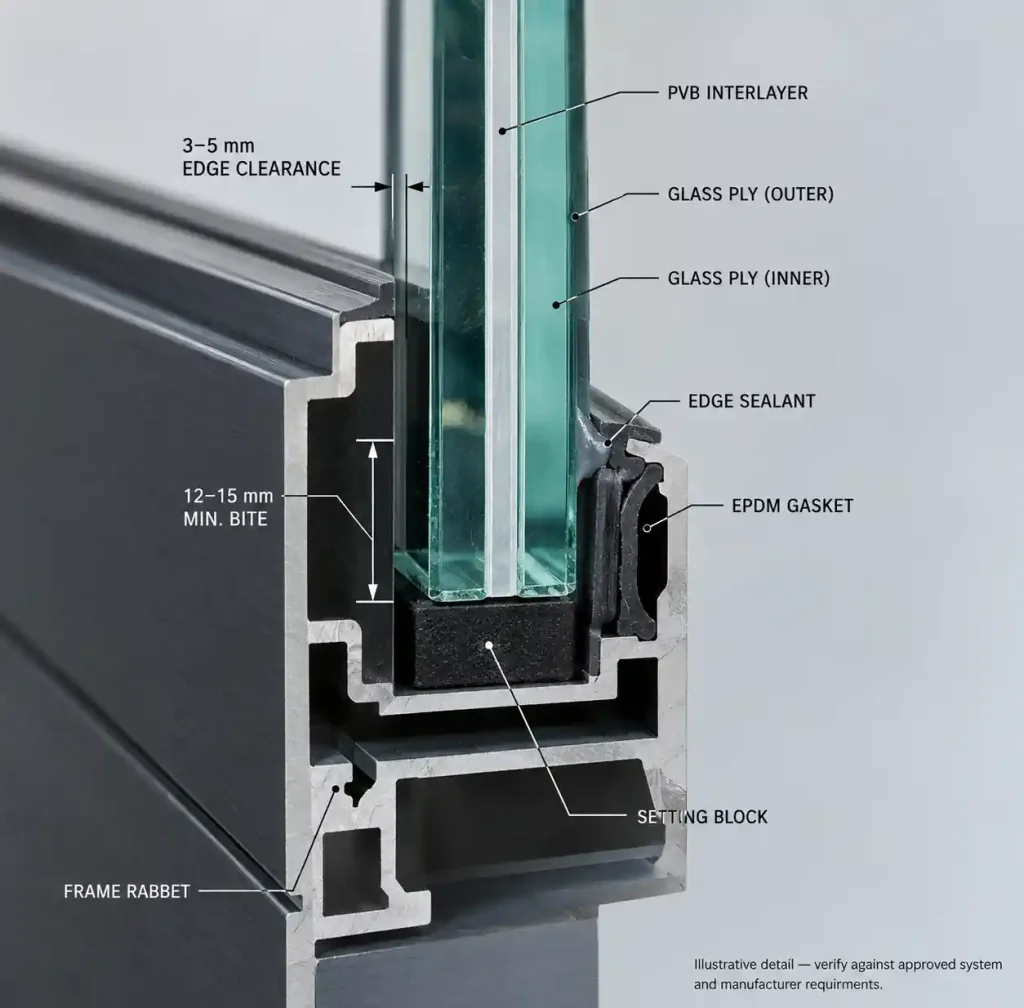
Metal mesh laminated glass requires specific laminated glazing details:
- Kantenabstand: 3-5mm (vs 2-3mm monolithic) for interlayer expansion
- Bite depth: Minimum 12-15mm to prevent edge delamination
- Edge treatment: Polished and sealed edges prevent moisture ingress, especially for SGP interlayer applications
- Bausilikon: Verify compatibility or specify SGP for structural glazing
Zhongbo Glass provides project-specific glazing details because improper installation voids warranties and causes premature failure. Experienced glaziers charge 15-20% more for laminated glass to account for required care.
Design Flexibility for Complex Applications
Wire glass cannot be curved—the embedded mesh creates differential expansion causing fractures during bending. For curved fire-rated applications, ceramic glass or specialty products are required.
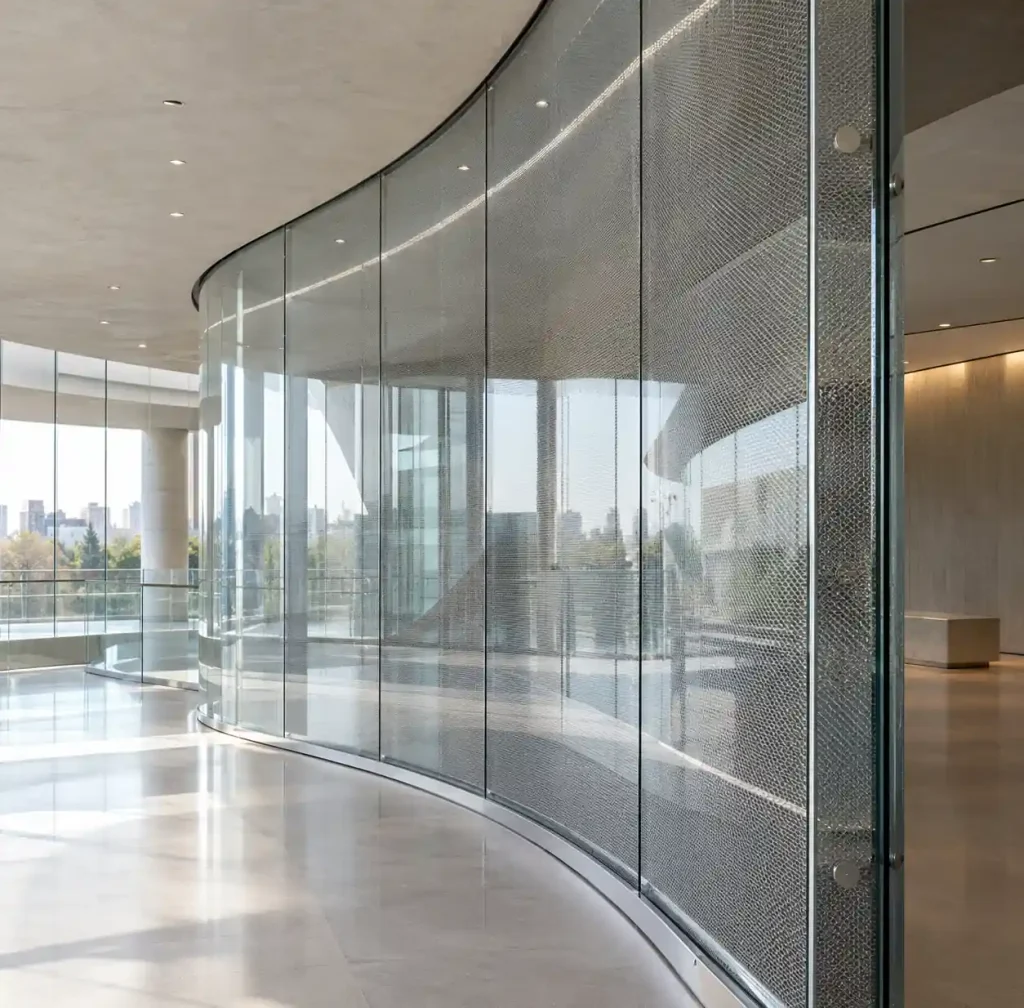
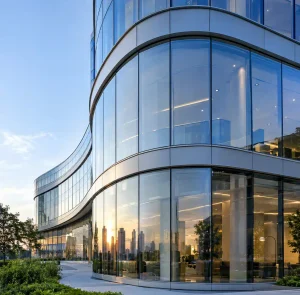
Metal mesh laminated glass can be curved with constraints. The mesh must flex to conform without buckling. Typical minimum radius: 1500mm for 6mm+6mm construction. Tighter radii need thinner glass or very fine mesh.
Zhongbo Glass curved capacity reaches 3660mm × 28000mm, but mesh pattern selection is critical. Some architectural meshes won’t conform to tight radii without testing.
Wire glass hits size limits around 2440mm × 3660mm. The wire mesh lacks tensile capacity for larger panels or spans exceeding 1200mm.
Metal mesh laminated glass structural capacity allows panels up to 4200mm × 28000mm at Zhongbo Glass. For structural glazing—point-supported fins, cantilevered canopies—laminated construction provides load-bearing capacity wire glass cannot match.
Fabric and metal glass combinations push boundaries further, achieving column-free spans exceeding 8 meters in atriums.
Code Acceptance and Building Regulations
IBC Section 715 and 716 historically allowed broad wire glass use based on legacy testing. Recent code cycles tightened requirements:
- Wire glass without lamination prohibited in doors or sidelights in educational occupancies
- Fire-rated corridor glazing increasingly requires EI classification—wire glass cannot provide this
- Maximum glazing area in fire barriers increased only for impact-safe products, excluding unlaminated wire glass
Progressive jurisdictions already limit wire glass to non-accessible locations. Metal mesh laminated glass meets impact safety requirements, allowing larger areas and hazardous location use—but requires exact tested assembly matching.
When Wire Glass Still Makes Sense
Despite limitations, wire glass remains appropriate for:
- Budget-driven projects where fire rating is required but aesthetics and safety performance are secondary
- Industrial or back-of-house spaces where laminated glass cost cannot be justified
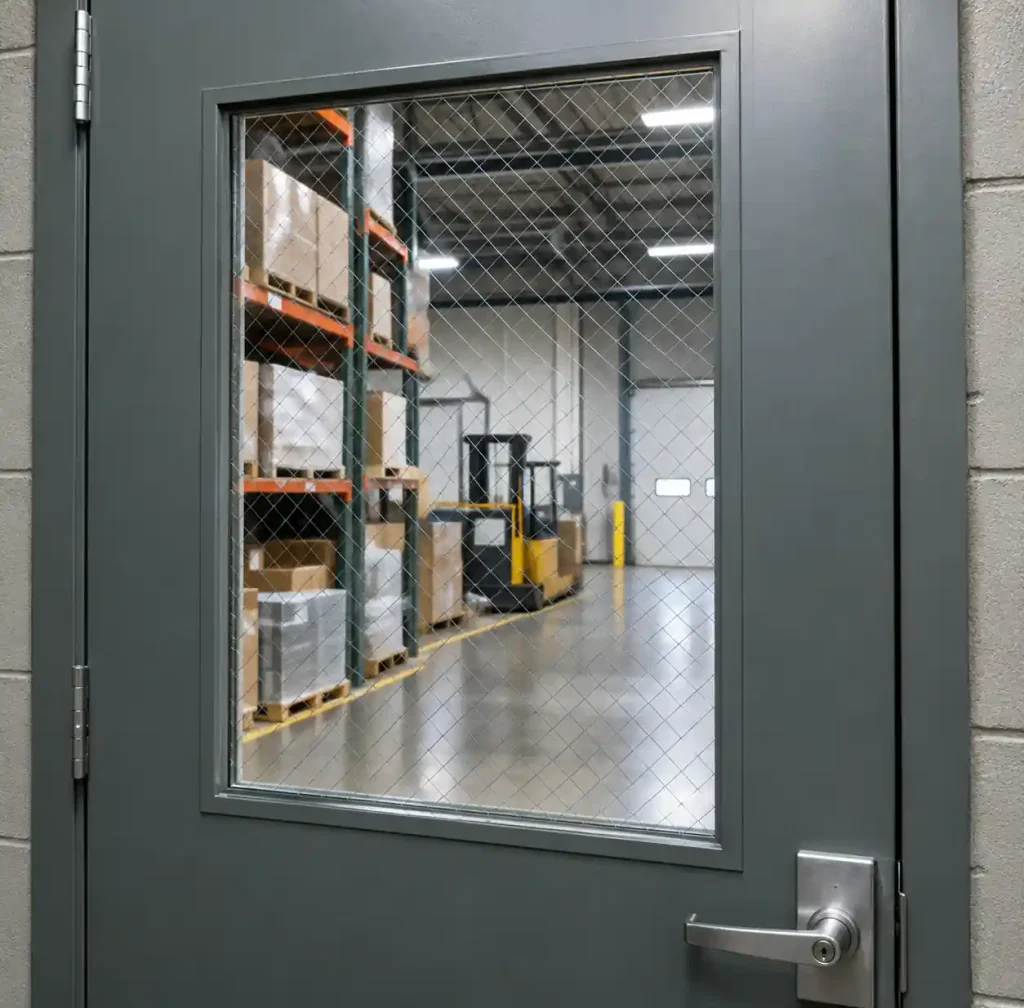
- Small door vision lites (under 1290cm²) where impact safety requirements don’t apply
- Historic building replacement where matching existing glazing is required for preservation approval
For these scenarios, wire glass’s 40-50% cost advantage justifies selection despite performance trade-offs.
Häufig gestellte Fragen
Is metal mesh laminated glass always fire-rated?
No. Metal mesh laminated glass is only fire-rated when tested as part of a complete assembly (glass + framing + seals) per ASTM E119 or EN 13501-2. Decorative metal mesh laminated glass without fire testing provides aesthetic value but no fire rating. Always specify tested assemblies and verify listings.
Can I retrofit wire glass with metal mesh laminated glass?
Usually, but not always. Metal mesh laminated glass is thicker (typically 12-14mm vs 6-7mm), so existing frames may lack sufficient depth. Edge clearance and glazing details also differ. A glazier should field-verify frames before specifying laminated replacements.
Does the metal mesh block wireless signals or RFID?
Fine mesh (under 1mm wire, tight spacing) can attenuate WiFi and cellular by 3-10dB depending on frequency. For connectivity-critical spaces, specify open mesh with >60% open area. Coarse architectural mesh (3-5mm spacing) causes minimal signal loss. RFID operates at lower frequencies less affected by mesh.
How do I clean metal mesh laminated glass?
Standard glass cleaning applies. The mesh is fully encapsulated within the interlayer—cleaners cannot contact metal directly. Avoid abrasive pads that scratch glass. Stainless steel mesh won’t corrode, but brass or copper mesh remains as-fabricated indefinitely due to encapsulation.
Can metal mesh laminated glass be tempered?
Yes, but glass layers are tempered before lamination. You cannot temper an already-laminated panel. Specify tempered glass layers during ordering. Tempered glass with metal mesh provides highest impact resistance, meeting EN 12600 Class 1(B)1 or CPSC Category I requirements.
What happens if metal mesh laminated glass breaks?
The laminated construction holds all fragments—glass and mesh—in place. The broken panel maintains visual and weather barrier, though structural capacity reduces. Replace promptly, but the panel won’t collapse or create immediate hazards, contrasting sharply with wire glass’s sharp, hazardous breakage.
Schlussfolgerung
Metal mesh laminated glass represents the modern evolution of wire glass’s original purpose: combining transparency with structural reinforcement and fire resistance. For commercial projects where aesthetics, safety performance, and long-term value matter, metal mesh laminated glass justifies its cost premium through superior impact resistance, design flexibility, and lifecycle durability.
Wire glass persists only where tight budgets override performance—and even then, safety limitations and code restrictions increasingly narrow acceptable applications. Architects specifying fire-rated glazing should default to laminated solutions meeting contemporary safety standards rather than relying on legacy products designed for less demanding requirements.
At Zhongbo Glass, our manufacturing experience across hundreds of projects shows a clear trend: metal mesh laminated specifications grow while wire glass volumes decline. The market recognizes what building codes are formalizing—safety glazing performance and occupant protection cannot be compromised for modest first-cost savings. For your next fire-rated glazing specification, evaluate total lifecycle cost, safety compliance, and aesthetic contribution rather than focusing solely on material cost per square foot.