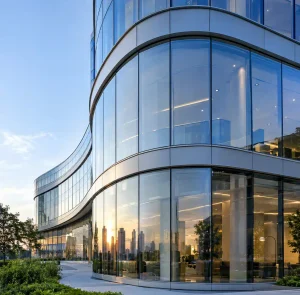
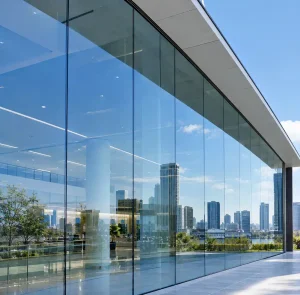
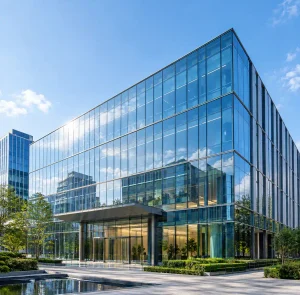
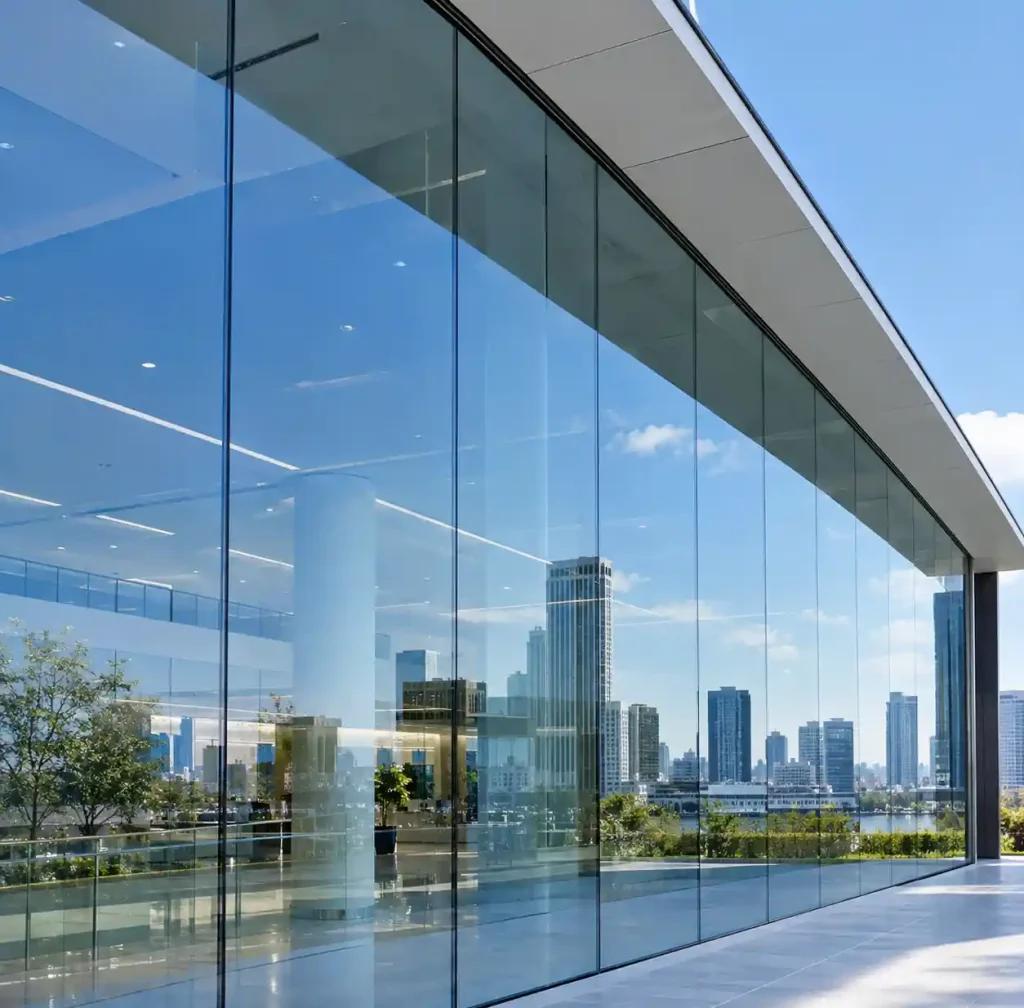
Structural silicone glazing (SSG) eliminates visible metal frames from building facades, transferring wind and dead loads from glass panels directly to the building structure through high-performance silicone sealants. This system achieves uninterrupted glass surfaces with superior weather resistance when properly designed and installed. At Zhongbo Glass, our 28-meter production capacity enables seamless execution of oversized SSG curtain walls.
What is Structural Silicone Glazing?
Structural silicone glazing bonds glass panels to curtain wall glass frames using two-component structural silicone rather than mechanical fasteners. The silicone bears all structural loads—wind pressure, seismic movement, and panel self-weight—while maintaining weathertight integrity across temperature extremes and UV exposure. Unlike conventional systems with visible cap profiles, SSG presents a flush exterior that enhances daylighting and delivers the clean aesthetic modern architects demand.
Key Design Requirements
Bite Depth and Joint Dimensions
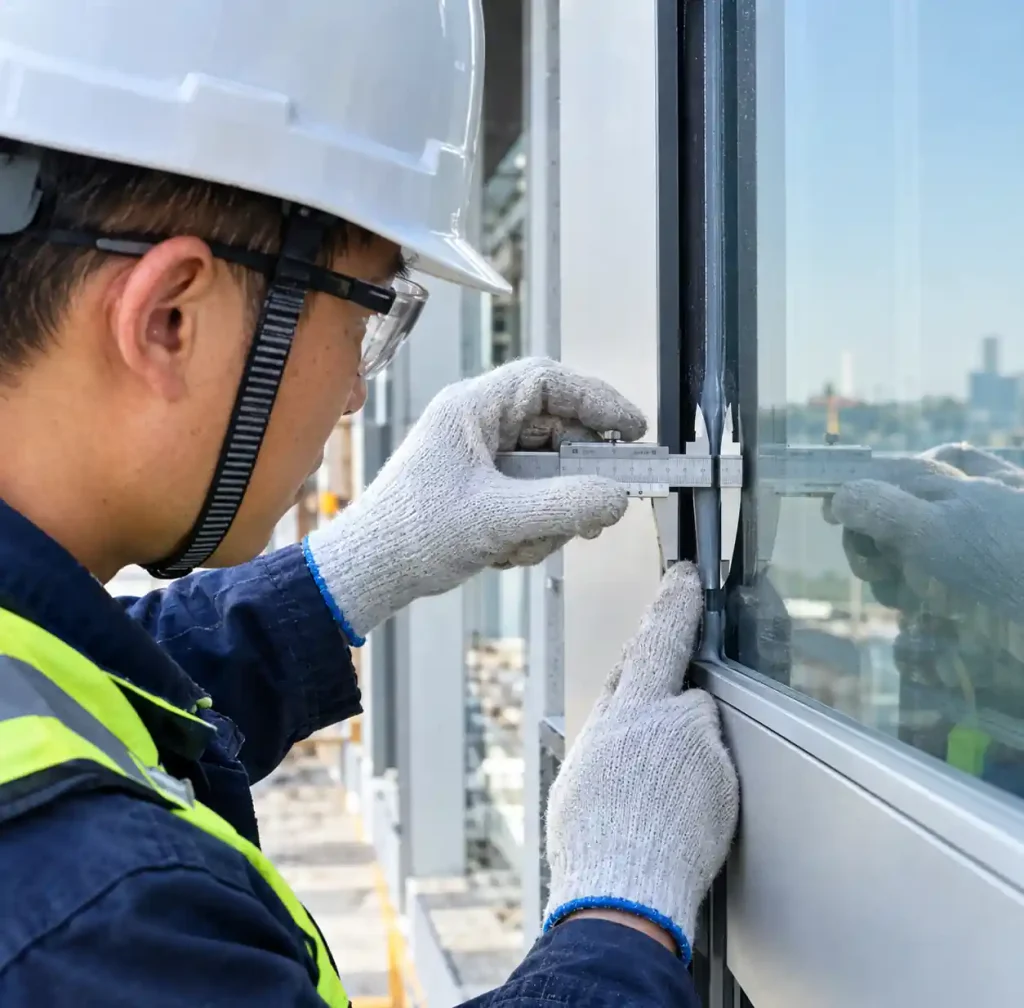
Bite depth—the silicone bonding width between glass edge and frame—governs structural capacity. Minimum bite depths based on glass area:
| Glass Panel Area | Minimum Bite Depth | Typical Bite Depth |
|---|---|---|
| < 3 m² | 6 mm | 8-10 mm |
| 3-5 m² | 8 mm | 10-12 mm |
| 5-10 m² | 10 mm | 12-16 mm |
| > 10 m² | 12 mm | 16-20 mm |
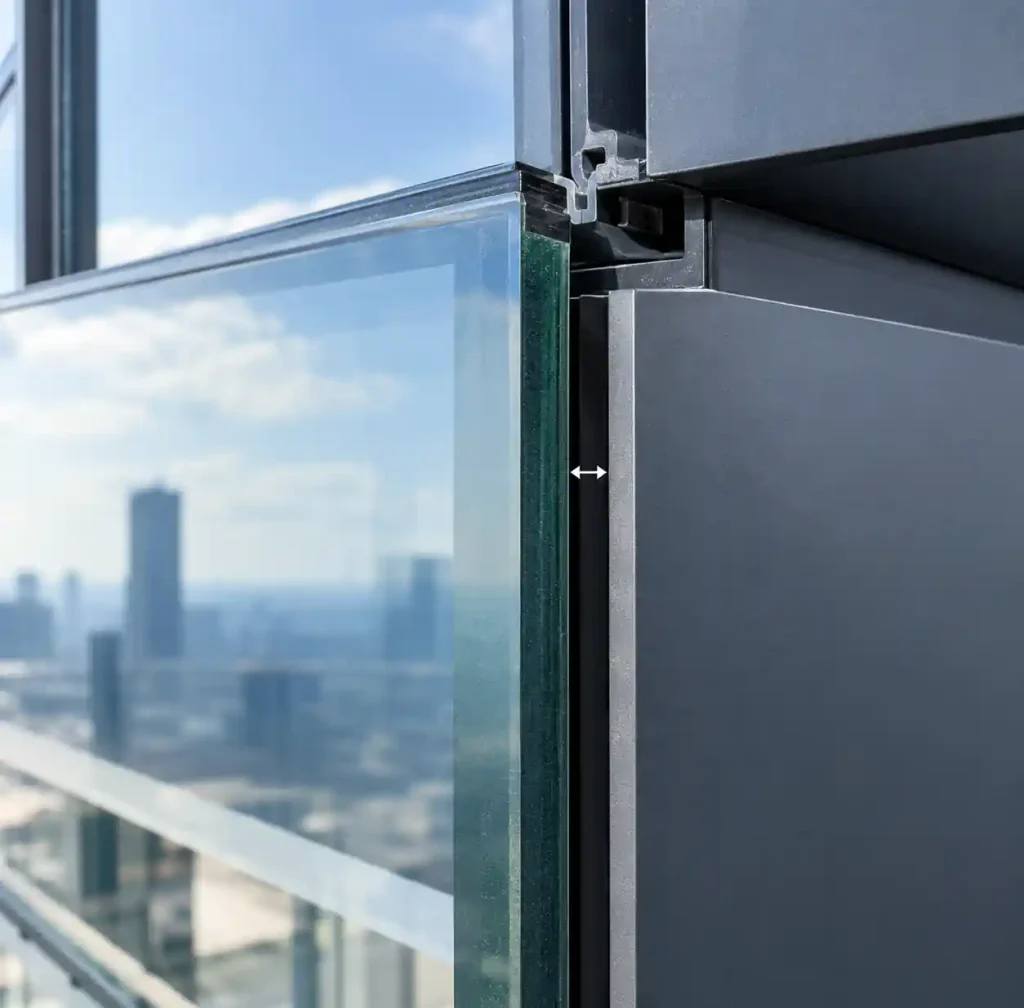
Joint thickness must maintain 2:1 width-to-depth ratio minimum. Edge clearances must accommodate thermal expansion: 3mm minimum at perimeter, 5mm for panels exceeding 2m in either dimension.
Material Compatibility Testing
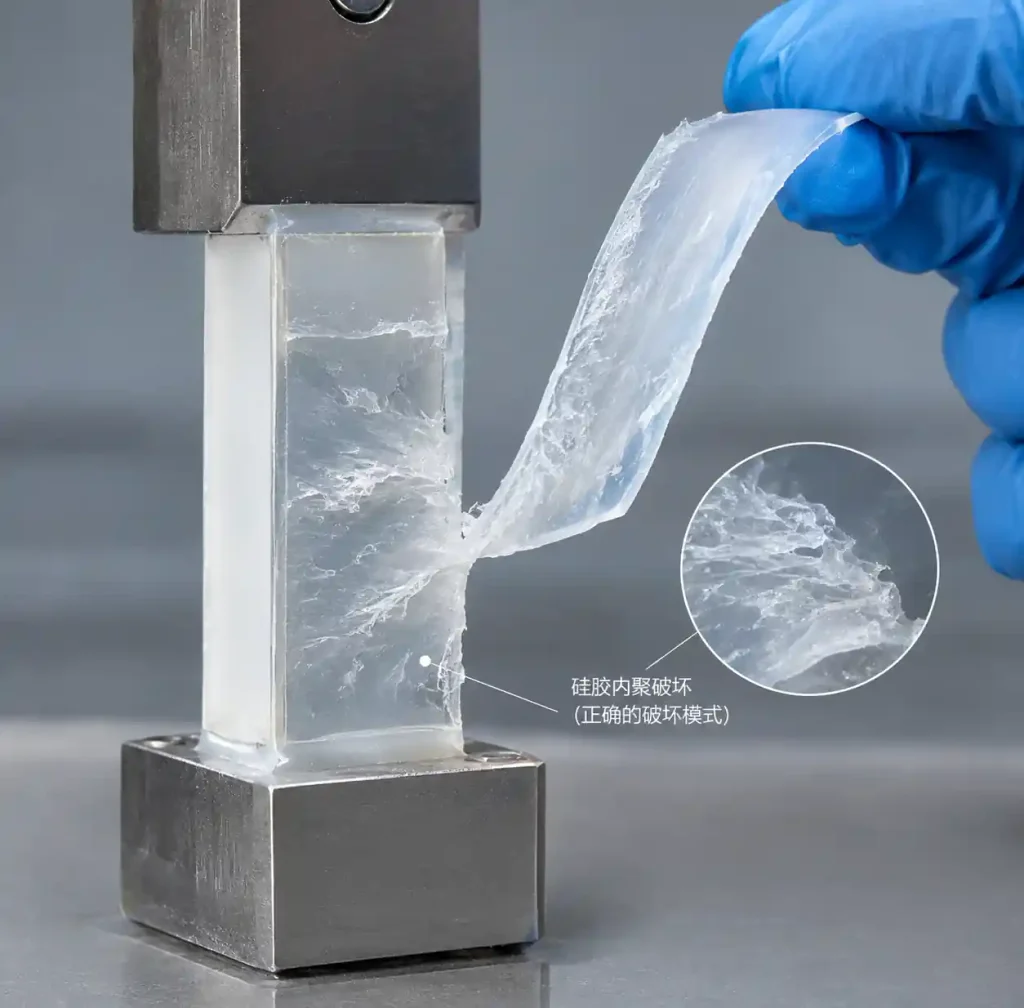
Low-E glass with certain soft-coat formulations can exhibit adhesion failure. Before specifying SSG, perform ASTM C1401 adhesion testing on actual project materials under thermal cycling (-20°C to 80°C). Verify cohesive failure mode where silicone tears internally rather than delaminating from substrates.
Laminated glass requires SGP interlayers for SSG applications as PVB can outgas volatiles that compromise silicone cure.
Load Considerations
Design loads include wind pressure (both positive and negative with 1.5 safety factor minimum), dead load from glass self-weight, seismic racking displacement, and thermal movement between glass and aluminum frames. Silicone design stress limits: 140 kPa for wind load, 21 kPa for dead load, accounting for aging and environmental degradation over 25+ year service life.
Critical Design Considerations
Edge Clearance and Thermal Movement
Insufficient edge clearance causes SSG failure when glass thermally expands and contacts the frame, creating concentrated stress that tears the silicone. Calculate clearances using thermal expansion coefficients (glass: 9 × 10⁻⁶ /°C, aluminum: 23 × 10⁻⁶ /°C). For a 3m panel across 70°C range, specify minimum 4mm perimeter clearance plus fabrication tolerance buffer.
Setting Blocks and Support
Tempered glass panels require continuous support during silicone cure (7-21 days). Setting blocks at quarter-points transfer dead load without inducing edge stress. Use EPDM or silicone rubber blocks, never PVC which leaches plasticizers that inhibit cure. For jumbo panels exceeding 3.5m height, additional intermediate support may be required. Our 4200mm × 28000mm production capacity enables manufacturing panels that minimize joints.
Weather Seal vs Structural Seal
SSG systems employ two silicone beads: structural silicone (interior, bonding glass to frame) and weather seal (exterior, preventing water intrusion). The structural bead carries all loads; the weather seal is non-structural. Never reverse this—exterior bonding exposes load-bearing joints to direct UV and moisture, accelerating degradation.
Installation Best Practices
Surface Preparation
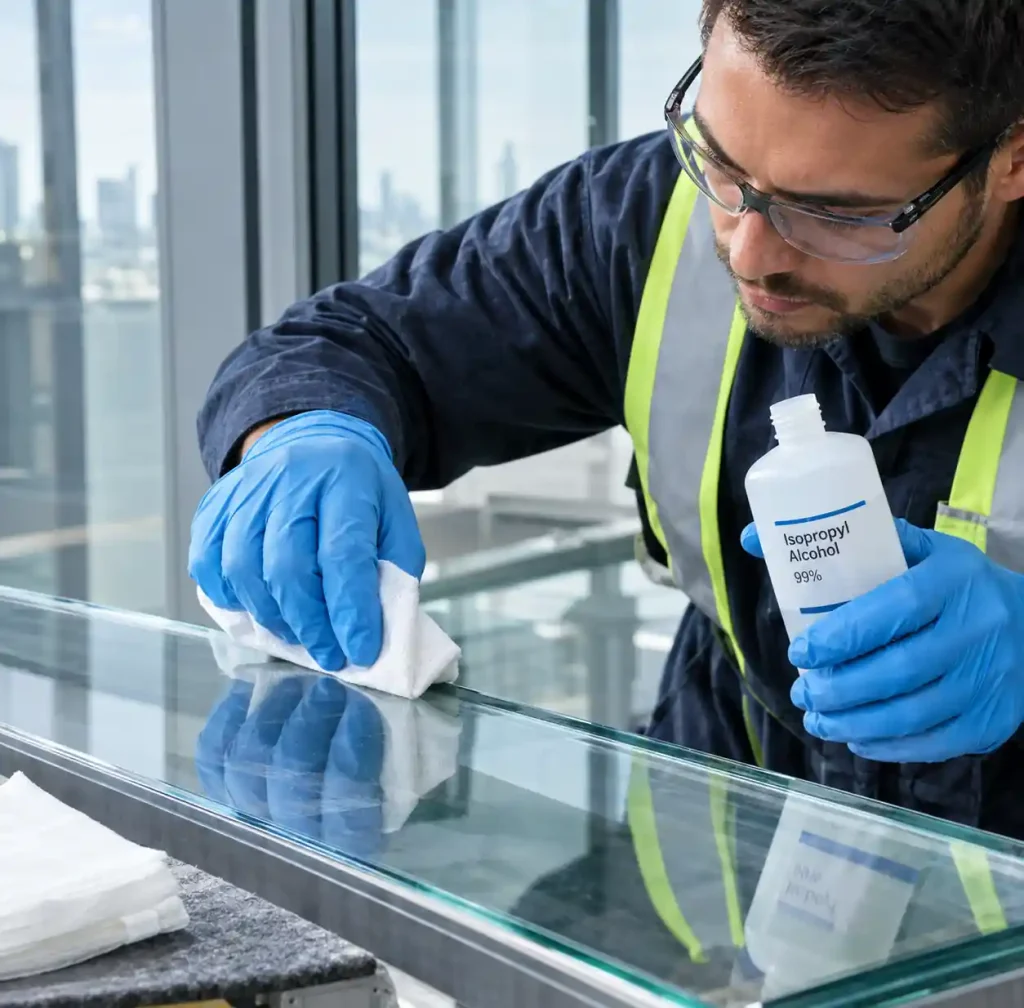
Silicone adhesion failures trace to contaminated bonding surfaces. Achieve pristine cleanliness through three steps: 1) Solvent wipe with isopropyl alcohol using lint-free cloths until clean, 2) Prime if required per manufacturer specifications, 3) Second IPA wipe immediately before silicone application. Glass edges must be clean-cut without chips that concentrate stress.
| Installation Phase | Quality Control Checkpoints |
|---|---|
| Surface Prep | IPA wipe test (white cloth remains clean), primer flash-off verified |
| Silicone Application | Bead continuity, correct bite depth (measured at corners), mixing ratio verified |
| Cure Period | Temperature >5°C, <80% RH, no load for minimum 7 days |
| Final Inspection | Cohesive test samples show silicone tear (not adhesion failure) |
Environmental Conditions
Two-component structural silicone requires precise environmental control during application and cure: Temperature 5°C to 40°C, humidity <80% RH, enclosed work area preventing dust contamination. Winter installations may require temporary heating enclosures. Never accelerate cure with direct heat as this creates internal stress and voids.
Application Technique
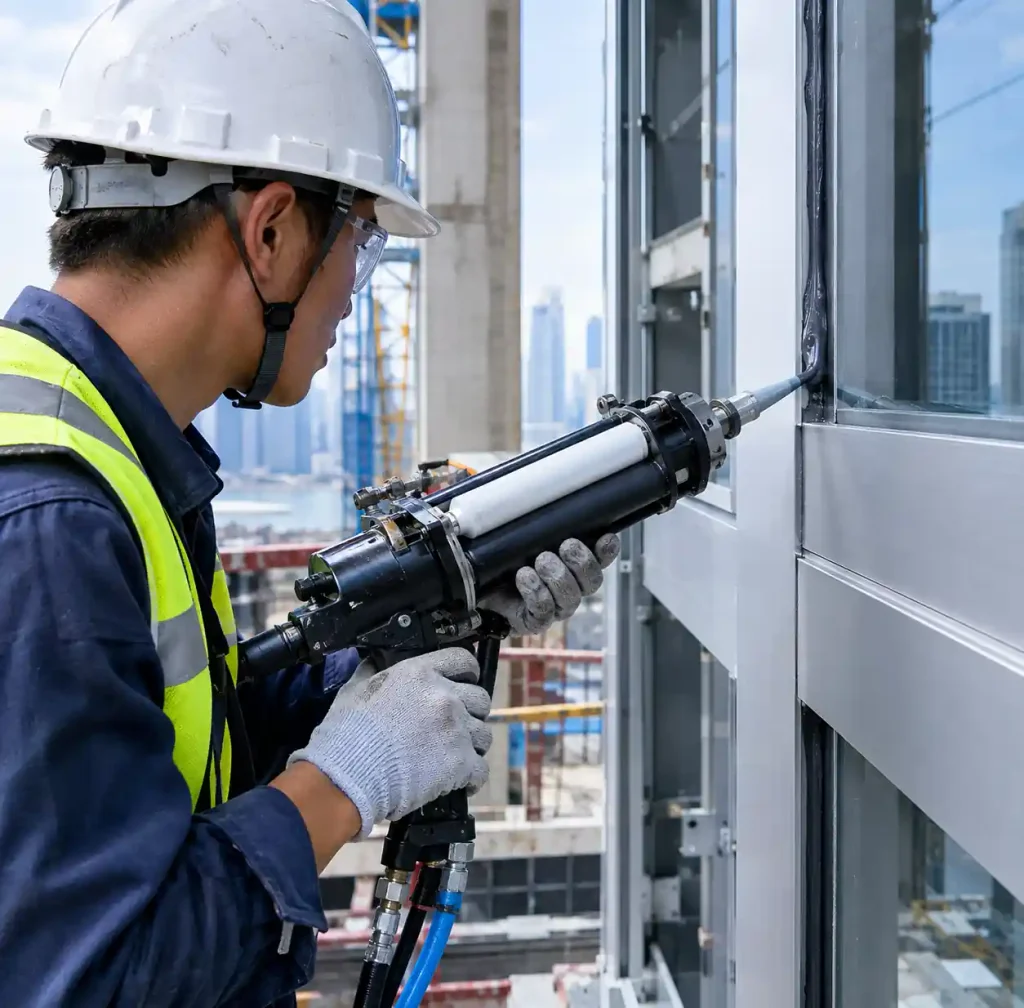
Apply structural silicone using professional pneumatic or electric dispensing guns ensuring consistent bead size and complete cavity filling. Apply continuous bead without stops/starts, tool immediately to press silicone into contact with both substrates without trapping air, and inspect every joint for voids or inadequate contact. For insulated glass units, edge deletion of Low-E coatings must extend 6-10mm beyond structural bite.
Quality Control and Testing
Adhesion Testing
Prior to production, conduct destructive adhesion testing on H-shaped specimens using actual project materials demonstrating cohesive failure mode (silicone tears internally, not at substrate interface), minimum adhesion strength >345 kPa per ASTM C1135, and consistent failure across all samples. Any adhesive failure indicates contamination or incompatible materials.
Inspection Checkpoints
At Zhongbo Glass, we implement inspections at every stage: glass edge quality and dimensional accuracy ±1mm, frame bonding surface flatness and alignment, bite depth verification at corners, bead continuity with proper setting blocks, and temperature/humidity logging during cure. Document all inspections as SSG failures often emerge 5-15 years post-installation.
Common SSG Failures and Prevention
Bite Depth Inadequacy
Undersized bite depth from design error, fabrication tolerance issues, or thermal expansion creates overstressed silicone. Prevention requires conservative design with safety margins, dimensional verification at multiple production stages, and adequate thermal clearances.
Adhesion Failure from Contamination
Oil from fingerprints, residual release agents from glass tempering, or environmental dust prevent proper silicone bonding. Prevention demands gloves during handling, proper solvent wiping technique, protecting cleaned surfaces until application, and environmental controls.
Premature Loading During Cure
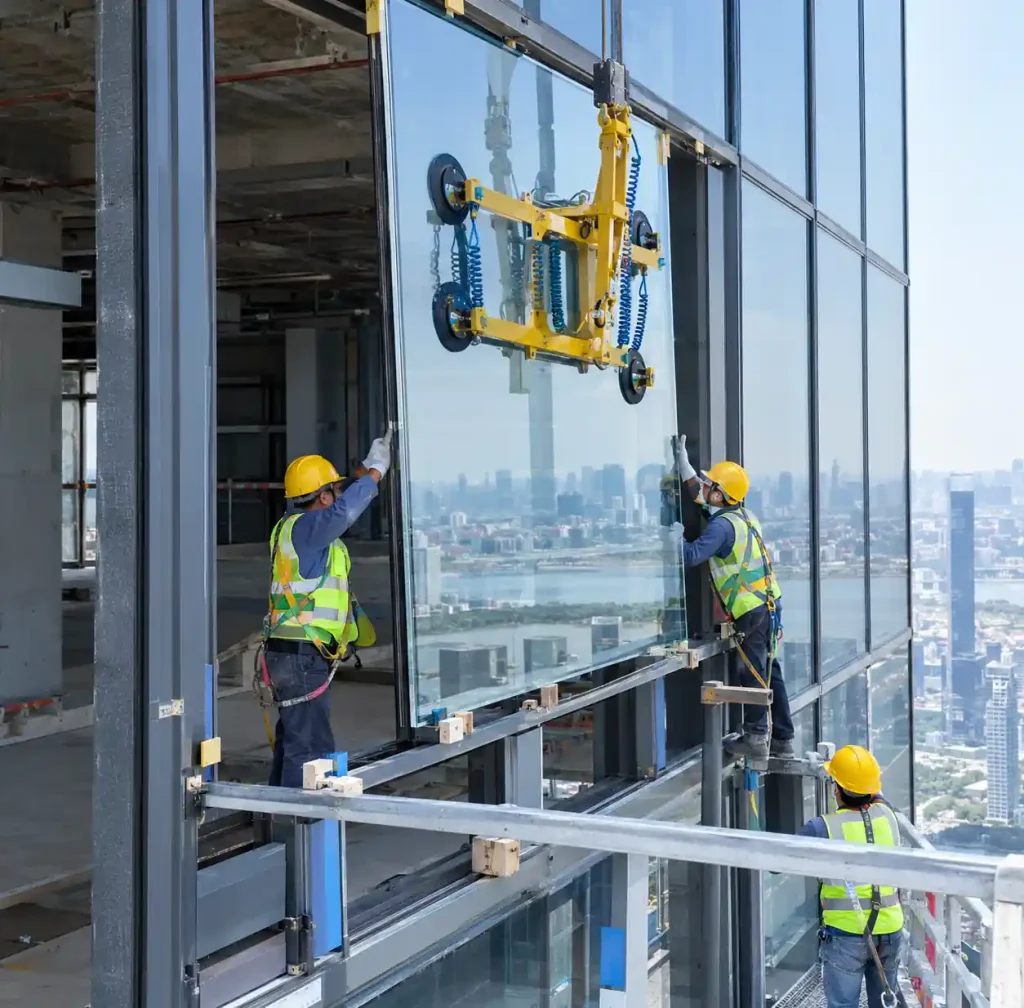
Silicone requires 7-21 days full cure before bearing loads. Premature loading creates permanent set or internal voids. Protect installations with temporary bracing, weather enclosures, restricted access, and schedule during favorable weather windows.
Advanced SSG Applications
Four-Sided Structural Glazing
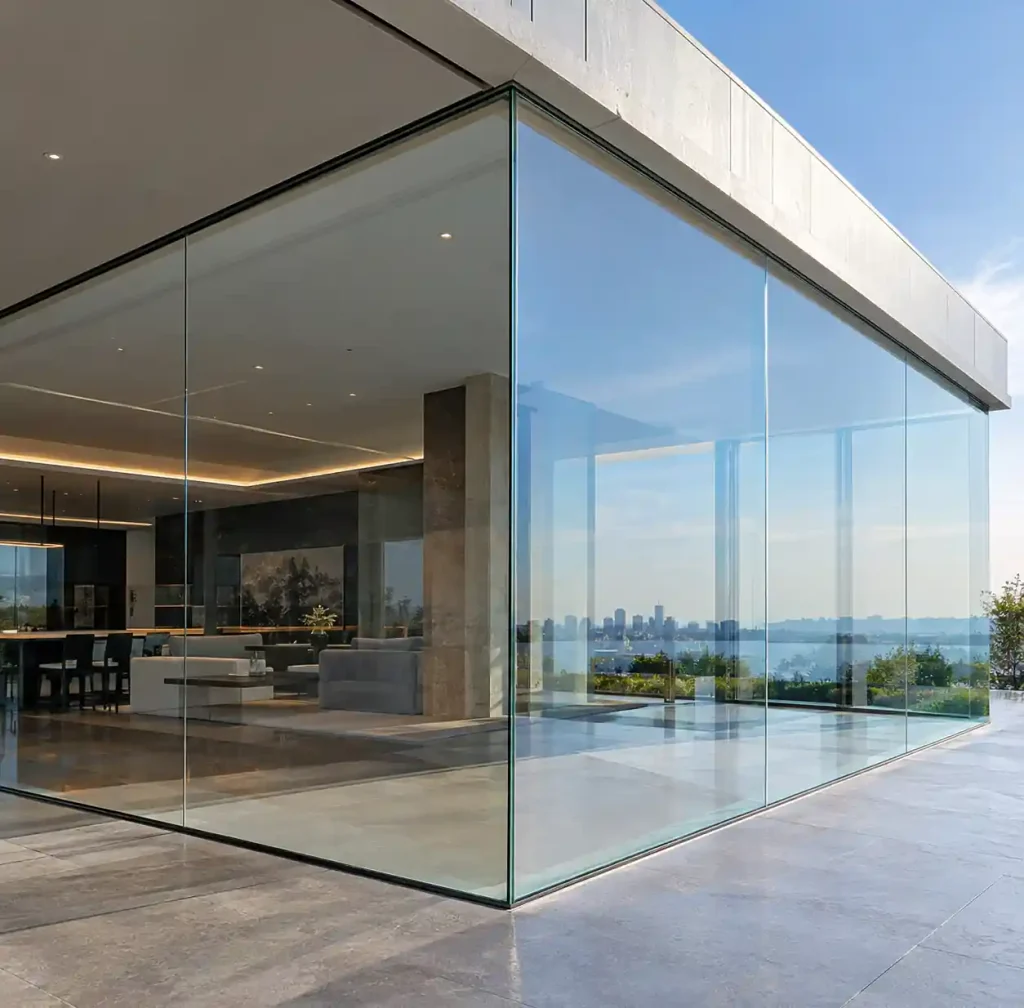
Four-sided SSG eliminates all visible framing for seamless glass walls, requiring increased bite depth (12-20mm all edges), continuous structural silicone without interruption, enhanced dead load capacity for horizontal bites, and careful setting block coordination. Zhongbo Glass supplied four-sided SSG systems for landmark projects including Shanghai Museum East Hall where 12.4m glass ribs required precise structural coordination.
Curved and Complex Geometries
Curved facades present additional SSG challenges: differential thermal expansion, non-planar bonding surfaces requiring special tooling, and complex load paths. Curved glass in SSG requires precise radius control during hot bending (our minimum radius: 1500mm for 12mm glass), structural analysis accounting for compound curvature, custom-fabricated support frames matching glass curvature within 1mm tolerance, and modified silicone application techniques preventing voids.
Fire-Rated and Insulated Glass
Fire-resistant glass can integrate into SSG with compatibility testing between intumescent interlayers and structural silicone. Fire-rated SSG requires increased bite depth to accommodate interlayer movement during fire exposure and frames rated for same fire duration as glass assembly.
IGU in SSG require edge deletion of Low-E coatings extending 6-10mm beyond bond line. For triple-glazed units exceeding 150kg, design must account for sustained dead load and spacer deflection under gravity.
Frequently Asked Questions
What is the typical lifespan of structural silicone in glazing applications?
Properly designed and installed structural silicone systems demonstrate service life exceeding 25-30 years with minimal degradation. Key factors affecting longevity include UV exposure (interior cavity bonding protects silicone), thermal cycling magnitude, and initial adhesion quality. Regular inspection every 5-7 years can identify any edge deterioration before structural capacity is compromised.
Can structural silicone glazing be used in seismic regions?
Yes, SSG performs well in seismic applications when designed to accommodate inter-story drift. The silicone’s elasticity allows differential movement between floors during seismic events without glass-to-frame contact. Design must account for maximum anticipated drift ratios (typically 1-2% of story height) and provide adequate edge clearances.
How do you inspect structural silicone after installation?
Post-installation inspection focuses on visual examination for cohesive integrity, bite depth verification through non-destructive measurement, and monitoring for delamination signs at edges. Periodic inspection every 5-7 years should assess silicone for cracking, hardening, or adhesion loss. Infrared thermography can detect delaminated areas through thermal signature differences.
What is the cost difference between SSG and conventional curtain wall systems?
Structural silicone glazing typically adds 15-30% to curtain wall costs compared to mechanically captured systems. Premium comes from specialized materials (structural silicone costs $15-25/linear meter), skilled labor requirements, extended fabrication time for cure, and comprehensive quality testing. However, SSG eliminates exterior metal framing maintenance and provides superior thermal performance.
Can you retrofit existing curtain walls with structural silicone glazing?
Retrofitting conventional curtain walls to SSG is rarely cost-effective. Existing frames lack proper bonding surfaces and dimensional configurations compatible with structural bite requirements. Complete frame replacement is typically necessary, approaching the cost of new curtain wall installation.
What weather seal maintenance does SSG require?
The exterior weather seal (non-structural perimeter bead) requires periodic replacement every 10-15 years as it experiences direct environmental exposure. Weather seal failure allows water intrusion but does not affect structural capacity. The interior structural silicone remains inaccessible and should not require maintenance if properly installed.
Conclusion
Structural silicone glazing transforms architectural vision into reality through engineered simplicity: eliminating visible framing while maintaining structural integrity and weathertight performance. Success requires rigorous attention to design fundamentals—adequate bite depth, proper material compatibility, conservative load analysis—combined with disciplined installation practices ensuring pristine adhesion and full cure before loading. At Zhongbo Glass, we deliver SSG systems that perform reliably across decades of service, supporting architects and contractors from initial design consultation through final installation.