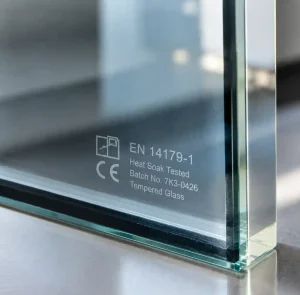
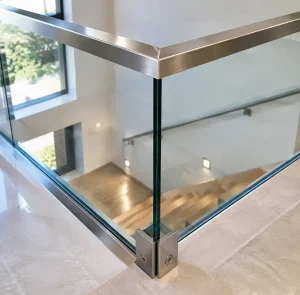
Heat soak testing reduces spontaneous tempered glass breakage by approximately 99% by detecting nickel sulfide (NiS) inclusions before installation. The process involves heating glass to 290°C for 2-8 hours in a controlled furnace, forcing unstable NiS particles to expand and break defective panels in the factory rather than in your building. While it adds roughly 3% to material costs, heat soak testing proves essential for high-rise facades, overhead glazing, and large-format installations where post-installation failure would be dangerous or prohibitively expensive.
After two decades manufacturing architectural glass including projects like the Zhangjiajie Grand Canyon Glass Bridge, we’ve witnessed firsthand how NiS-induced failures can devastate project timelines and budgets. This guide explains when heat soak testing is worth the investment and how the process actually works.
What Are Nickel Sulfide Inclusions?
Nickel sulfide (NiS) inclusions are microscopic crystalline impurities—typically 0.04 to 0.65mm in diameter—that form during the glass melting process. These particles originate from stainless steel equipment contamination or raw material impurities. During tempering, when glass is rapidly cooled from approximately 650°C, NiS particles become trapped in a high-temperature alpha-phase crystal structure.
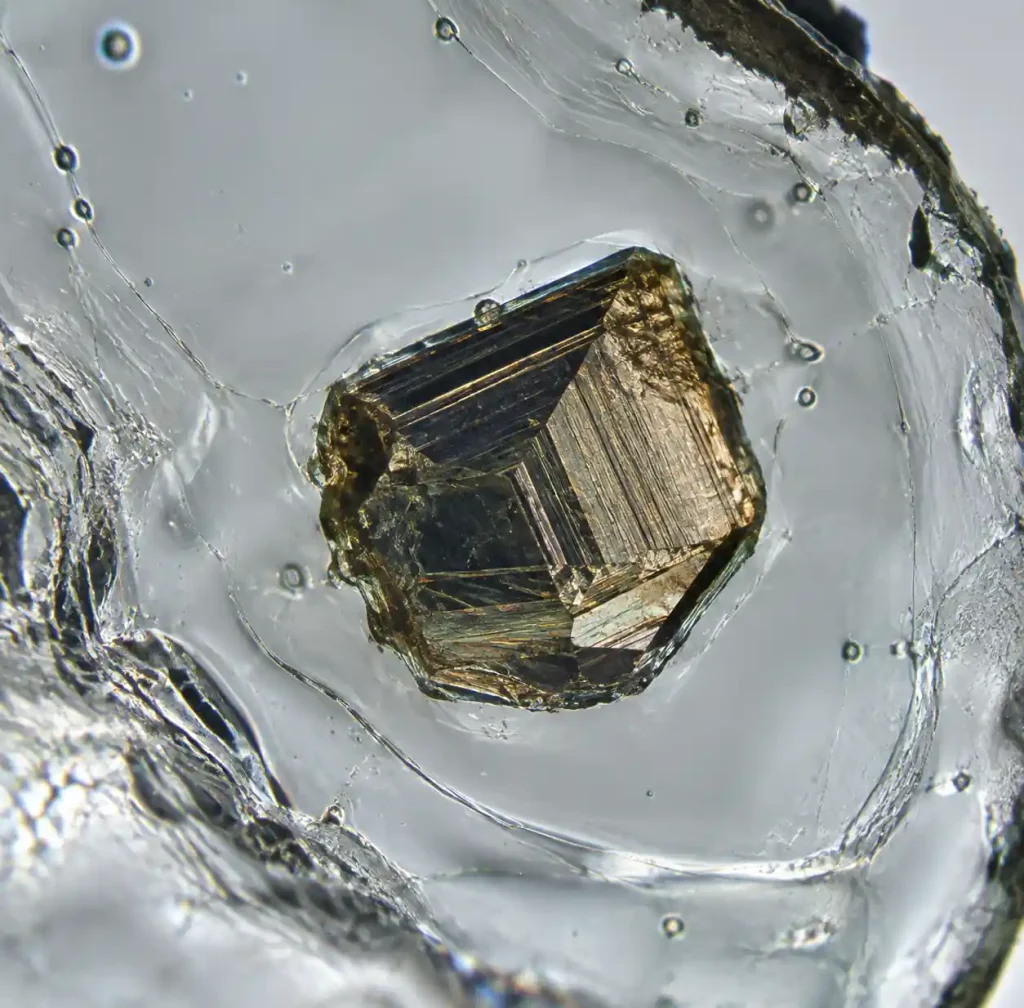
The problem emerges over time. At ambient temperatures, NiS naturally wants to transform from the compact alpha phase to a larger-volume beta phase. This expansion can increase the particle size by up to 4%, creating internal stress within the tempered glass. When this stress exceeds the glass’s surface compression strength, spontaneous breakage occurs—sometimes months or years after installation.
Industry data indicates approximately 1 in every 400-500 tons of standard tempered glass contains problematic NiS inclusions. For a typical commercial project using 10,000 square meters of tempered glass, this translates to 2-3 potential spontaneous failures without heat soak treatment.
How Heat Soak Testing Works
Heat soak testing (HST) accelerates the NiS phase transformation process under controlled factory conditions. At Zhongbo Glass, our two heat soak production lines can process up to 3660mm × 24000mm panels with a daily capacity of 1600㎡.
The process follows EN 14179-1 standards:
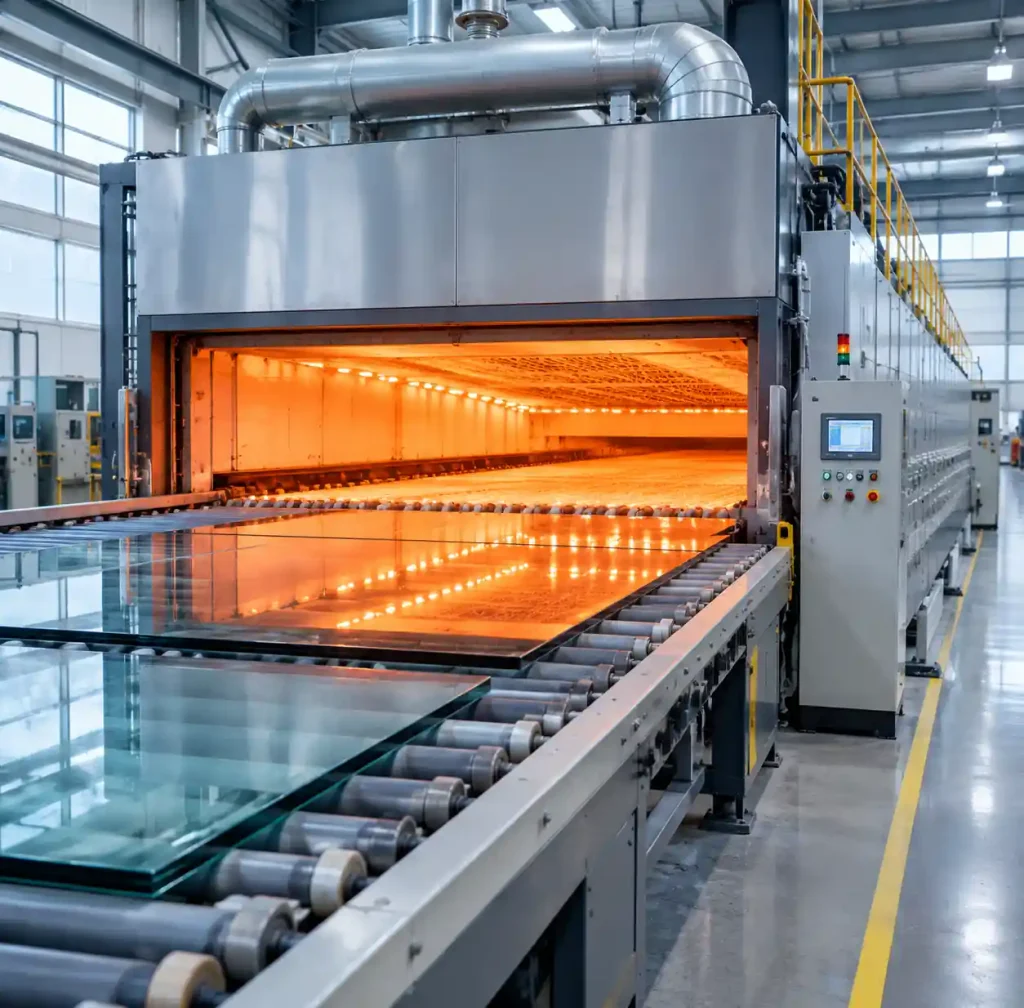
Temperature Protocol: Glass panels are loaded into the heat soak oven and gradually heated to 290°C (±10°C). This temperature accelerates the alpha-to-beta NiS transformation without damaging the glass.
Soak Duration: Panels are held at 290°C for a minimum of 2 hours, though we use extended 4-8 hour cycles for critical applications. Longer soak times increase detection probability but also increase production time and costs.
Cooling Phase: After the hold period, glass is gradually cooled. Any panels containing unstable NiS inclusions typically break during the heating or early cooling phases. Surviving panels undergo visual inspection before shipping. Broken panels are replaced at no additional cost.
The physics work elegantly: by raising the glass temperature, we provide thermal energy for NiS particles to complete their phase transformation rapidly. Particles that would take months or years at room temperature complete the process in hours at 290°C.
Heat Soak Testing vs. Standard Tempered Glass
| Criterion | Standard Tempered Glass | Heat Soak Tested Glass |
|---|---|---|
| Spontaneous Breakage Risk | 1 in 400-500 tons (~0.002%) | Reduced by 95-99% |
| Processing Time | 2-3 days | 4-6 days (additional 2-3 days) |
| Cost Premium | Baseline | +3-5% total material cost |
| EN 14179-1 Compliance | Not applicable | Required certification |
| Recommended Applications | Low-rise, easily accessible | High-rise, overhead, critical installations |
| Replacement After Installation | Customer responsibility | Extremely rare, typically covered |
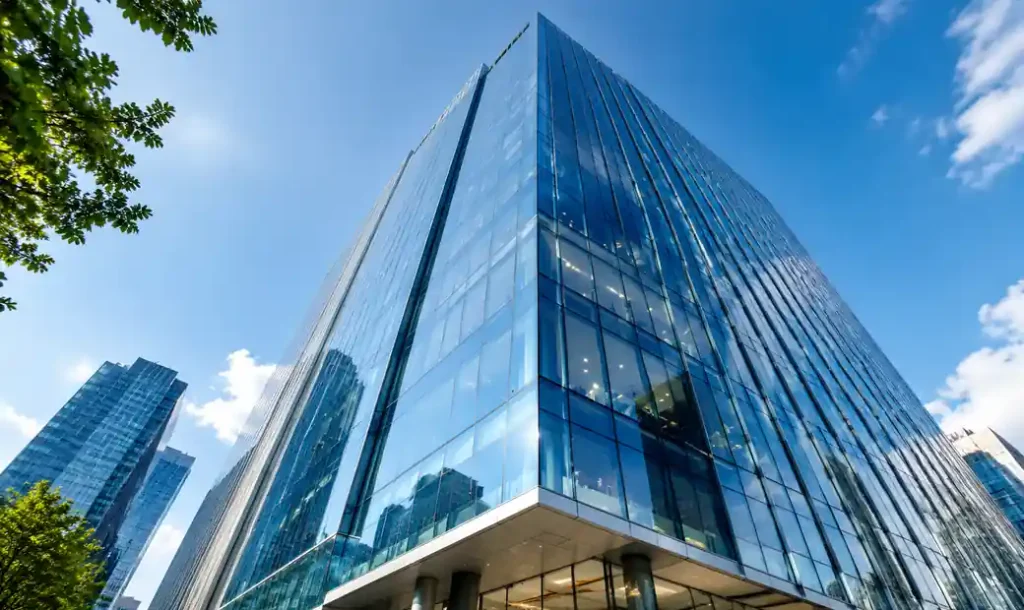
The decision matrix becomes clearer when you calculate replacement costs. A single tempered glass panel failure 15 stories up might cost $5,000-15,000 to replace including lift equipment, safety protocols, and building downtime. For a project using 200 large-format panels, the 3% HST premium ($3,000-6,000) insures against potential replacement costs exceeding $100,000.
EN 14179-1 Standard Compliance
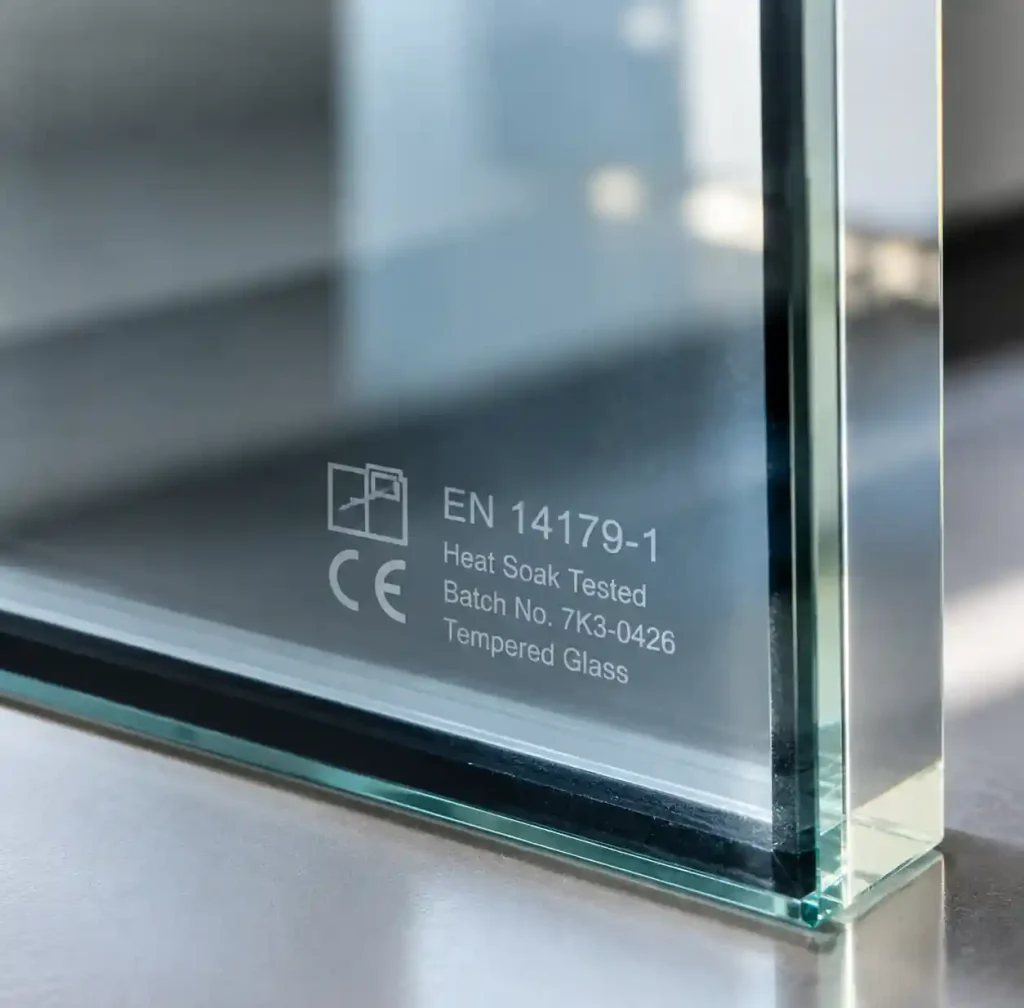
The European standard EN 14179-1:2016 “Glass in building – Heat soaked thermally toughened soda lime silicate safety glass” establishes the technical requirements and testing protocols for heat soak treatment.
Key compliance requirements include:
Temperature Control: Furnace temperature maintained at 290°C ±10°C with verification thermocouples throughout the oven.
Minimum Soak Time: 2 hours at target temperature for all glass thicknesses, measured from when the last panel reaches 290°C.
Documentation: Complete batch records including furnace temperature charts, soak duration, panel identification, and quality control sign-offs.
Certification Marking: Heat soak tested glass receives permanent marking identifying the manufacturer, standard compliance (EN 14179-1), and batch traceability codes.
At Zhongbo Glass, every heat soak batch undergoes automated temperature monitoring with digital records maintained for 10 years. This documentation proves essential for insurance claims, building code compliance, and warranty validation.
When Is Heat Soak Testing Necessary?
Not every tempered glass application justifies the additional cost and lead time. Based on our manufacturing experience with over 2,000 architectural projects, we recommend heat soak testing for:
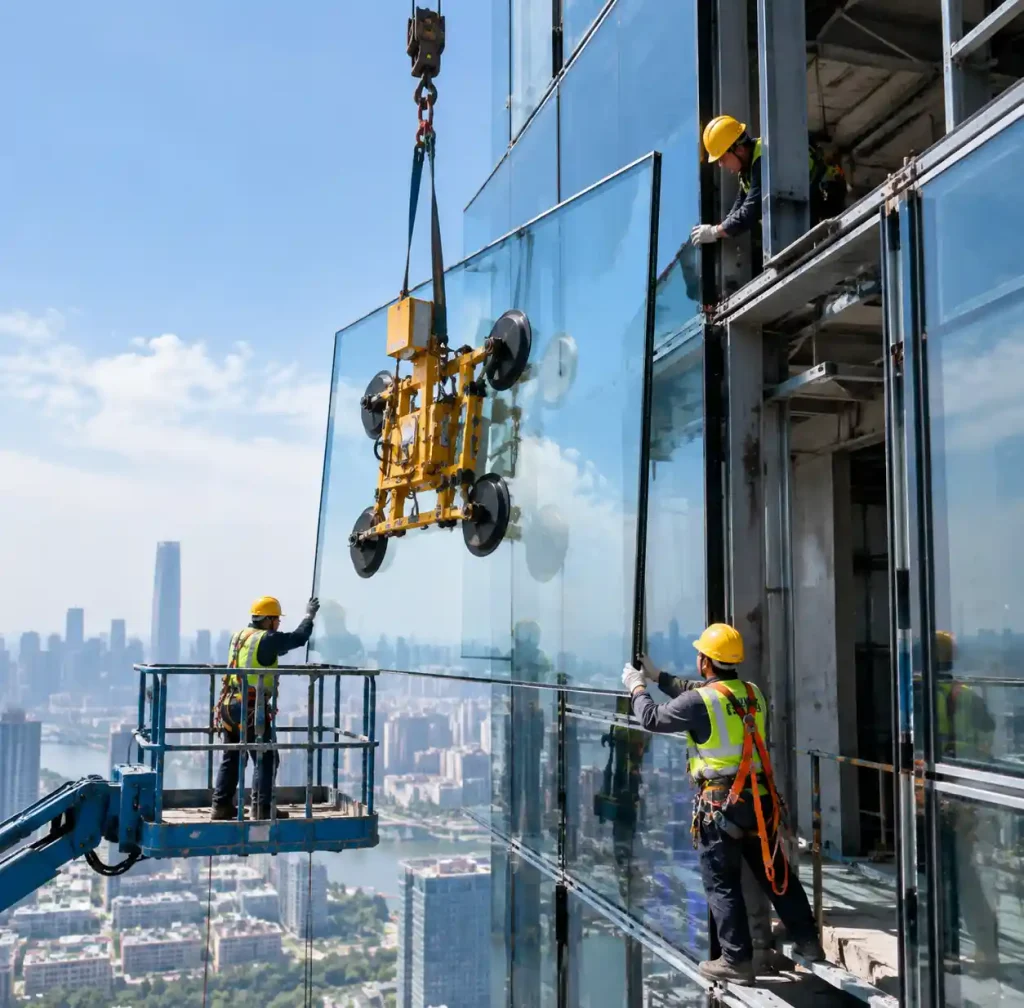
High-Rise Building Facades: Any installation above 5 stories where replacement requires specialized equipment. The International Building Code increasingly mandates HST for overhead glazing and facades exceeding specific heights.
Overhead Glazing: Skylights, canopies, and glass roofs where falling glass poses direct safety risks. Many jurisdictions now require HST for all overhead glazing regardless of building height.
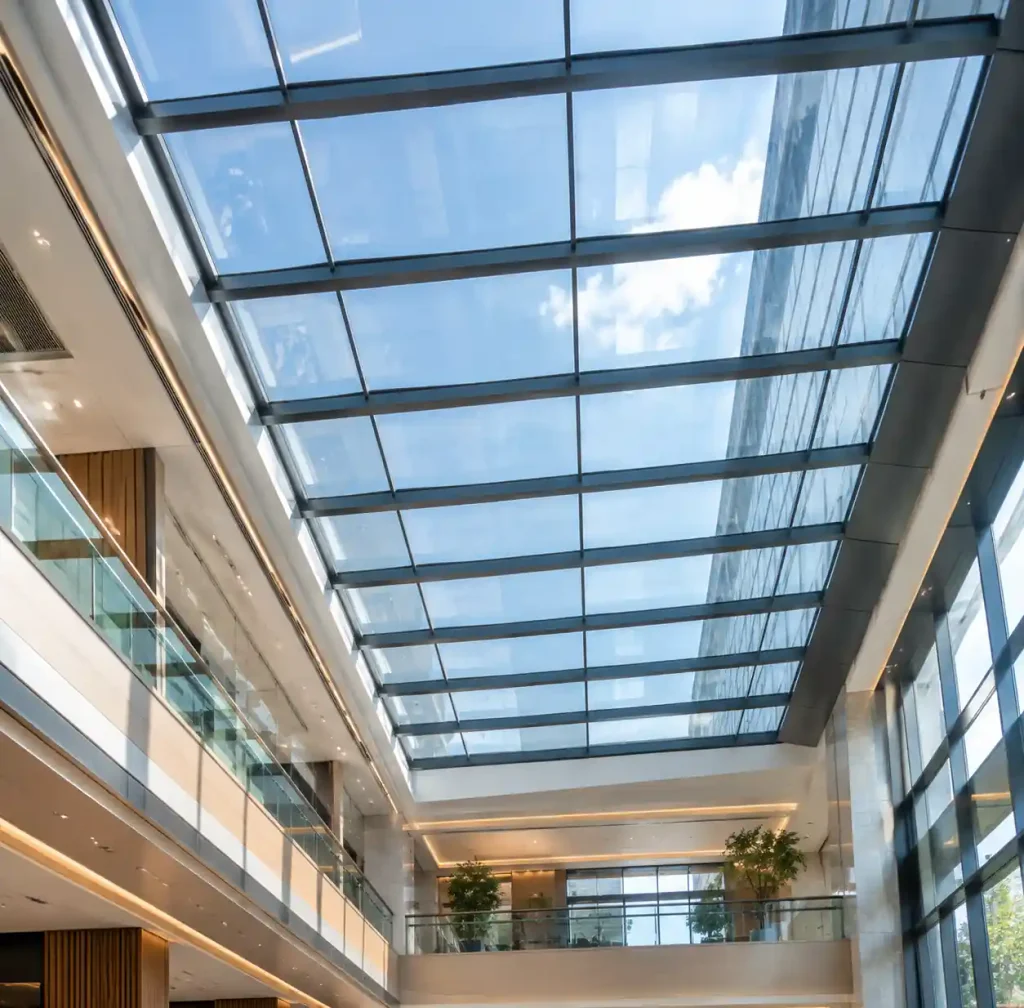
Large-Format Panels: Glass exceeding 3 square meters. Our production capabilities extend to 3660mm × 28000mm for standard tempering and 3660mm × 24000mm for heat soak treatment. Larger panels mean higher individual replacement costs and greater safety consequences if failure occurs.
Critical Infrastructure: Hospitals, airports, data centers, and facilities where glass failure causes significant operational disruption beyond replacement costs.
Laminated Glass Applications: When tempered glass forms the structural component of laminated assemblies. A NiS failure in one layer can compromise the entire unit’s integrity.
Projects With Extended Warranties: Many architects specify HST to support 10-15 year glass warranties. Without heat soak testing, warranty coverage for spontaneous breakage is typically excluded or severely limited.
Cost-Benefit Analysis of Heat Soak Testing
| Project Scenario | Panel Count | Standard Tempered | Heat Soak Tested | Potential Savings |
|---|---|---|---|---|
| Low-rise office (3 stories) | 150 panels @ 2m² | $45,000 | $46,350 (+3%) | Limited—accessible replacement |
| High-rise residential (25 stories) | 400 panels @ 3m² | $240,000 | $247,200 (+3%) | $50,000-150,000 (2-3 avoided failures × $25k-50k replacement) |
| Airport terminal overhead glazing | 200 panels @ 4m² | $160,000 | $164,800 (+3%) | $80,000-200,000 (operational downtime + emergency replacement) |
| Commercial curtain wall | 600 panels @ 2.5m² | $300,000 | $309,000 (+3%) | $60,000-180,000 (1-3 avoided high-altitude replacements) |
The return on investment becomes undeniable when factoring in intangible costs: tenant displacement, insurance premium increases, reputation damage, and project delays. One spontaneous breakage during occupancy can eliminate any initial savings from skipping heat soak testing.
The Reality of “Risk-Free” Heat Soak Testing
Heat soak testing significantly reduces but does not eliminate spontaneous breakage risk. Industry professionals must understand the process limitations:
Detection Rate: Heat soak testing catches approximately 95-99% of problematic NiS inclusions. Small inclusions or those positioned in low-stress zones might survive the process and still cause delayed failures.
Other Breakage Causes: Heat soak testing only addresses NiS inclusions. It does not prevent breakage from edge damage, installation stress, thermal stress from shading patterns, or impact events.
Process Variables: Furnace temperature uniformity, soak duration accuracy, and heating/cooling rates all affect detection effectiveness. Not all heat soak facilities maintain equally rigorous standards.
From our manufacturing perspective, we’ve observed approximately 1 post-installation spontaneous breakage per 10,000 square meters of heat soak tested glass over 10-year periods. Compare this to roughly 20-30 failures per 10,000 square meters of standard tempered glass.
Manufacturing Capacity and Lead Times
At Zhongbo Glass, our heat soak capacity reflects our commitment to large-format architectural glazing:
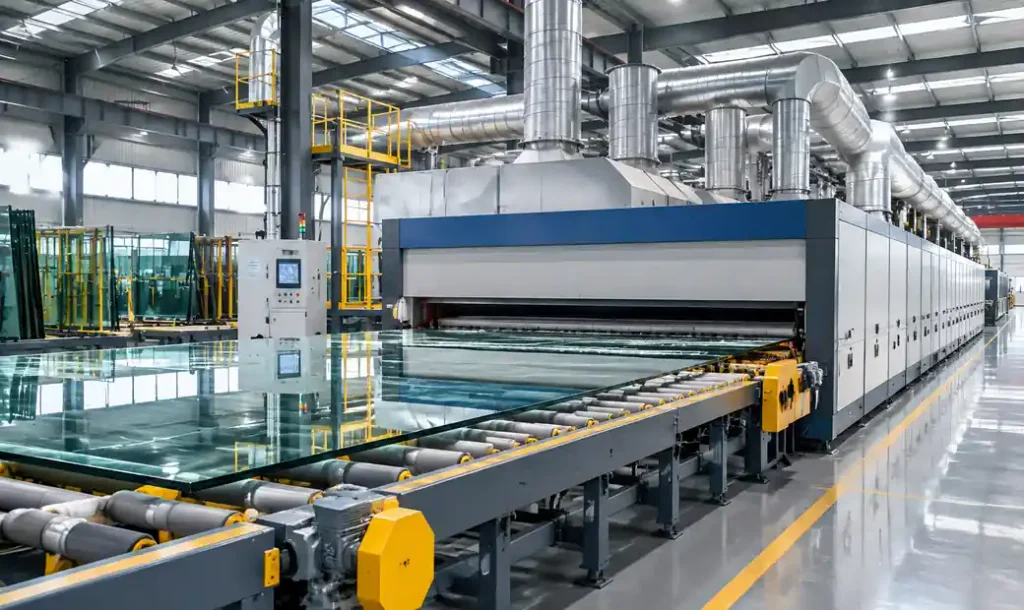
Equipment Capacity: 2 heat soak production lines accommodating panels up to 3660mm × 24000mm—among the largest heat soak capacity globally. This enables us to treat the same oversized panels we produce on our 3660mm × 28000mm tempering lines.
Daily Throughput: 1600㎡ per 24-hour period across both lines. A typical high-rise tower facade requires 3,000-5,000㎡ of tempered glass, representing 2-3 days of dedicated heat soak processing.
Lead Time Impact: Heat soak testing adds 2-3 days to standard tempered glass production. Total manufacturing time extends from 2-3 days to 4-6 days.
FAQ
How much does heat soak testing cost?
Heat soak testing typically adds 3-5% to the total cost of tempered glass. For a $100,000 glass package, expect an additional $3,000-5,000.
Can heat soak testing damage glass?
When performed correctly following EN 14179-1 protocols, heat soak testing does not damage glass. The 290°C temperature remains well below the glass softening point (approximately 600°C). Zhongbo Glass maintains precise temperature controls with ±10°C tolerance.
Is heat soak testing required by building codes?
Requirements vary by jurisdiction. Many regions mandate heat soak testing for overhead glazing, facades above certain heights (typically 5 stories), and critical infrastructure. Consult your local building official for definitive requirements.
How long does heat soak tested glass last?
Heat soak tested glass has the same functional lifespan as standard tempered glass—typically 20-30 years for quality installations. The process specifically reduces spontaneous breakage risk during the early years after installation.
Can you visually identify heat soak tested glass?
Heat soak tested glass carries permanent marking per EN 14179-1 requirements, typically including the manufacturer name, standard reference, and batch code. Visually, HST glass is indistinguishable from standard tempered glass.
What happens if heat soak tested glass still breaks spontaneously after installation?
While extremely rare (less than 0.01% probability), post-installation failures of properly heat soak tested glass are typically covered under manufacturer warranties. Document the failure thoroughly with photographs and failure pattern analysis.
Conclusion
Heat soak testing represents the industry’s most effective defense against nickel sulfide-induced spontaneous breakage in tempered glass. For architectural applications where safety, accessibility, or replacement costs create significant concerns, the 3-5% cost premium delivers measurable risk reduction and long-term value.
At Zhongbo Glass, our investment in large-format heat soak capacity (up to 3660mm × 24000mm) enables us to provide HST for the same oversized panels demanded by contemporary architectural designs. Over 400 major projects including high-rise towers, convention centers, and infrastructure installations have benefited from our heat soak testing capabilities.
The decision to specify heat soak testing ultimately balances project-specific risk factors against cost considerations. For high-rise facades, overhead glazing, and critical installations, heat soak testing isn’t optional—it’s essential insurance against catastrophic failure. Consult with experienced glass manufacturers early in the design process to evaluate whether your project’s specifications, timeline, and budget align with heat soak testing requirements.