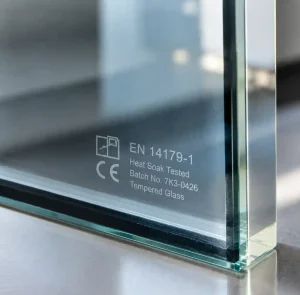
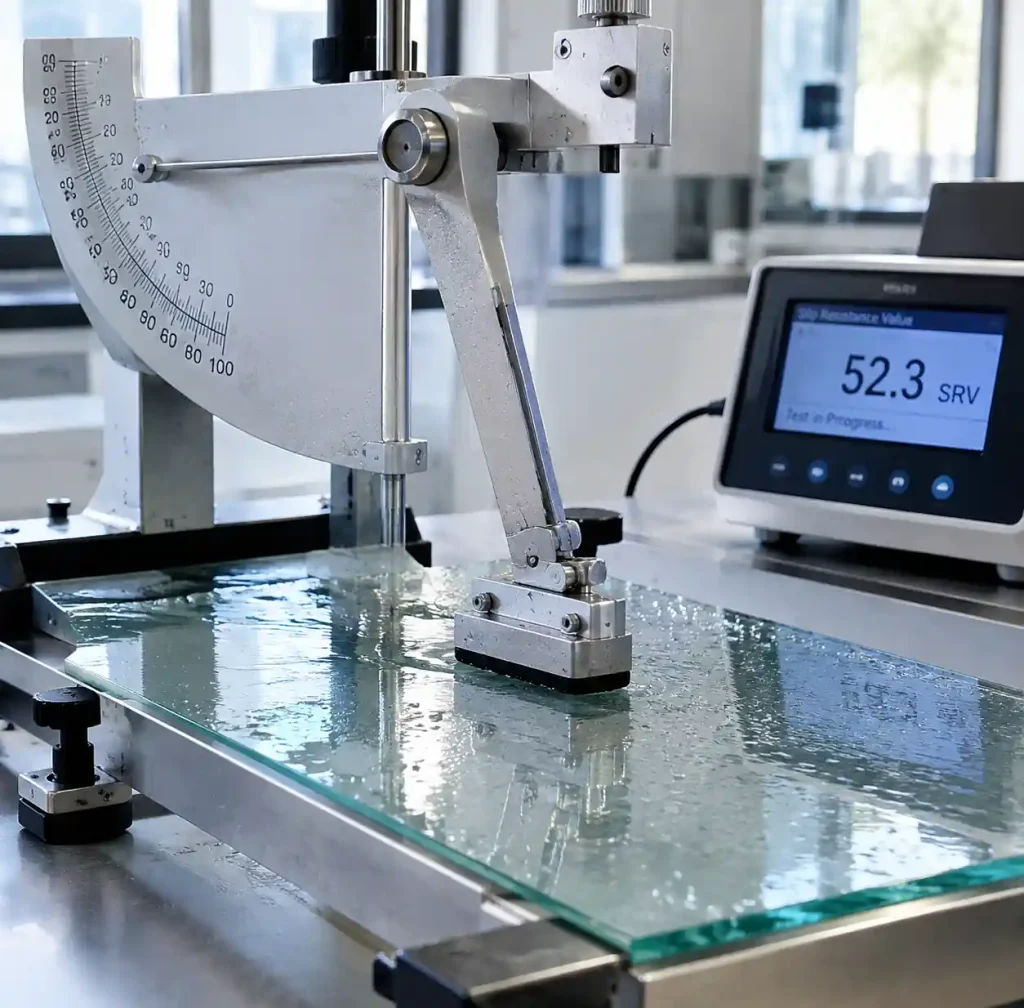
When specifying glass for pool decks, achieving proper slip resistance is critical. Acid etching delivers consistent barefoot traction with an NSF 50-compliant slip resistance value (SRV) of 45-52, while ceramic frit coatings offer superior chemical resistance to chlorine and saltwater. For commercial pools, acid-etched laminated glass with SGP interlayers provides the right balance of barefoot safety, chemical durability, and structural performance—achieving SRV values above 45 while maintaining reasonable optical clarity.
Why R-Values Don’t Work for Pool Glass
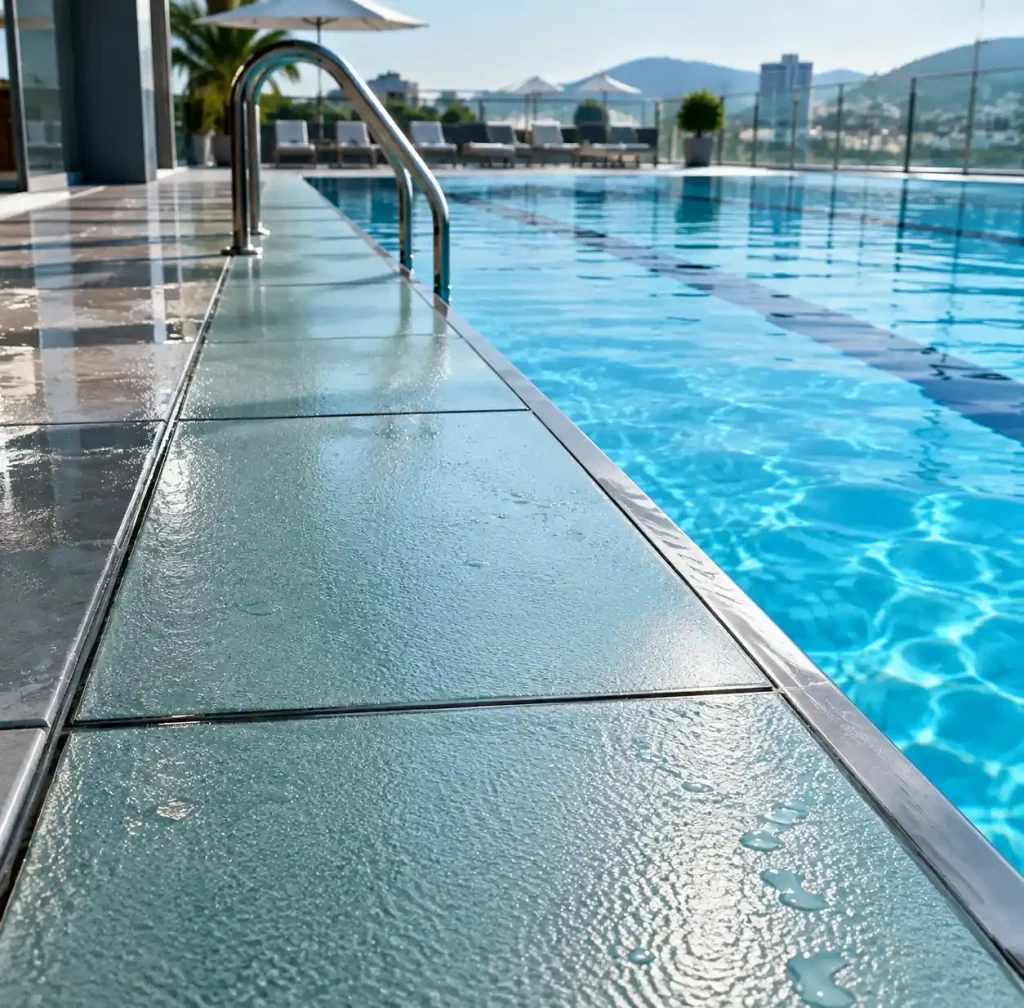
Standard R-values (R9-R13) from DIN 51130 testing use cleated work boots and oil—designed for industrial floors, not wet bare feet. For swimming pools, NSF/ANSI/CAN 50-2020 requires a wet SRV of 40+ using pendulum testing that simulates barefoot contact. A surface rated R11 can fail catastrophically under barefoot wet conditions. The German DIN 51097:1992 barefoot ramp test provides realistic benchmarks using human subjects on wet inclined surfaces.
Surface Treatment Technologies
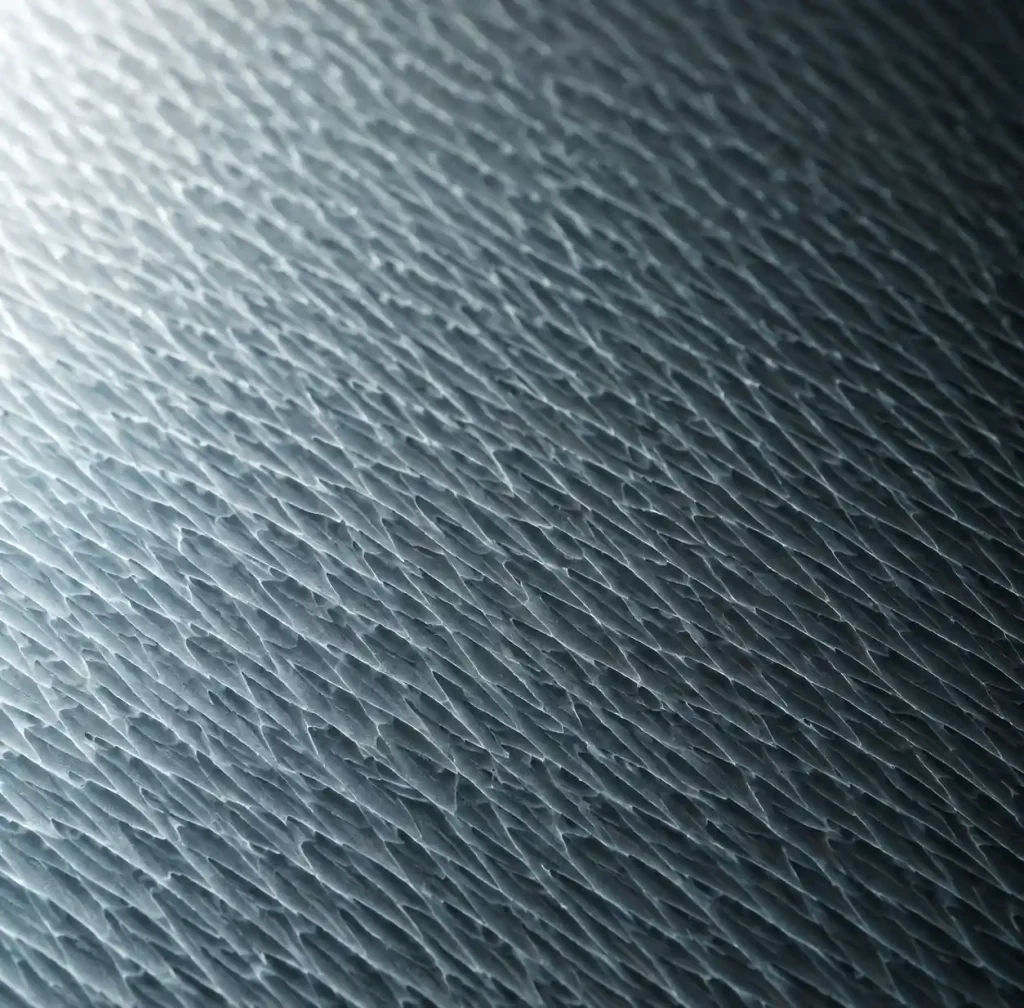
Acid Etching
Acid etching uses hydrofluoric acid to dissolve the glass surface at a microscopic level, creating uniform micro-valleys. Tempered glass panels (up to 3660mm × 28000mm) are immersed in HF acid baths for 8-15 minutes. The acid removes 40-80 microns, creating a matte finish with SRV 45-52 in wet conditions. The surface feels smooth when dry but provides excellent barefoot grip when wet. Optical clarity reduces by 15-20%.
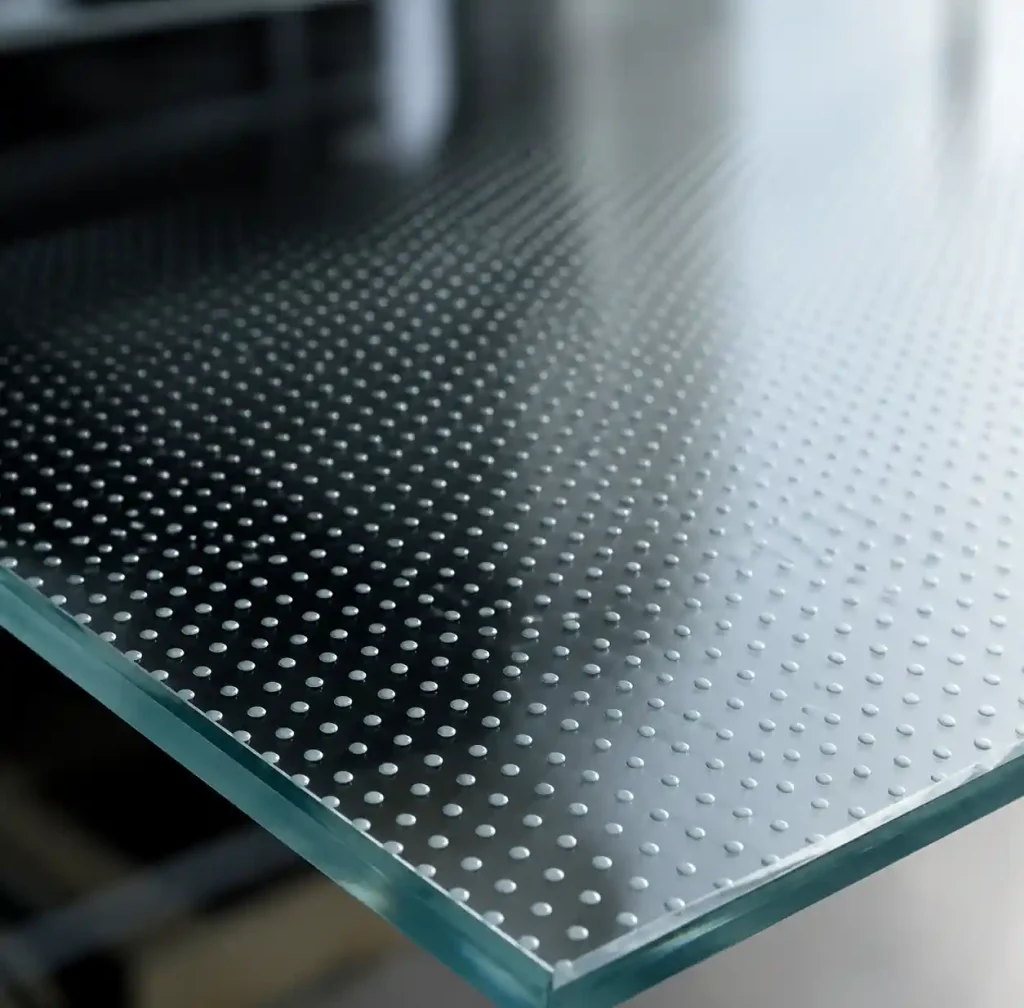
Ceramic Frit Application
Ceramic frit involves applying glass powder mixed with metallic oxides, then firing at 650-720°C during tempering. The frit fuses permanently into the glass surface. A 40% dot coverage achieves SRV 42-48. At Zhongbo Glass, our digital printing line (3300mm × 28000mm) allows precise frit application with ±0.5mm registration accuracy. Frit-treated glass maintains 85-90% optical clarity because only the printed pattern is textured—ideal for pool walls where visibility matters.
Performance Comparison
| Treatment Method | Wet SRV | Chemical Resistance | Clarity Loss | Maintenance | Cost |
|---|---|---|---|---|---|
| Acid Etching | 45-52 | Excellent | 15-20% | Low | Moderate |
| Ceramic Frit (40%) | 42-48 | Superior | 10-15% | Very Low | High |
| Ceramic Frit (60%) | 50-55 | Superior | 20-25% | Very Low | High |
| Sandblasting | 50-60 | Good | 40-50% | Moderate | Low |
Chemical Resistance in Pool Environments
Chlorine Exposure
Commercial pools maintain free chlorine at 2-4 ppm, with shock treatments spiking to 10-20 ppm. Chlorine doesn’t attack glass directly, but it degrades organic materials and penetrates micro-cracks.
Acid-etched glass: The etched surface is pure glass with no coating to degrade. After 12 years in a chlorinated pool, acid-etched samples showed no SRV degradation. Micro-valleys don’t trap organic matter that feeds algae growth.
Ceramic frit: Frit is fired into the glass matrix, becoming part of the glass structure. In accelerated testing (equivalent to 20 years at 5ppm chlorine), frit-treated panels showed zero performance loss.
Saltwater Systems
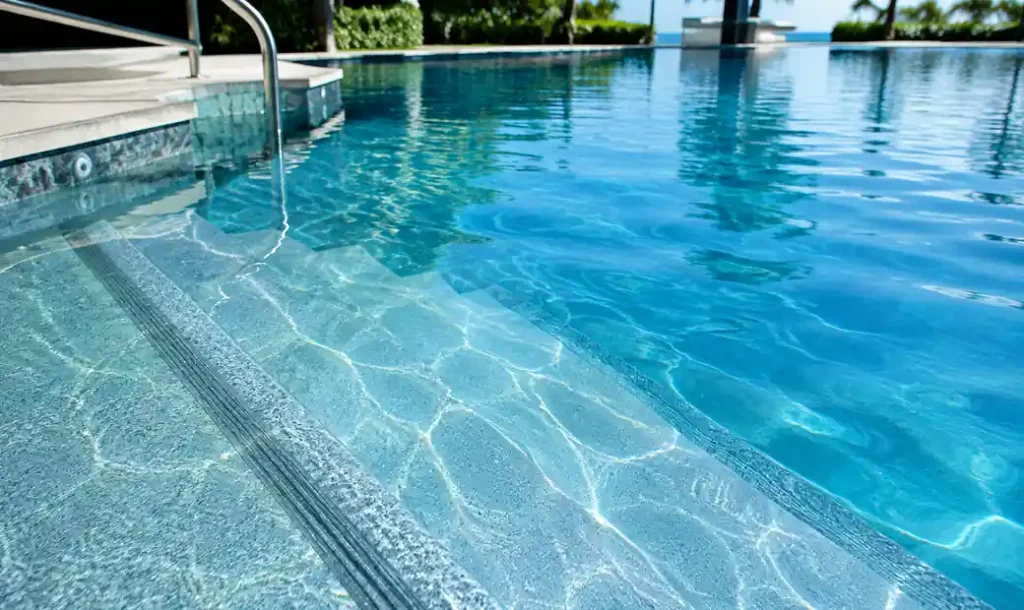
Saltwater pools generate chlorine through electrolysis and introduce sodium chloride at 2500-5000 ppm. The real threat is calcium scale buildup on textured surfaces.
Acid-etched glass accumulates calcium carbonate in micro-valleys over 18-24 months in hard water regions, reducing SRV from 48 to 36. Quarterly acid cleaning restores performance. Ceramic frit surfaces resist scale better—the raised texture sheds mineral deposits more effectively. Five-year testing at a saltwater resort maintained SRV above 44 with only annual cleaning.
Wet vs. Dry Performance
Dry SRV values for acid-etched glass measure 65-72. The micro-texture engages directly with bare skin. Wet SRV values drop to 45-52 because water creates a lubricating film, but micro-valleys channel water away, maintaining safe traction.
Transition zones are most dangerous. When users step from dry areas onto wet glass, expectation mismatch causes slips. Use consistent surface treatment across the entire pool deck.
For submerged steps, at 50mm water depth, SRV values match surface-wet conditions. Below 100mm, buoyancy reduces downward force and slip risk decreases. The critical zone is 0-50mm depth where water film is thickest.
Structural Requirements
Pool deck glass experiences concentrated loads (200-400 kg at furniture legs), impact loads, thermal stress (45°C differentials), and deflection limits (L/60 maximum to prevent water ponding).
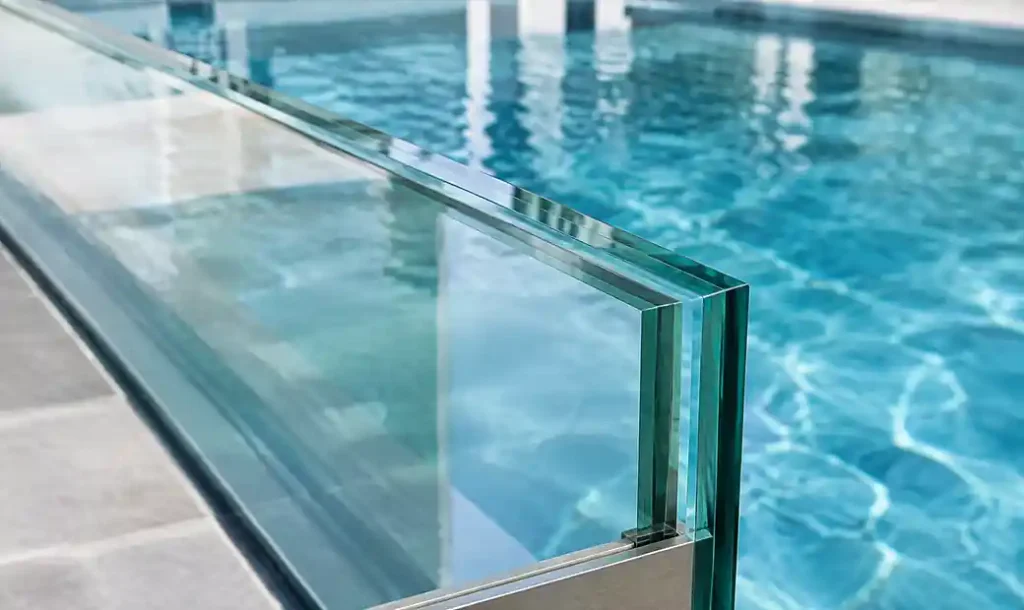
We specify tempered or laminated construction for pool decks. Acid etching removes 40-80 microns—negligible effect on structural capacity (less than 2% strength reduction). For pool applications, use SGP (SentryGlas Plus) interlayers rather than PVB because SGP maintains shear stiffness at elevated temperatures. At 50°C—common for pool deck glass in summer—PVB softens significantly, reducing effective thickness by 30-40%. SGP remains structurally effective up to 60°C.
Typical specification: 12mm tempered + 2.28mm SGP + 12mm tempered, acid-etched on top surface. This provides 22mm effective thickness while maintaining 48 SRV wet rating.
Technology Comparison
| Technology Aspect | Acid Etching | Ceramic Frit | Sandblasting |
|---|---|---|---|
| Process Temperature | Ambient | 650-720°C | Ambient |
| Treatment Depth | 40-80 microns | 10-30 microns | 100-200 microns |
| Pattern Options | Uniform only | Unlimited custom | Limited |
| Max Panel Size | 3660mm × 28000mm | 3300mm × 28000mm | 3660mm × 18000mm |
| Lead Time | +3 days | +5 days | +2 days |
| Color Options | Matte clear | Any RAL color | Matte clear |
Maintenance Protocol
Pool deck glass requires different maintenance than vertical glazing. Water evaporates rather than draining, leaving mineral deposits. Sunscreen oils and organic matter accumulate in surface texture.
Quarterly maintenance:
- Pressure wash at 2000 PSI with 40° fan tip
- Apply pH-balanced glass cleaner (pH 7-8)—never alkaline cleaners
- For calcium scale: dilute muriatic acid (10:1 water:acid), 5 minutes, rinse thoroughly
- Inspect laminated panel edges for delamination
Properly maintained acid-etched glass shows no SRV degradation over 15 years. The 70-micron initial etch depth wears to 30 microns over 10 years in high-traffic resorts—still functional. Ceramic frit wears at the same rate as glass substrate—essentially never under normal traffic.
Design Considerations
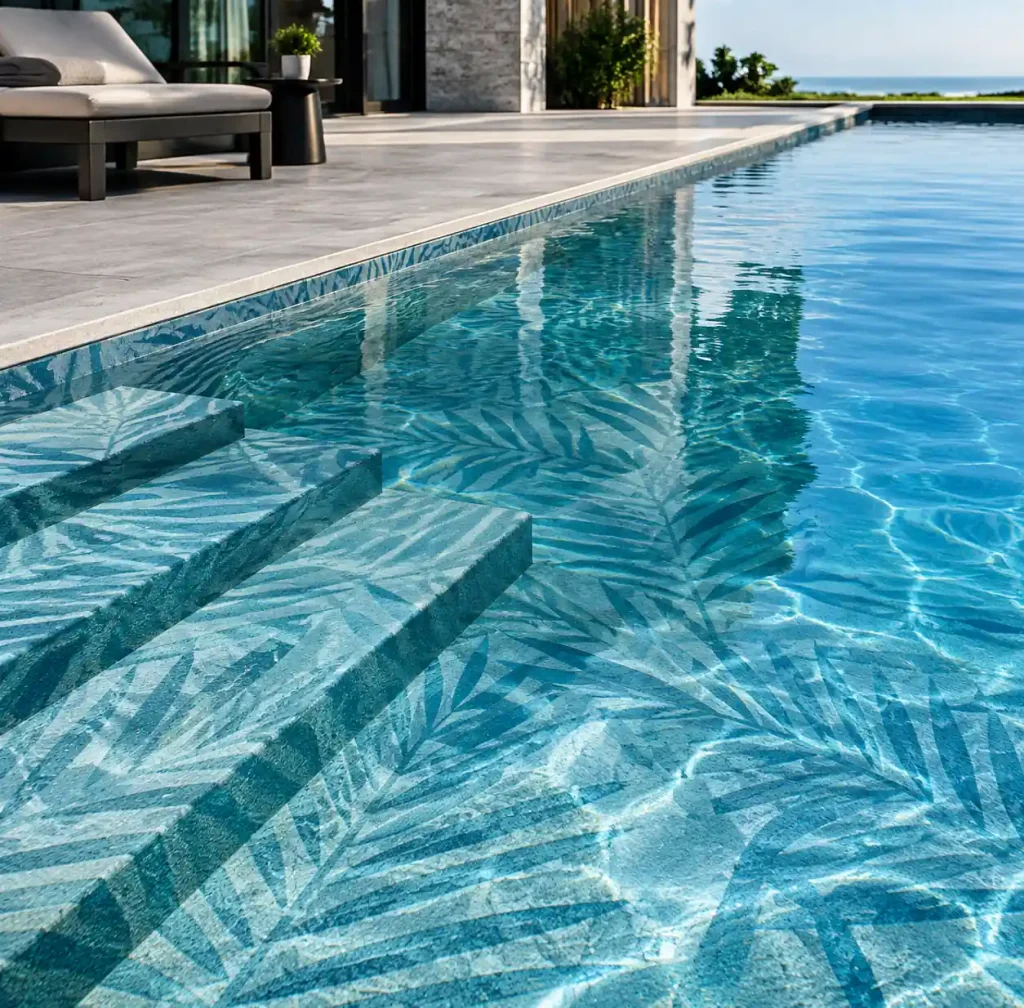
Submerged steps: Specify acid etching on tread surfaces only, not risers. Risers don’t require slip resistance; optical clarity improves underwater visibility for safety monitoring.
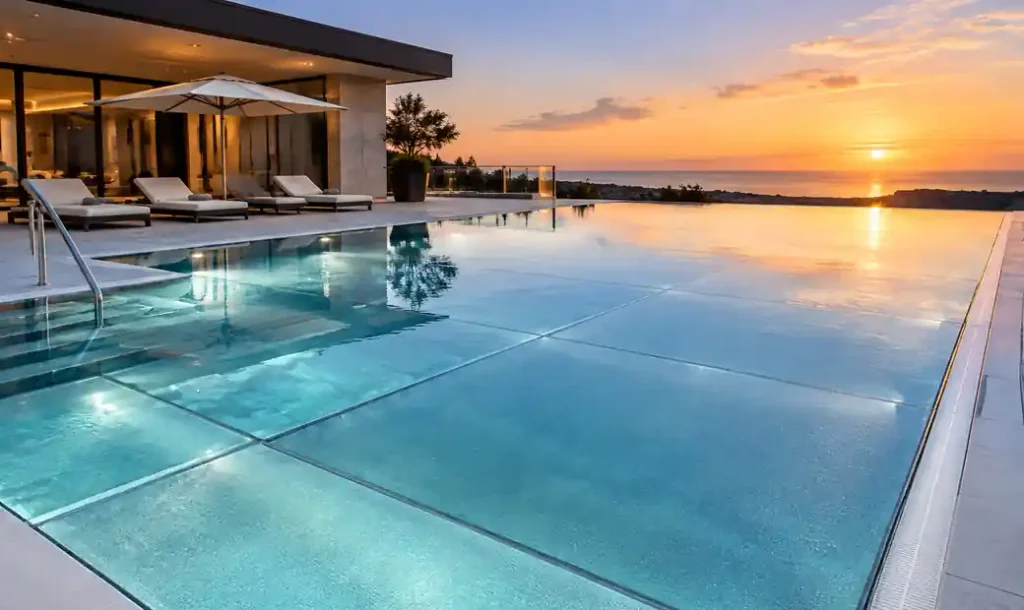
Infinity edges: Require maximum slip resistance (SRV > 50). Specify 60% ceramic frit coverage—functional but not visually obtrusive.
Drainage integration: Anti-slip texture doesn’t replace proper drainage. Pool decks must slope 1-2% toward drains. Standing water defeats any anti-slip surface.
Material transitions: Where glass meets other materials (stone, concrete, wood), ensure texture consistency. A 20mm SRV difference creates perceptible slip risk.
Zhongbo Glass has supplied anti-slip glass for installations from residential pools to water parks. Our largest pool deck project used 1,200 m² of acid-etched laminated glass panels up to 3600mm × 2400mm—8 years in service with zero slip incidents.
Frequently Asked Questions
Q: Can anti-slip treatment be applied to existing pool glass?
A: No. Both acid etching and ceramic frit are manufacturing processes that occur before or during tempering. Post-installation chemical coatings exist but require annual reapplication and provide inconsistent results.
Q: Does anti-slip texture make glass harder to clean?
A: Slightly. Acid-etched glass accumulates mineral scale in micro-valleys, requiring quarterly acid cleaning in hard water areas. Ceramic frit resists scale better. Both are easier to maintain than porous materials like natural stone.
Q: What’s the maximum size for anti-slip pool glass panels?
A: At Zhongbo Glass, acid-etched tempered panels reach 3660mm × 28000mm and laminated panels reach 4200mm × 28000mm. Ceramic frit panels are limited to 3300mm × 28000mm due to digital printing equipment capacity.
Q: Is anti-slip glass safe for children’s bare feet?
A: Yes. Acid-etched and ceramic frit surfaces provide traction without being abrasive. The micro-texture doesn’t cause skin irritation even with prolonged contact, unlike sandblasted glass which can feel rough.
Q: How does anti-slip glass perform in freeze-thaw climates?
A: Excellently. The anti-slip texture doesn’t create water traps that cause spalling during freeze-thaw cycles. Installations at ski resort pools (-20°C winters) show no freeze-thaw damage after 6+ years with proper drainage.
Conclusion
Specifying anti-slip glass for swimming pools requires balancing slip resistance, chemical durability, optical clarity, and maintenance. Acid etching delivers reliable barefoot traction with SRV 45-52 and excellent long-term durability in chlorinated environments—our default recommendation for most commercial pool decks. Ceramic frit offers superior chemical resistance and scale resistance in saltwater pools, justifying higher costs for premium installations.
Critical specification: verify performance using NSF/ANSI 50-2020 SRV testing, not industrial R-values. Standard R-ratings don’t predict barefoot wet traction. At Zhongbo Glass, we test every production batch to ensure consistent SRV values across large-format panels up to 28 meters in length. Properly specified anti-slip glass flooring prevents injuries, reduces liability, and delivers maintenance-free performance for decades. View our glass floor solutions for technical specifications and project references including the Zhangjiajie Grand Canyon Glass Bridge.
Sources: