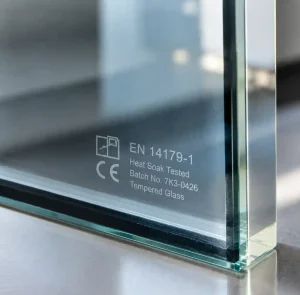
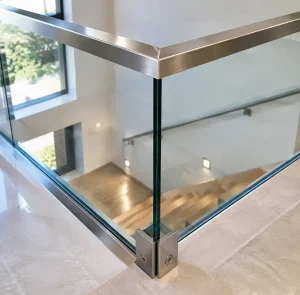
When fabricating oversized structural glass panels up to 4200mm × 28000mm, traditional manual methods cannot deliver the precision modern architecture demands. CNC glass processing has transformed architectural glazing through automated precision that manual techniques cannot match.
This guide draws from manufacturing glass for landmark projects including the Zhangjiajie Grand Canyon Glass Bridge and Shanghai Museum East Hall, examining cutting and drilling technologies, tolerance requirements, and process decisions.
Understanding CNC Glass Machining Technology
CNC (Computer Numerical Control) glass processing uses automated equipment guided by CAD/CAM programming to cut, drill, edge, and shape glass with micron-level repeatability. Unlike manual fabrication where operator skill varies, CNC systems execute programmed toolpaths consistently. Modern tempered glass and laminated assemblies demand this precision.

The technology solves three critical challenges: dimensional accuracy across large formats, hole placement precision for structural connections, and edge quality affecting aesthetics and structural performance.
Core Processing Methods Comparison
| Processing Method | Cutting Mechanism | Suitable Thickness | Typical Tolerance | Best Application |
|---|---|---|---|---|
| Diamond Wheel Cutting | Mechanical scoring + breaking | 3mm – 19mm | ±0.5mm | Straight cuts, high volume |
| CNC Waterjet | Abrasive erosion | 5mm – 50mm+ | ±0.1mm | Complex shapes, laminated glass |
| Diamond Core Drilling | Rotary grinding | Any thickness | ±0.05mm | Precision holes, structural connections |
| CNC Machining Center | Multi-axis milling/grinding | 6mm – 50mm+ | ±0.02mm | Complex contours, tight tolerances |
Diamond wheel cutting processes approximately 4000m² per 24 hours across our eight cutting lines, handling straight cuts on glass up to 3660mm × 28000mm. For curved cuts or complex geometries, CNC waterjet systems cut without thermal stress—critical for tempered glass production. On the Baiyun International Conference Center project, waterjet cutting fabricated 8200mm × 2200mm panels with ±0.1mm accuracy.

Precision Hole Drilling: Process and Tolerance Control
Hole drilling for structural glass connections demands the tightest tolerances in architectural fabrication. Engineers typically specify ±0.5mm position tolerance for bolt holes, but thermal expansion and safety factors often require ±0.2mm or tighter.
Our CNC machining centers accommodate panels up to 4200mm × 28000mm using diamond core drills from 6mm to 150mm diameter.

Critical Process Variables
Tool Speed: Diamond core bits operate at 500-3000 RPM depending on diameter and glass thickness. For 50mm holes in 15mm tempered glass, we run at 800 RPM with continuous water cooling.
Feed Rate: Optimal rates of 30-80mm/minute balance productivity against micro-cracking risk. Aggressive feeds risk perimeter damage; conservative feeds reduce throughput.
Coolant: Continuous water flow cools the contact zone, flushes particles, and lubricates diamond abrasive. Insufficient coolant causes drill failure and poor edge quality.
Quality Specifications
Edge chips exceeding 0.5mm depth fail inspection due to stress concentration. Our quality control includes edge inspection under 10× magnification, CMM dimensional verification, hole position measurement, and surface quality assessment.
For Shanghai Museum East Hall, we drilled 2,000+ precision holes in oversized laminated panels (up to 12,400mm × 700mm) with ±0.15mm position tolerance. CNC positioning maintained specification across the entire production run.
Large Format Glass Processing Capabilities
Processing architectural glass at extreme dimensions requires managing material handling, thermal control, and dimensional stability.
| Glass Type | Maximum Size (W×H) | Production Lines | Typical Application | Key Constraint |
|---|---|---|---|---|
| Cutting | 4200mm × 28000mm | 8 lines | All glass types | Material handling weight |
| CNC Machining | 4200mm × 28000mm | 2 centers | Complex fabrication | Fixturing stability |
| Tempered Glass | 3660mm × 28000mm | 5 lines | Safety glazing, facades | Pre-tempering tolerance ±1mm |
| Laminated Glass | 4200mm × 28000mm | 8 lines | Structural applications | Autoclave chamber size |
| Edging/Polishing | 3660mm × 28000mm | 10 lines | Exposed edges | Edge access limitations |
Thermal expansion across a 28-meter panel can exceed 5mm during processing. Our climate-controlled environment maintains 20°C ±2°C to minimize dimensional variation.

Diamond Tooling and Performance
Diamond tooling quality directly affects processing precision and production efficiency.
Cutting Wheels: Diamond wheels with 60-80 grit handle scoring operations. We monitor wheel condition continuously and replace based on cut quality.
Core Drill Bits: Precision drilling requires sintered diamond core bits maintaining dimensional stability as the diamond layer wears. For holes requiring ±0.1mm tolerance, sintered bits are mandatory versus electroplated alternatives.
Grinding Tools: Edge finishing uses progressively finer diamond grits from 120 (rough) through 400 (fine polishing). Edge quality affects aesthetics and structural performance—microdefects can initiate cracks under load.
Tool life varies with glass type. Low-iron ultra-clear glass increases tool wear by approximately 30% compared to standard float glass. Ceramic fritted glass with fired coatings accelerates wear further.

Tolerance Requirements for Structural Glass
Understanding which dimensions are critical enables efficient processing without over-specification.
Panel Dimensions: Curtain wall and structural glazing typically require ±1.5mm tolerance on width and height. Over-specifying ±0.5mm increases cost without benefit when framing systems accept wider tolerance.
Hole Position: Structural connections demand ±0.3mm position tolerance referenced to panel edges or adjacent holes. CNC coordinate drilling maintains this even on oversized panels.
Edge Straightness: Butt-jointed glazing requires flatness within 1mm per meter. Our CNC edging lines achieve 0.3mm per meter straightness on panels up to 28 meters long.
Perpendicularity: Corner angles must be 90° ±0.5° to prevent installation issues. CNC cutting maintains perpendicularity automatically.

Pre-Tempering Processing Considerations
Glass cannot be cut, drilled, or edge-processed after tempering. All fabrication must occur before thermal treatment.
Dimensional Compensation: Tempered glass shrinks 0.3-0.5% during tempering due to compressive stress formation. For a 3-meter panel, this represents 9-15mm. We compensate by cutting glass oversized based on thickness and tempering parameters.
Hole Placement Accuracy: Post-tempering adjustment is impossible. Hole position errors discovered after tempering result in scrapped panels. Pre-tempering CMM inspection occurs before releasing panels to tempering.
Edge Quality: Sharp edges create stress concentration points during tempering causing spontaneous breakage. All edges and holes require 1mm radius minimum grinding before tempering.
For the Huawei R&D Center Shanghai project, we processed over 15,000m² of Low-E tempered glass with drilled holes, delivering zero field rejections for dimensional non-conformance.
CNC vs. Manual Processing: Production Data
Five years of transition from manual to CNC processing demonstrates clear advantages:
Throughput: CNC cutting processes 4000m²/24h versus 1500m²/24h manual operations, stemming from automated material handling and elimination of operator fatigue.
Quality Consistency: Manual processing showed 3-5% reject rates for dimensional non-conformance at ±1mm tolerance. CNC reduced rejects to <0.5%. For ±0.3mm hole position tolerance, CNC achieved 99.2% conformance where manual was not feasible.
Complex Geometry: Tianfu Art Museum curved glass required ±2mm deviation from CAD geometry. Manual template-based cutting achieved 60% conformance; CNC waterjet with direct CAD import delivered 97%.

Quality Control and Inspection
Automated fabrication requires automated inspection to match production rates.
Coordinate Measuring Machines (CMM): CMM systems verify hole positions, panel dimensions, and edge straightness on panels up to 12 meters. The CMM probes glass at programmed points and compares measured coordinates to CAD data.
Optical Edge Inspection: Automated systems scan polished edges at 10× magnification, identifying chips, cracks, or grinding marks. Critical for exposed structural glass edges where defects affect safety and aesthetics.
Thickness Measurement: Ultrasonic gauges verify glass thickness at multiple points. Thickness variation affects optical quality and structural calculations.
Our quality system maintains statistical process control (SPC) charts for all CNC operations, identifying tool wear or equipment drift before parts go out of tolerance.
Frequently Asked Questions
Can tempered glass be cut or drilled after tempering?
No. Tempered glass cannot be cut, drilled, or edge-processed after thermal treatment. The internal stress pattern would cause immediate shattering. All fabrication must occur before tempering.
What is the minimum hole diameter for structural glass?
Minimum hole diameter should equal glass thickness, with 6mm being the practical minimum. For example, 12mm thick glass should have holes no smaller than 12mm diameter to avoid stress concentration and cracking.
How close can holes be placed to glass edges?
Industry standards require holes positioned at least 2× the hole diameter from any edge, with 50mm being common minimum. For a 25mm diameter hole, the center should be at least 50mm from edges to prevent cracking.
What tolerance can CNC glass processing achieve?
CNC machining centers achieve ±0.02mm on hole positions and ±0.05mm on critical dimensions under controlled conditions. Production tolerances typically specify ±0.15mm for hole positions and ±0.5mm for panel dimensions.
Does CNC processing work for all glass types?
Yes. CNC processing accommodates annealed, tempered, laminated, insulated glass, coated, and ceramic fritted glass. Processing parameters vary—Low-E coated glass requires modified tooling to prevent coating damage.
How does glass thickness affect CNC processing time?
Processing time increases with thickness due to slower speeds required to prevent thermal stress. Drilling a 50mm hole in 10mm glass takes approximately 90 seconds, while the same hole in 25mm glass requires 4-5 minutes.
Conclusion
CNC glass processing has transitioned from specialized capability to production standard for architectural glass fabrication. The technology delivers dimensional precision, production consistency, and complex geometry capabilities that manual methods cannot match.
For projects demanding oversized panels, tight tolerances, or complex drilling patterns, CNC fabrication is often the only viable approach. The equipment investment is offset by reduced waste, eliminated rework, and ability to confidently bid projects that would be high-risk with manual processing.
As architectural design pushes toward larger glass panels, more complex geometries, and tighter structural integration, CNC processing capabilities will increasingly define which glass fabricators can compete for landmark projects. The combination of precision equipment, optimized tooling, and integrated quality systems enables manufacturers to deliver what designers envision and engineers specify, meeting the demanding specifications of global architectural firms and contractors.