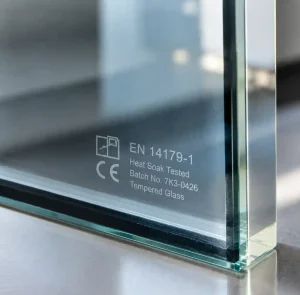
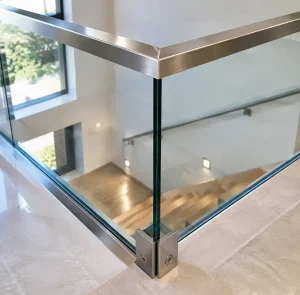
When specifying architectural glass, the edge finish is often overlooked—yet it directly impacts both structural integrity and visual quality. At Zhongbo Glass, our decades of manufacturing experience with landmark projects have taught us that proper edge finishing isn’t just about aesthetics; it’s fundamental to glass performance. This guide explains the finishing options available, quality standards that matter, and how to specify the right edge treatment for your project.
Why Glass Edge Quality Matters in Structural Applications
The edge of glass is where failure typically begins. During cutting, mechanical stress creates microcracks and flaws along the edge surface. These microscopic defects propagate under load, making edge quality critical for structural glazing. Research from TU Dresden demonstrates that optical surface quality directly correlates with bending tensile stress at failure—polished edges consistently outperform lower-grade finishes in strength testing.
For large-format architectural glass (our facility processes panels up to 3660mm × 28000mm for tempered applications and 4200mm × 28000mm for laminated glass), edge finishing becomes even more critical. A single undetected edge defect in a 12-meter laminated glass panel can compromise the entire installation.

Standard Edge Finishing Options Compared
Understanding the progression from basic to premium edge treatments helps you match finishing costs to application requirements.
| Edge Finish Type | Process Description | Surface Appearance | Typical Applications | Relative Cost |
|---|---|---|---|---|
| Seamed (Swiped) | Belt sander removes sharp edges | Dull, slightly rough, translucent | Framed glazing where edges are hidden | Lowest |
| Ground | Coarse grinding wheel smooths surface | Matte, smooth to touch but not reflective | Interior partitions, some framed applications | Low-Medium |
| Flat Polished | Progressive grinding followed by polishing | Clear, reflective, optical-quality | Exposed edges, frameless systems, display glass | Medium-High |
| Beveled Polished | Angled cut (typically 1″) then polished | Clear angled face with decorative effect | Mirrors, decorative panels, interior accent glass | High |
| Pencil (C-Edge) | Rounded convex profile, polished | Smooth curved edge | Furniture, shelving, tabletops | Medium-High |
Seamed Edges: Safety Treatment Only
Seaming removes the razor-sharp edge left by cutting but does little for optical or mechanical performance. The edge remains translucent and rough under magnification. We specify seamed edges only when the glass sits fully within a frame with no edge exposure. For laminated glass installations where edge appearance matters, seaming is insufficient—the interlayer becomes visible as a distinct line that detracts from the monolithic appearance.
Ground Edges: The Middle Ground
Grinding uses progressively finer abrasive wheels to create a smooth, matte surface. While not optically clear, ground edges feel smooth and present no safety hazard. They work well for interior partitions and applications where you want a refined but not jewel-like appearance. The grinding process removes deeper subsurface damage from cutting, improving edge strength compared to seaming alone.

Flat Polished Edges: The Architectural Standard
Polishing takes grinding to optical-quality clarity through multiple stages of finer abrasives and polishing compounds. The result is a transparent, reflective edge that disappears visually—critical for frameless balustrades, structural glass fins, and anywhere edges are exposed. According to European standardization, polished edges receive the highest edge finishing factor for strength calculations, though recent research shows significant variability between manufacturers.
ASTM C1048 explicitly requires polished edges for heat-treated glass in exposed applications. For our ultra-large architectural projects like the 8200mm × 2200mm panels at Guangzhou Baiyun International Conference Center, flat polishing is non-negotiable—both for structural integrity and to maintain visual continuity across multi-panel facades.
Edge Polishing and Heat Treatment: Sequence Matters
Edge work must always precede heat treatment. Once glass is tempered, it cannot be cut, ground, or polished—any attempt causes immediate failure.
The proper sequence for tempered glass is: cut to size → edge finish → drill holes if needed → tempering. For curved tempered glass, bending and tempering happen simultaneously after edge finishing.

For laminated glass, you have two options: polish edges before laminating (resulting in visible interlayer lines), or polish after lamination (creating a monolithic appearance). Post-lamination polishing requires specialized equipment to achieve seamless optical quality across the entire thickness.
Quality Standards and Inspection Methods
Industry Standards Governing Edge Quality
| Standard | Scope | Key Requirements |
|---|---|---|
| ASTM C1036 | Flat glass quality | Base material quality, annealed glass specifications |
| ASTM C1048 | Heat-treated flat glass | Requires polished edges for exposed heat-treated glass |
| ASTM C1172 | Laminated architectural glass | Edge-fabrication tolerances, lamination quality for exposed edges |
| AS/NZS 4667:2000 | Australian/NZ glass standards | Visual quality assessment protocols for architectural glass |
| European Standards | Edge finishing factors | Strength adjustment factors based on edge finish quality |
Inspection Protocols We Apply
At Zhongbo Glass, quality control happens at multiple stages. After edge finishing and before heat treatment, we inspect for:
Visual Defects: Chips, nibbles, or grinding marks visible to the naked eye from 3 meters under natural light. Industry guidelines specify that inspectors must have 20/20 vision (corrected or uncorrected).
Dimensional Tolerance: Edge straightness within ±1mm for standard architectural glass, tighter for precision applications. Our CNC processing centers maintain ±0.5mm tolerance on panels up to 4200mm width.

Surface Roughness: For polished edges, we verify optical clarity by viewing through the edge—any haze or grinding marks indicate incomplete polishing.
Subsurface Damage: Under magnification, we check for microcracks extending from the edge surface, particularly critical for tempered glass where edge defects can cause spontaneous breakage.
Edge Finishing Process: From Raw Cut to Polished Surface
Step 1: Straight-Line Edging
Glass travels through a straight-line edger with progressively finer grinding wheels. The first wheel (120 grit) removes cutting artifacts. For seamed edges, the process stops here. Higher grades continue through 240, 320, and 400 grit wheels.
Step 2: Shaping
Bevels, pencil edges, and profiles are cut using profiled grinding wheels. CNC-controlled edgers maintain consistent geometry even on panels exceeding 10 meters.
Step 3: Fine Grinding
Grinding stages with 600, 800, and 1200 grit remove subsurface damage. This determines ultimate edge strength. Rushing compromises structural performance.
Step 4: Polishing
Felt or cork wheels with cerium oxide create optical clarity. Automated lines maintain consistent pressure for uniform results on oversized panels.
Step 5: Cleaning and Inspection
Residual polishing compound must be completely removed before heat treatment or lamination to prevent optical defects and adhesion issues.
Specifying Edge Finishes: Practical Considerations
Application-Driven Selection
Frameless Glass Railings and Balustrades: Flat polished edges only. Exposed edges in public spaces demand optical clarity and maximum strength. Reference glass railing edge treatment guides that emphasize polishing as non-negotiable for structural glass guardrails.
Curtain Wall and Window Systems: Ground or seamed edges acceptable when fully captured in framing. Polishing adds cost without functional benefit if the edge never sees exposure.
Interior Partitions and Doors: Ground edges provide refined appearance at moderate cost. Upgrade to polished if door edges are visible when open, or if partition uses minimal framing.
Shower Enclosures and Wet Areas: Flat polished edges prevent moisture infiltration along rough edge surfaces and eliminate hiding places for mold growth.

Decorative Applications: Beveled or specialty edges create visual interest. Consider lighting interaction—polished bevels refract light dramatically in internally lit applications.
Cost-Benefit Analysis
Edge finishing typically represents 8-15% of total glass fabrication cost. Upgrading from seamed to polished adds $8-20 per linear meter depending on thickness and scale. For a typical 1500mm × 3000mm panel (9 linear meters of edge), polishing adds roughly $100-180 to the fabrication cost—minimal compared to reinstallation costs if an inferior edge finish causes premature failure.
Common Edge Defects and Their Causes
| Defect Type | Visual Appearance | Cause | Prevention |
|---|---|---|---|
| Edge Chips | Missing glass at edge perimeter | Impact during handling, insufficient corner protection | Proper packaging, corner guards during processing |
| Grinding Marks | Linear scratches visible on edge | Worn grinding wheels, contaminated cooling water | Regular wheel replacement, filtered water systems |
| Ream (Convex Edge) | Edge curves outward from face | Excessive grinding pressure | Calibrated equipment, controlled feed rates |
| Hollow Edge (Concave) | Edge curves inward | Insufficient grinding contact | Proper wheel profiling, consistent pressure |
| Visible Interlayer Lines | White lines in laminated edge | Pre-lamination polishing, moisture contamination | Post-lamination polishing or accept as characteristic |
| Shell/Spall | Shallow concave defect | Subsurface damage from cutting propagating during grinding | Sharper cutting wheels, optimized cutting speed |
Understanding these defects helps during quality acceptance inspections. Not all edge imperfections compromise performance—small shells on edges that will be fully framed are cosmetic issues only, while the same defect on an exposed edge presents both aesthetic and structural concerns.

Advanced Edge Treatments for Specialty Applications
CNC-Shaped Custom Profiles
CNC processing enables complex edge profiles for architectural features—radius corners on curved facades, recessed grip edges for overhead glazing, and interlocking profiles for frameless glass-to-glass connections.
Mitered Edges for 90° Glass Joints
Glass-to-glass mitered corners create frameless enclosures with minimal visual interruption. Each edge is polished at precisely 45°, then joined with structural silicone or UV-bonded adhesive. Tolerance requirements are extreme—angular deviation beyond 0.5° creates visible gaps.

Arrissed Edges for Safety Compliance
Arrissing slightly rounds the edge-to-face intersection, creating a microscopic chamfer (0.5-1mm). While not visible, arrissing eliminates the sharp 90° corner that can chip during handling.
Edge Quality in Extra-Large Architectural Glass
Manufacturing precision becomes exponentially more difficult as glass dimensions increase. Panels exceeding 10 meters present unique challenges.
Handling Deflection: A 3660mm × 12000mm tempered panel weighs roughly 1100kg and flexes under its own weight during processing. Specialized vacuum handling systems prevent edge grinding variations.
Thermal Expansion: Edge grinding generates significant heat. On large panels, differential expansion between heated edges and cooler center glass can induce temporary bow.
Quality Verification at Scale: Inspecting long edges for defects requires specialized LED edge-lighting systems that reveal subsurface damage invisible under overhead illumination.
FAQ
Q: Can glass edges be polished after installation?
A: Field polishing is possible for minor chip repair but cannot match factory optical quality. The glass must remain in place, limiting access and equipment options. For exposed edges, specify factory polishing—field corrections should be considered emergency repairs only.
Q: Why do laminated glass edges sometimes show white lines?
A: The interlayer (PVB or SGP) has a different refractive index than glass. When edges are polished before lamination, the interlayer becomes visible as a distinct line. Post-lamination polishing creates a unified appearance by exposing all layers simultaneously, though this requires specialized equipment for thick laminates.
Q: How does edge finish affect tempered glass strength?
A: Significantly. European standards apply edge finishing factors to bending strength calculations: polished edges = factor 1.0, ground edges = 0.85, cut edges = 0.60. A panel with cut edges must be 67% thicker than an equivalent polished-edge panel to achieve the same strength rating.
Q: Should I specify ground or polished edges for glass that sits in a frame?
A: If the edge is fully captured and never visible, seamed edges are sufficient and most economical. If there’s any chance of edge exposure (door panels that open, windows with slim sightlines), specify at least ground edges. When in doubt, polished edges eliminate all risk of poor edge quality becoming visible after installation.
Q: What’s the maximum size glass that can have polished edges?
A: Equipment limitations vary by fabricator. At Zhongbo Glass, our edging and polishing equipment processes panels up to 3660mm width and 28000mm length—among the largest capacities globally. Panels exceeding transport dimensions (typically 6m × 3.3m) require special logistics regardless of technical fabrication capability.
Q: Can curved glass have polished edges?
A: Yes, but edge polishing must occur before bending. The glass is cut, edge-polished, then heated and bent. Attempting to polish after bending is technically possible for gentle curves but risks breaking the tempered glass and produces inconsistent results.
Conclusion
Edge finishing bridges design intent and structural reality in architectural glass. The edge finish you choose affects strength, appearance, longevity, and safety—particularly in frameless and large-format applications.
As architectural glass pushes toward larger panels and more demanding applications, edge quality becomes the limiting factor in what’s structurally feasible. At Zhongbo Glass, our capacity to process panels up to 4200mm × 28000mm requires precision edge finishing to match—which is why we’ve invested in automated polishing lines that maintain optical quality even on oversized edges.
For your next project, consider edge finishing as a structural specification, not a cosmetic detail. Whether specifying a glass fin for a high-rise curtain wall or a frameless glass railing with exposed edges, the finishing quality determines whether the glass performs as engineered or fails prematurely. Specify clearly, inspect thoroughly, and choose fabricators with demonstrated capacity at your required scale.

Zhongbo Glass specializes in extra-large architectural glass fabrication with advanced edge finishing capabilities. Our facility in Henan, China produces tempered, laminated, and specialty glass for landmark projects worldwide. Contact our technical team to discuss edge finishing requirements for your architectural glass application.