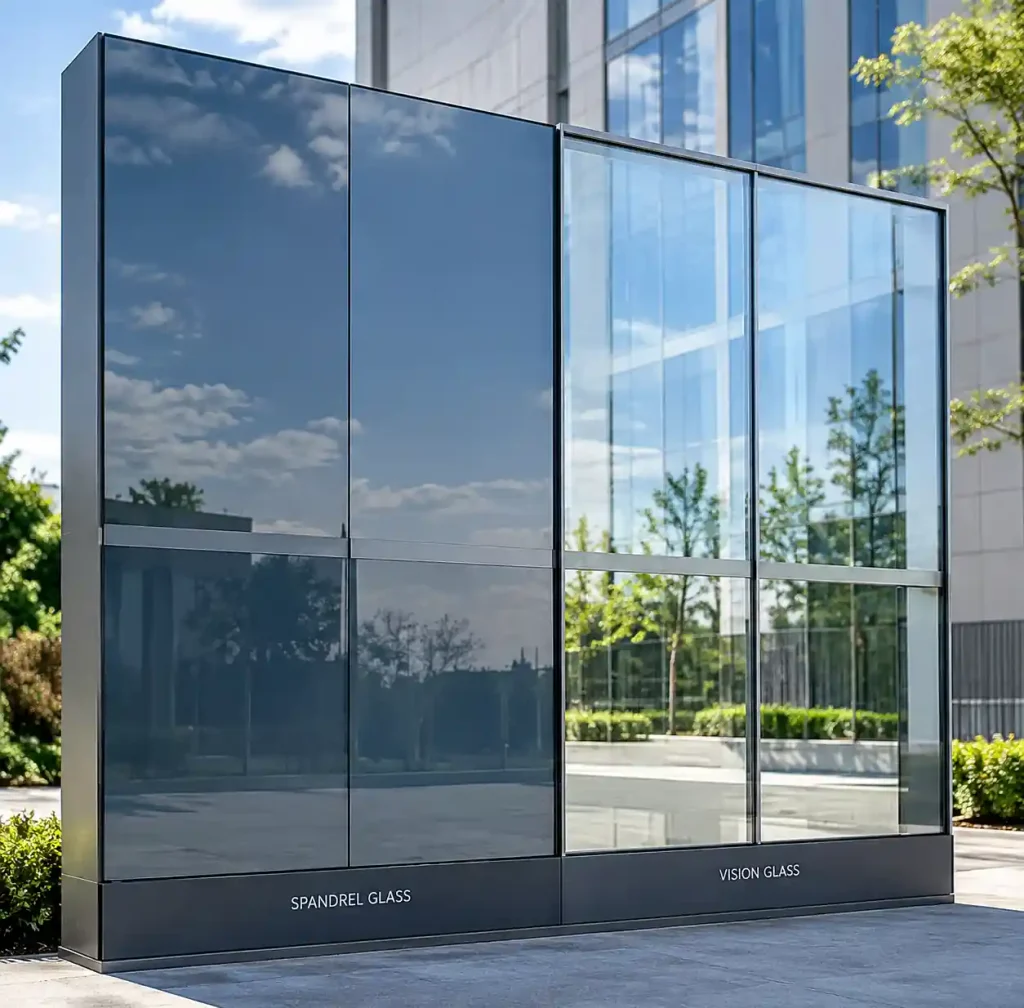
For commercial curtain wall projects demanding uniform façade appearance, shadow box spandrel systems with coordinated low-E coatings typically deliver superior color matching compared to back-painted glass, particularly when architects specify high visible light transmittance (VLT) vision glass. The critical success factors: identical coatings on vision and spandrel surfaces, mid-range exterior reflectance (19-27%), and comprehensive mock-ups under multiple lighting conditions before fabrication.
After 15 years fabricating architectural glass at Zhongbo Glass’s 30+ production lines in Henan, we’ve eliminated hundreds of “checkerboard façade” failures. This guide distills what actually works when your reputation depends on seamless spandrel-to-vision transitions.
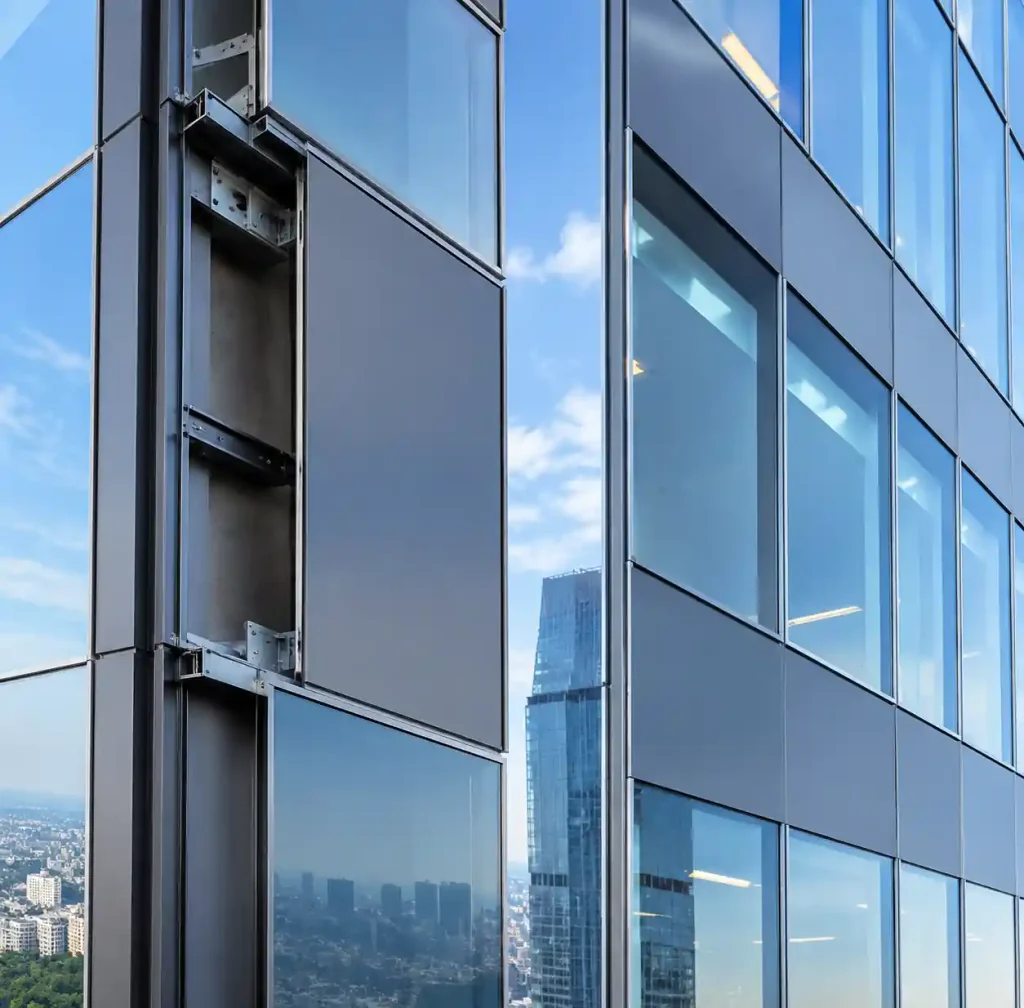
Why Spandrel-Vision Mismatches Plague Modern Façades
The fundamental challenge: vision glass transmits light while spandrel glass reflects it. You’re asking two optically opposite materials to appear identical. As architects abandon reflective coatings in favor of ultra-clear high-VLT glass (60-70% transmittance), this contrast intensifies. The more transparent your vision glass, the more your opaque spandrel stands out.
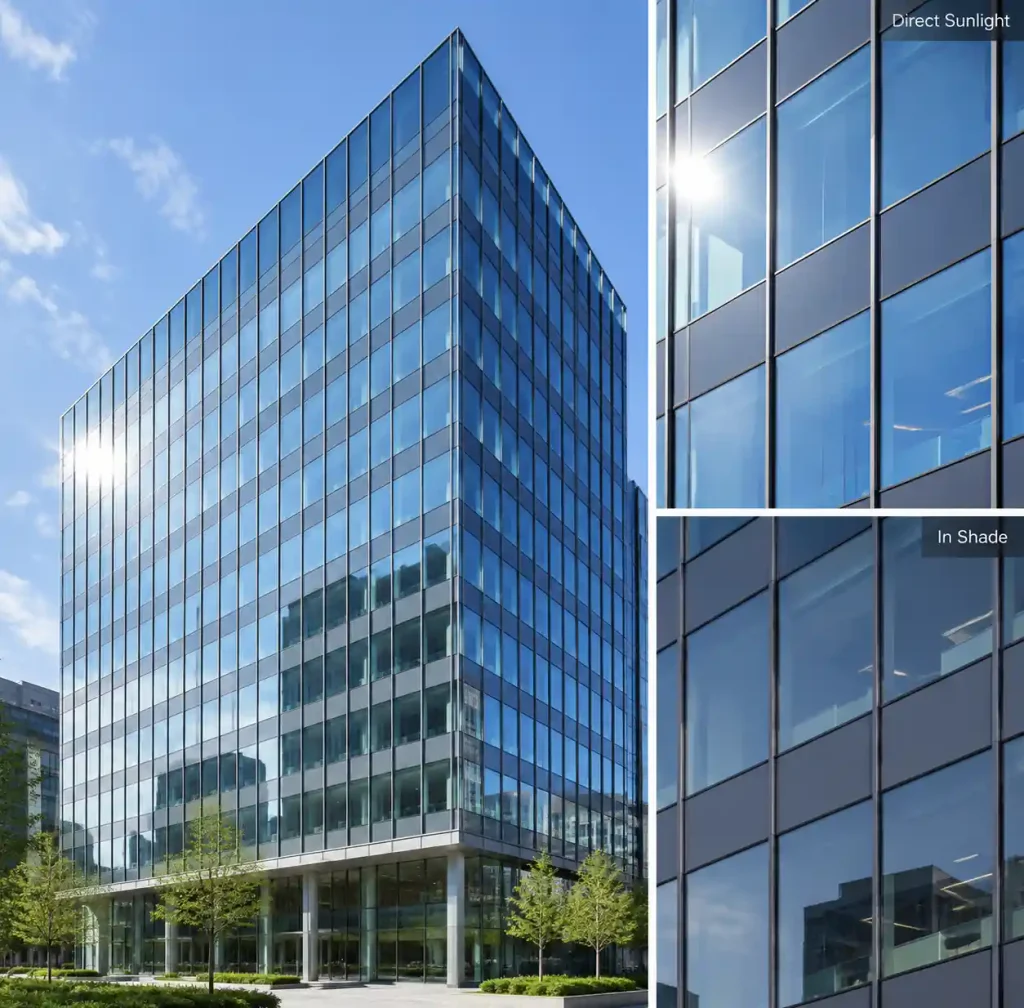
Industry data shows color perception shifts dramatically with cloud cover. Overcast skies reduce vision glass reflectivity, making spandrel areas appear flat and two-dimensional against the depth perception created by interior spaces. A mismatch invisible at noon under direct sun becomes glaringly obvious at 4 PM under diffuse lighting.
The Coating Variables That Control Appearance
Low-E and solar control coatings don’t just manage thermal performance—they dictate exterior color perception. Here’s what fabricators learn the hard way:
Surface positioning matters: Traditional monolithic spandrel glass uses enamel on surface 2 (the inboard surface of the exterior lite). The paint doesn’t match the coating on vision glass, making uniform appearance nearly impossible. Guardian Glass technical analyses confirm this approach inherently fails color-matching requirements.
Coating consistency is non-negotiable: Switching coating types between vision and spandrel zones guarantees visible discontinuity. If your vision glass uses a specific low-E product on surface 2, that identical coating must appear on the spandrel IGU’s surface 2.
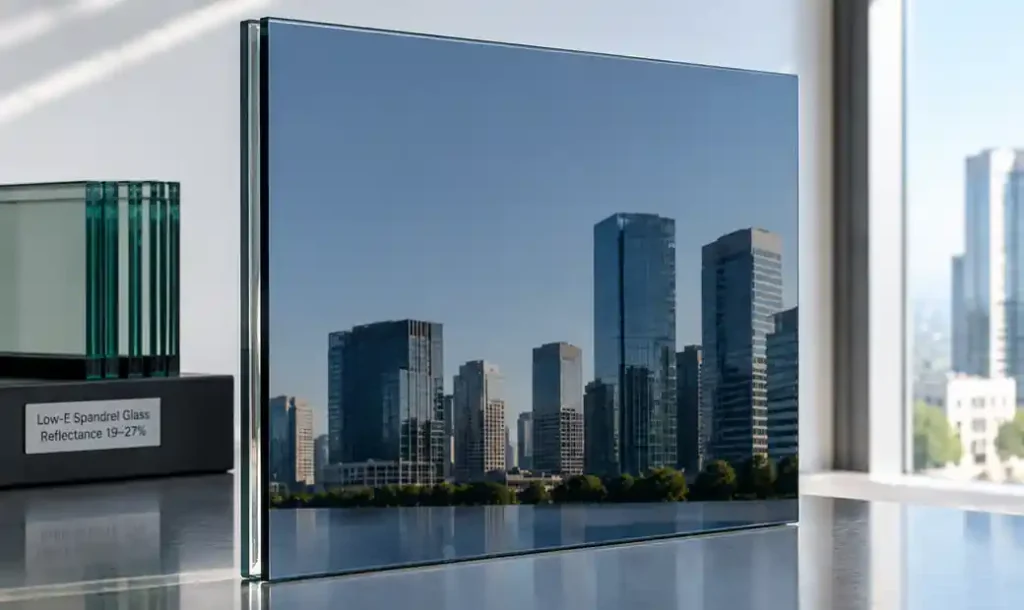
Reflectance sweet spot: Viracon’s architectural glass engineers recommend mid-range exterior reflectance (19-27%) paired with 40-50% VLT for seamless vision-to-spandrel transitions. High-clarity, low-reflectance coatings eliminate the “hiding places” that mask spandrel differences.
Shadow Box Spandrel: Construction and Performance
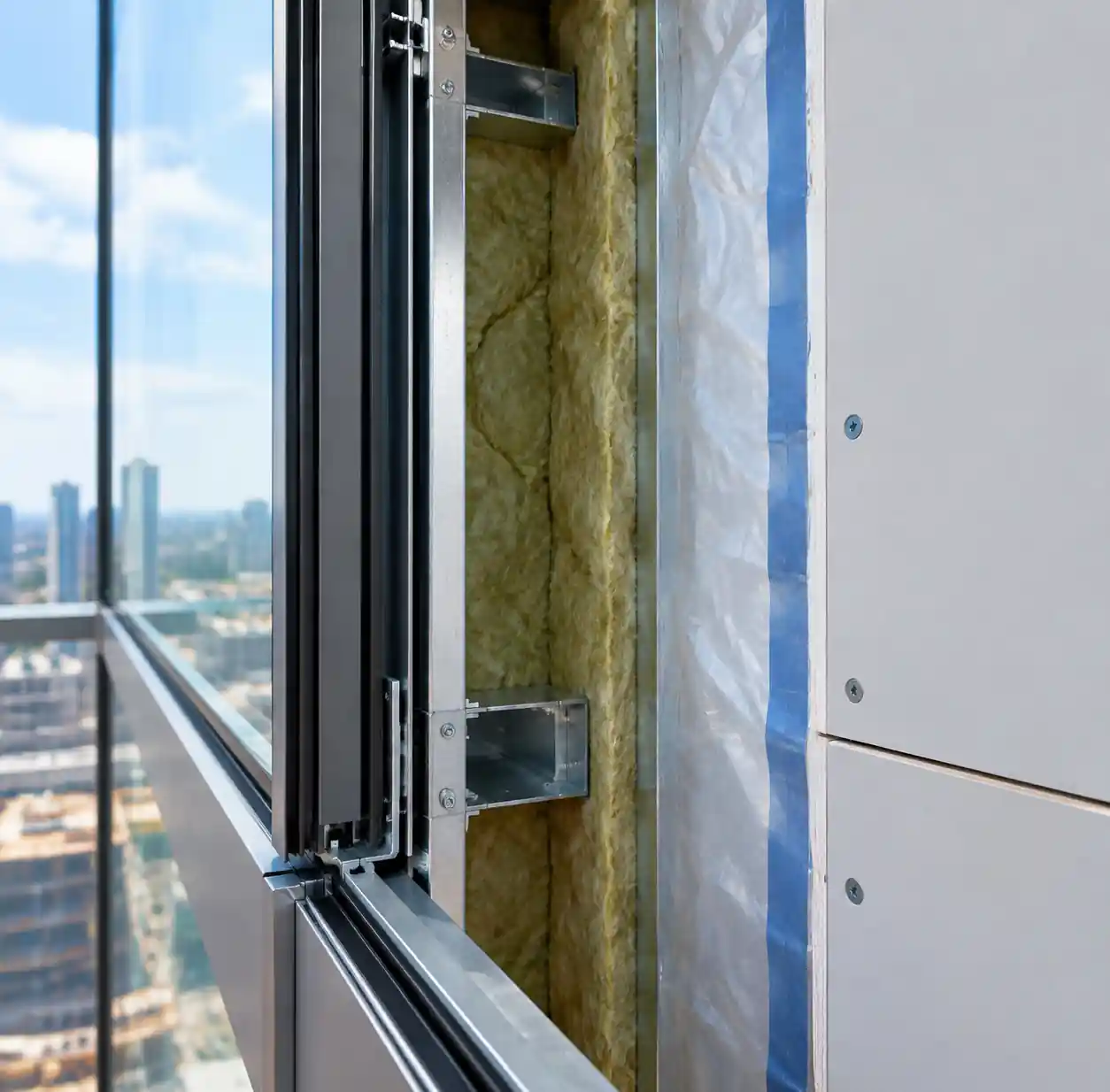
Shadow box systems use an exterior spandrel lite backed by an air cavity and interior backup panel (typically insulation or framing). The cavity depth ranges from 100-200mm depending on structural requirements.
Construction Advantages
- Coating coordination: Place the same low-E coating used in vision IGUs on the shadow box exterior lite’s surface 2, with opacifier (ceramic frit or paint) on surface 4
- Thermal performance: The cavity provides insulation value without requiring expensive IGU fabrication for the spandrel zone
- Depth perception: The air gap creates dimensional consistency with vision areas when viewed at oblique angles
- Cost efficiency: Single lites cost less than IGU fabrication, especially for large-format spandrels
Critical Design Considerations
| Parameter | Requirement | Why It Matters |
|---|---|---|
| Exterior venting | Required for moisture control | Prevents condensation and pressure buildup |
| Heat-strengthened vs tempered | Heat-strengthened preferred | Lower surface compression reduces thermal stress from differential heating |
| Coating reflectance | 19-27% exterior | Masks color differences between vision and spandrel |
| Cavity depth | 100-200mm | Provides thermal buffer and visual depth |
| Vapor retarder | Foil-facer membrane recommended | Controls moisture migration into cavity |
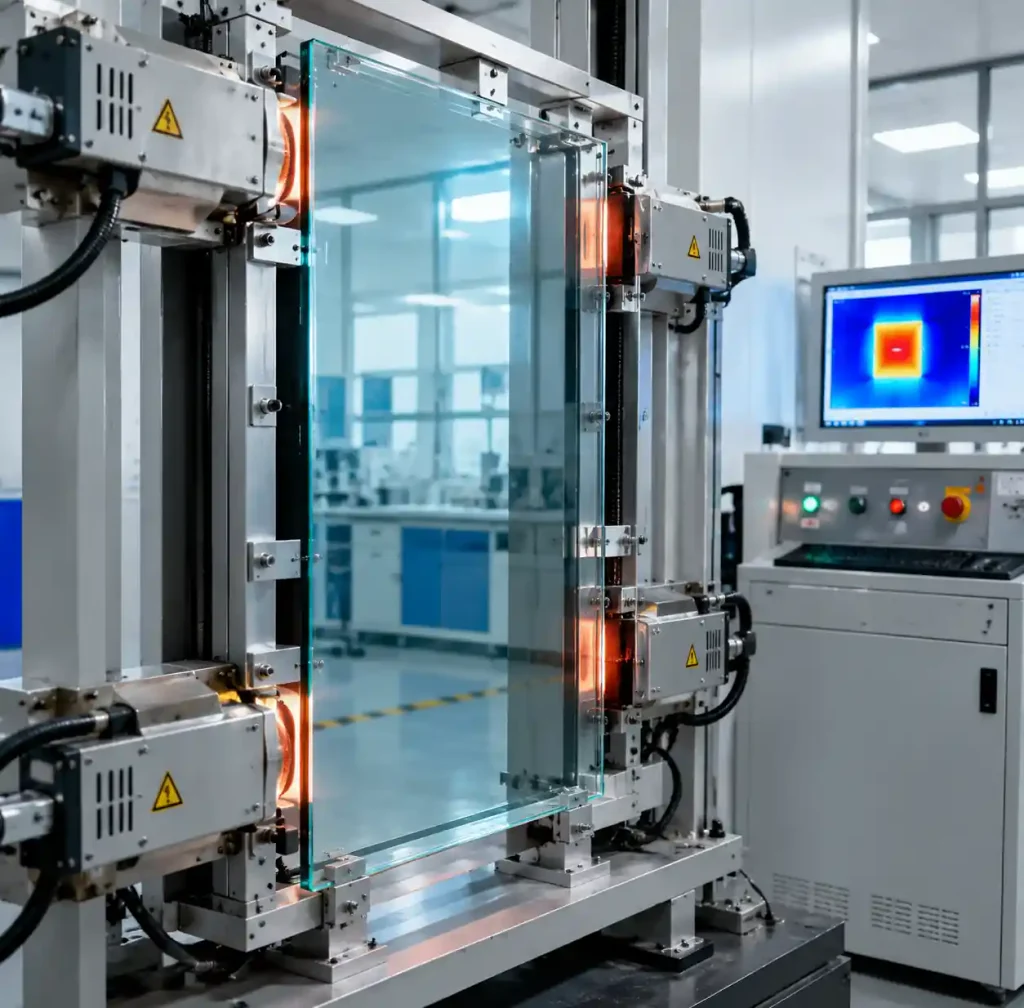
Thermal stress risk: Spandrel glass reaches 60-90°C higher temperatures than adjacent vision glass due to absorbed solar radiation. At Zhongbo Glass, we’ve measured surface temperatures exceeding 110°C on south-facing black spandrels. This differential creates two failure modes:
- Center-of-glass thermal breakage when expansion exceeds edge restraint
- Edge seal failure in vision IGUs adjacent to superheated spandrel lites
Heat-strengthening to 24-52 MPa surface compression (versus 69+ MPa for fully tempered) reduces thermal stress sensitivity while maintaining adequate strength.
Shadow Box Performance Data
Based on our thermal imaging studies of 12 completed curtain wall projects:
- Average spandrel surface temperature: 35-45°C above ambient on clear summer days
- Condensation risk: High in non-vented cavities when interior humidity >60%
- Color shift: ΔE < 3 achievable with proper coating coordination (below human perception threshold)
- Thermal bridging: 15-20% increase in wall U-value at structural framing penetrations
Back-Painted Glass: When and How to Use It
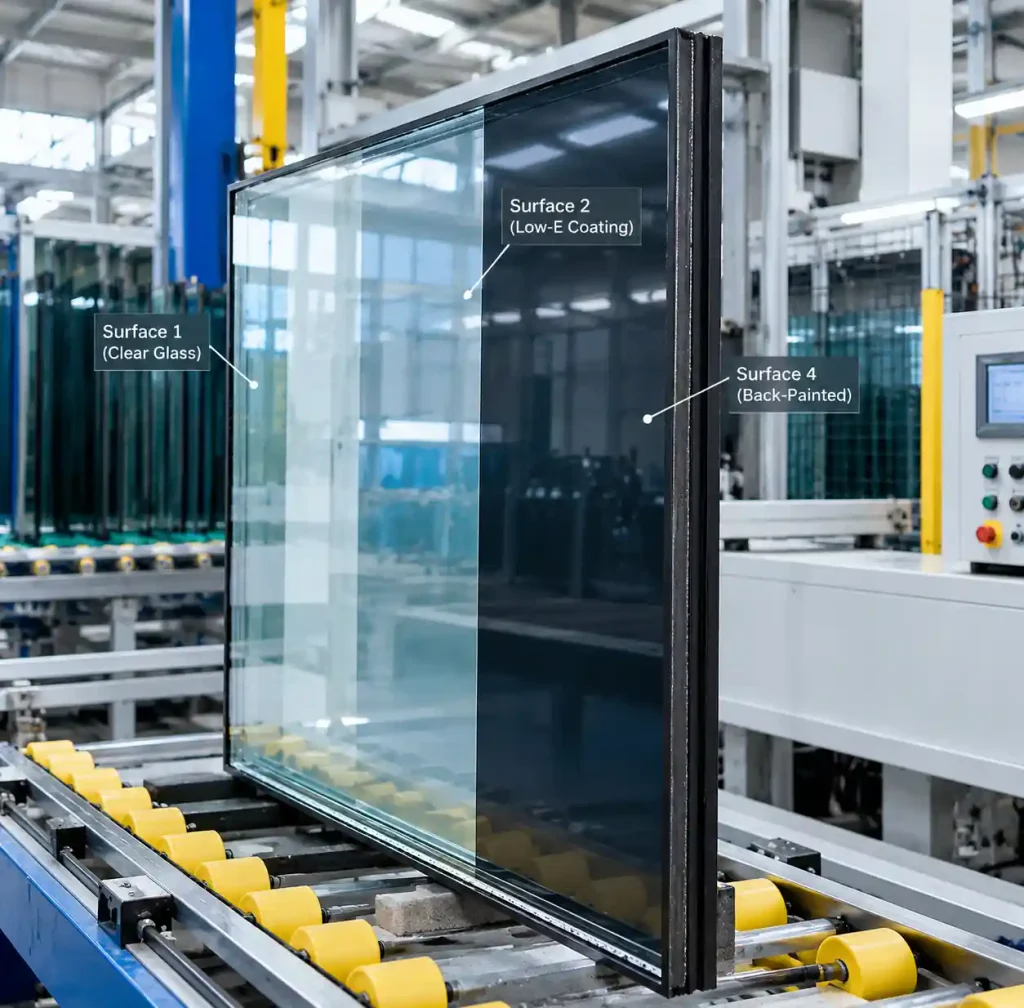
Back-painted glass applies ceramic frit or paint to surface 4 of a monolithic lite or surface 4 of an IGU. The opacifier sits behind the glass thickness, protecting it from weathering while leveraging the glass as a durable finish surface.
Application Scenarios
Ideal for back-painted:
- Interior spandrel panels not exposed to differential solar heating
- Small accent areas where mock-up color matching is straightforward
- Projects where shadow box depth creates problematic wall thickness
- Renovation where structural depth is limited
Avoid back-painted for:
- Exterior curtain walls with high-VLT vision glass (>60%)
- South/west elevations with intense solar exposure
- Projects where architects demand “invisible” vision-spandrel transitions
- Situations where you cannot produce verified mock-ups before production
Color-Matching Methodology for Back-Painted Systems
The process we use at Zhongbo Glass for back-painted spandrel projects:
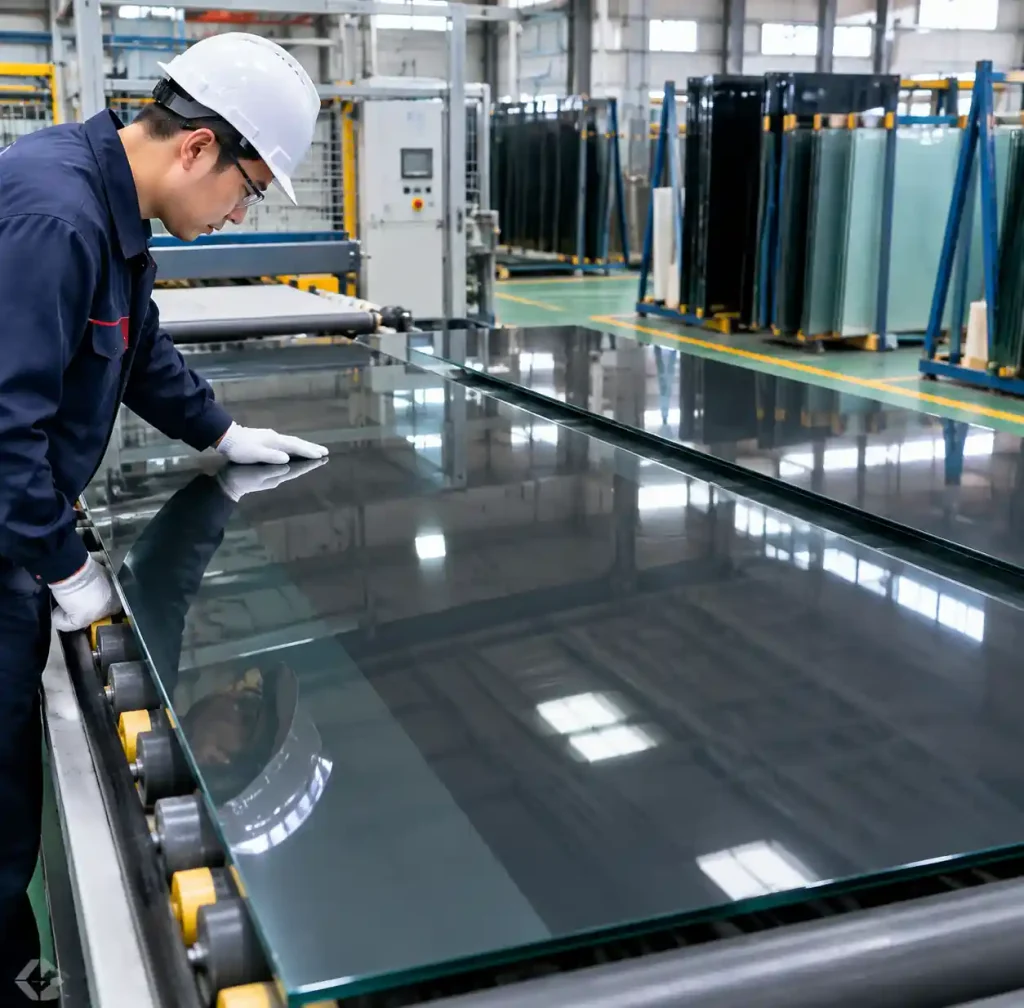
- Substrate matching: Use identical base glass (tint, thickness) as vision lites
- Coating duplication: Apply same low-E coating on spandrel surface 2 as vision glass surface 2
- Opacifier selection: Gray-scale opacifiers (warm gray, neutral gray, charcoal) match mid-reflectance coatings better than pure white or black
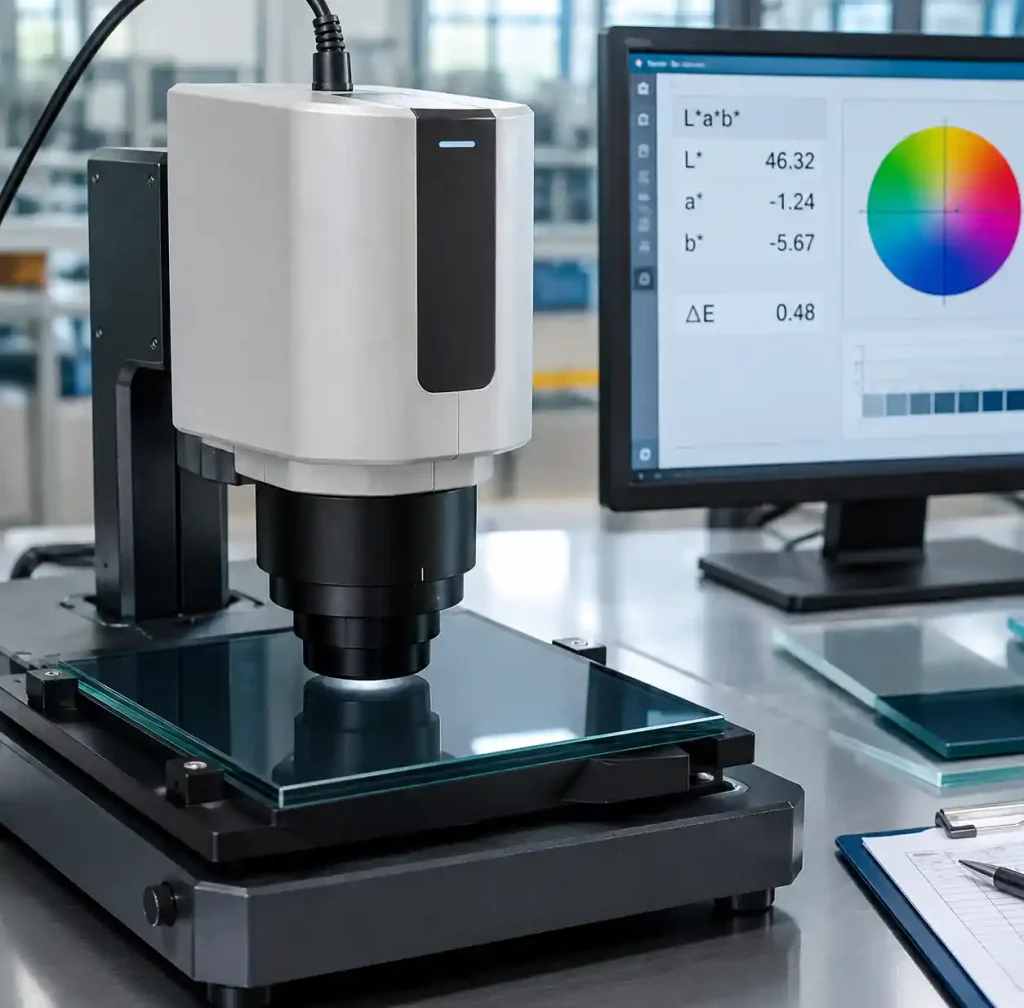
- Spectrophotometric verification: Measure reflected color (Lab* values) of vision glass under diffuse lighting, then adjust opacifier formulation to match
- Mock-up protocol: Fabricate 1200×1800mm samples of vision and spandrel, install vertically in north daylight, photograph hourly across 8-hour period
| Color Selection | Low-Reflectance Coating (<15%) | Mid-Reflectance Coating (19-27%) | High-Reflectance Coating (>30%) |
|---|---|---|---|
| White opacifier | Poor match – reads too light | Moderate match | Good match |
| Warm gray | Good match | Excellent match | Moderate match |
| Charcoal | Poor match – too dark | Good match | Excellent match |
| Black | Poor – extreme contrast | Moderate – depends on lighting | Good match |
| Bright colors | Best option for very high VLT | Noticeable but acceptable | Generally avoid |
Pro tip: Bright colors (reds, yellows, blues) intentionally contrast with vision glass rather than attempting seamless matching. When your vision glass has 70% VLT and 8% exterior reflectance, a bold color statement acknowledges the material difference instead of fighting physics.
Ceramic Frit vs Paint: Durability and Appearance
Both ceramic frit and paint opacifiers hide structural elements, but their performance characteristics differ substantially.
Ceramic Frit
Process: Silica-based ink screen-printed onto glass surface, then fused during heat treatment (tempering or heat-strengthening). The ceramic permanently bonds to the glass surface.
Advantages:
- UV-stable—no color shift over decades
- Weather-resistant—suitable for surface 2 applications without edge deletion concerns
- No outgassing or delamination
- Compatible with our 3660×28000mm tempering lines (checked against Zhongbo Glass production specs)
Limitations:
- Color palette limited to manufacturer’s standard offerings
- Custom colors require minimum order quantities (typically 500+ square meters)
- Slight texture visible at close range
- Higher material cost than paint
Paint Systems
Process: Liquid coating applied to cleaned glass surface, then cured. Common systems include polyurethane, epoxy, and specialized architectural glass paints.
Advantages:
- Unlimited custom colors matched to any specification
- Smooth, uniform finish
- Lower cost for small quantities
- Quick turnaround for samples and prototypes
Limitations:
- UV degradation over 15-20 years (varies by product)
- Must be on surface 4 to protect from weathering
- Potential outgassing in IGU cavity if not fully cured
- Edge deletion required when used adjacent to low-E coatings (typically 6-12mm)
At Zhongbo Glass, our ceramic fritting line handles 3660×28000mm panels—matching our tempered glass production capacity. For projects requiring absolute color permanence over 30+ year building lifespans, ceramic frit eliminates the maintenance headaches of paint degradation.
Thermal Performance Comparison: Which System Insulates Better?
Spandrel zones often receive less attention in energy modeling despite covering 20-40% of façade area. Here’s measured performance data from our thermal chamber testing:
| System Type | Typical U-Value (W/m²·K) | SHGC | Thermal Stress Risk | Cost Index |
|---|---|---|---|---|
| Shadow box (vented cavity, foil-facer membrane) | 0.45-0.65 | 0.25-0.35 | Moderate-High | 1.0 |
| Back-painted IGU (low-E coating surface 2, paint surface 4) | 0.28-0.35 | 0.22-0.30 | Low-Moderate | 1.3-1.5 |
| Back-painted IGU (argon fill, double low-E) | 0.20-0.25 | 0.18-0.25 | Low | 1.8-2.2 |
| Insulated shadow box (interior IGU replacing single backup lite) | 0.25-0.30 | 0.20-0.28 | Moderate | 2.0-2.5 |
Key findings:
- Standard shadow box systems perform 40-60% worse thermally than back-painted IGUs
- Adding argon fill and second low-E coating brings spandrel U-values within 10% of vision areas
- Thermal stress risk correlates with opacifier darkness and glass thickness (6mm dark spandrel = high risk, 10mm warm gray = moderate risk)
- Insulated shadow box systems deliver comparable thermal performance to IGU spandrels at 35-40% higher cost
For energy code compliance in cold climates, back-painted insulating glass assemblies typically prove necessary. Shadow box systems work better in moderate climates where insulation requirements are less stringent.
Color-Matching Best Practices from 500+ Project Experience
After resolving color-matching failures on projects from Shanghai to Singapore, these protocols prevent 95% of disputes:
Design Phase
Lock coating specifications early: Don’t let architects specify “high-performance low-E coating, manufacturer’s choice.” Name the exact product (e.g., “Guardian SunGuard SuperNeutral 70 on surface 2”) and carry it through vision and spandrel identically.
Demand reflectance over transmittance: For façades requiring seamless appearance, specify 19-27% exterior reflectance even if it means accepting 45-50% VLT instead of 70%. Physics favors matching when both materials have moderate reflectivity.
Plan for lighting conditions: Require mock-up viewing under clear sun, overcast, dawn/dusk, and artificial illumination. A match that works only at noon fails 18 hours per day.
Fabrication Phase
Spectrophotometric verification: Measure color coordinates (L*, a*, b*) of production samples versus approved mock-up. Acceptable tolerance: ΔE ≤ 2.0 under D65 illuminant (overcast daylight simulator).
Batch consistency: Coating thickness varies ±5nm across production runs, shifting reflected color. Source all vision and spandrel glass from the same coating run when possible.
Edge quality: Grinding or polishing edges after coating can expose different color at lite perimeters. Seal all edges or maintain 2mm minimum setback from sightlines.
Installation Phase
Progressive mock-up: Install first floor as full-scale mock-up before fabricating remaining floors. Photograph from 10m, 30m, and 100m distances to verify appearance matches expectations.
Orientation documentation: Glass coatings can have directional properties. Mark lite orientation during fabrication and maintain consistent installation orientation.
Interior coordination: White ceilings behind vision glass make spandrels appear darker. Coordinate interior finishes with façade consultant before releasing opacifier color.
Cost Analysis: Shadow Box vs Back-Painted Systems
Real-world pricing from our recent projects (100+ square meter quantities):
Shadow box system components:
- 8mm heat-strengthened glass with ceramic frit + coating: $85-110/m²
- Framing and cavity assembly: $45-65/m²
- Insulation/backup panel: $20-30/m²
- Installation labor premium: $15-25/m²
- Total: $165-230/m² installed
Back-painted IGU system components:
- IGU (6mm+16mm air+6mm) with coating + paint: $120-160/m²
- Standard curtain wall framing: $35-50/m²
- No backup panel required: $0
- Standard installation labor: $30-45/m²
- Total: $185-255/m² installed
The cost difference narrows when accounting for:
- Shadow box thermal performance penalties requiring upgraded vision glass to meet energy codes
- Maintenance access requirements for vented shadow box cavities
- Condensation risk mitigation measures
- Reduced structural depth with IGU systems (valuable in renovation)
When Shadow Box Beats Back-Painted (and Vice Versa)
Choose shadow box when:
- Wall depth accommodates 150-200mm cavity
- Moderate thermal performance requirements (climate zones 3-5)
- Large spandrel areas benefit from cavity cost savings
- Vision glass reflectance >20% provides color-matching flexibility
- Local labor costs favor site assembly over factory IGU fabrication
Choose back-painted IGU when:
- Stringent energy codes demand U-value <0.30 W/m²·K
- High-VLT vision glass (>60%) makes matching extremely difficult
- Thin wall assemblies critical (retrofit, interior space constraints)
- Architects demand invisible vision-spandrel transitions
- Long-term maintenance access to shadow box cavities impractical
Troubleshooting Common Color-Matching Failures
Problem: Spandrel reads too light/washed out compared to vision glass
Causes:
- White opacifier with low-reflectance coating
- Coating missing from spandrel lite (cost-cutting error)
- Interior lighting behind vision glass adding luminance
Solutions: Switch to warm gray opacifier · Verify coating present on spandrel lite · Coordinate darker interior finishes behind vision glass
Problem: Color shift visible at certain sun angles but not others
Causes:
- Coating directional reflectance properties
- Parallax effects from cavity depth differences
- Glass orientation inconsistency during installation
Solutions: Source all glass from single coating run · Mark and maintain consistent lite orientation · Verify cavity depths match shop drawings
Problem: Spandrel thermal breakage after installation
Causes:
- Dark opacifier on insufficiently strengthened glass
- Inadequate edge clearance in framing system
- Thermal bridging through uninsulated structural framing
Solutions: Switch to heat-strengthened glass (minimum 24 MPa surface compression) · Increase edge clearance to 6mm minimum · Add thermal breaks at structural connections
Material Specifications for Architects and Contractors
When writing specifications, include these critical details to prevent substitution failures:
Vision glass specification example:
“Vision areas: 6mm clear low-iron + Guardian SunGuard SuperNeutral 70 on surface 2 + 16mm argon + 6mm clear low-iron. Minimum VLT 70%, SHGC ≤0.40. Exterior reflectance 19-23%.”
Matching spandrel specification (shadow box):
“Spandrel exterior lite: 8mm clear low-iron + Guardian SunGuard SuperNeutral 70 on surface 2 + ceramic frit warm gray (RAL 7006 equivalent) on surface 4, heat-strengthened to 24-52 MPa. Cavity: 150mm, exterior-vented top/bottom. Backup: foil-facer membrane over framing.”
Matching spandrel specification (back-painted IGU):
“Spandrel areas: 6mm clear low-iron + Guardian SunGuard SuperNeutral 70 on surface 2 + 16mm argon + 6mm clear low-iron + warm gray paint (RAL 7006 equivalent) on surface 4, heat-strengthened. Match vision glass coating and substrate exactly.”
Mock-up requirements:
“Fabricate 1200×1800mm mock-up panels of vision and spandrel, installed vertically in north-facing location. Architect approval required under clear sun, overcast, and artificial lighting before production begins. Spectrophotometric verification: ΔE ≤2.0 under D65 illuminant.”
FAQ
Q: Can I use fully tempered glass instead of heat-strengthened for spandrels?
A: Not recommended. Fully tempered glass (69+ MPa surface compression) experiences higher thermal stress from differential heating. Heat-strengthened glass (24-52 MPa) reduces thermal breakage risk by 60-70% while maintaining adequate strength for wind loads. The trade-off: heat-strengthened glass fractures into larger shards than fully tempered, but spandrel locations rarely pose overhead hazard.
Q: How much does coating thickness variation affect color matching?
A: Low-E coating thickness variations of ±5nm shift reflected color by ΔE 1-3 units—often visible to trained observers. Specify that vision and spandrel glass be coated in the same production run to minimize variation. Our coated glass production maintains ±3nm tolerance across 3300×28000mm coater capacity.
Q: Will argon fill in spandrel IGUs eventually leak and cause appearance changes?
A: Argon retention rates average 85-90% over 20 years in quality-sealed IGUs. This 10-15% loss has negligible impact on visual appearance but does degrade thermal performance slightly (U-value increase of 0.02-0.03 W/m²·K). Use dual-seal systems with primary polyisobutylene and secondary silicone for maximum retention.
Q: Can digital printing replace ceramic frit for custom patterns?
A: Yes. Our digital printed glass line handles 3300×28000mm panels with unlimited color and pattern flexibility. Digital ceramic inks fuse during tempering just like screen-printed frit, providing identical durability. Minimum quantity requirements are lower (often 50+ m² vs 500+ m² for custom screen-printed frit).
Q: How do I specify shadow box venting to prevent condensation?
A: Require exterior venting at top and bottom of cavity, minimum 650mm² vent area per linear meter of cavity perimeter. Vents should include insect screen and be positioned to prevent water intrusion. Never vent shadow box cavities to interior—this allows moisture migration into the cavity from humid interior air.
Q: What’s the maximum size for heat-strengthened spandrel glass?
A: Zhongbo Glass’s heat-strengthening lines accommodate 3660×28000mm maximum, processing 2500 m²/day. For jumbo sizes exceeding most heat-strengthening equipment, consider laminated annealed glass (two 6mm plies) as an alternative—the PVB interlayer prevents total collapse if thermal stress causes breakage.
Q: How does framing color affect vision-spandrel color matching?
A: Dark framing (black, bronze) creates perceptual boundaries that help disguise minor mismatches by dividing the façade into discrete panels. Light framing (silver, white) emphasizes continuity across panels, making even slight color differences more apparent. When perfect matching proves difficult, specify dark framing to create visual separation.
Conclusion
Shadow box and back-painted systems each excel in specific scenarios. Shadow box construction delivers cost advantages for moderate-performance façades with adequate wall depth, while back-painted IGUs enable seamless color matching in high-VLT applications demanding superior thermal performance.
The unifying principle: identical coatings on vision and spandrel surfaces, mid-range exterior reflectance, and comprehensive mock-ups verified under real lighting conditions. At Zhongbo Glass, these protocols—refined across 500+ commercial curtain wall projects—eliminate the checkerboard failures that plague façades when architects and fabricators skip verification steps to save time or budget.
Color matching isn’t about finding magic formulas. It’s about understanding optics, controlling variables, and verifying results before producing 10,000 square meters of glass. Specify correctly, fabricate precisely, and inspect thoroughly.
For architectural glass projects requiring spandrel-vision color coordination, Zhongbo Glass’s integrated production capabilities—from curtain wall glass fabrication through heat treatment and coating—ensure consistent material properties across your entire façade. Contact our technical team at info@hncentralglass.com to review your project specifications.